


SOUTH TANGERANG, JurnalPost.com — Residents of Bintaro Jaya shopping at minimarkets or supermarkets have recently found premium rice shelves only partially stocked. At the same time, Sunkist oranges, Sunpride bananas, and carrots remain available daily. Broiler chicken is also still found on the market, although its price has experienced quite sharp fluctuations.
A survey by Group 3 of several traders, combined with news data and scientific journals, shows that these six food commodities have different supply issues.
Premium Rice: Goods Exist, but Retailers Are Reluctant
The most striking issue occurs with premium rice. The Chairman of the Indonesian Retail Merchants Association (Aprindo), Solihin, stated that premium rice has become increasingly difficult to find in modern retail over the last two to three months. This condition occurs because suppliers are reluctant to sell rice at prices that must comply with the highest retail price (HET) regulations (Katadata, 2026a).
Agricultural observer Khudori explained that producers could potentially suffer losses if they sell rice according to the HET. As a result, specialty rice, such as fortified rice, is increasingly filling sales shelves (Katadata, 2026b). The HET for premium rice for Zone I is set at Rp14,900 per kilogram.
The government has a different view. The Deputy of the National Food Agency (Bapanas), Hermawan, stated that the price of premium rice at the Cipinang Rice Wholesale Market (PIBC) on September 19, 2026, ranged from Rp12,860 to Rp14,200 per kilogram, which is still below the HET.
According to him, the limited stock of premium rice in modern retail is related to retail margin cuts and the withdrawal of 25 problematic fortified rice brands (Republika, 2026).
Both explanations do not necessarily contradict each other. Both show obstacles in the premium rice supply chain to modern retail.
Based on Group 3's field survey, two rice traders sold premium rice for Rp17,000 and approximately Rp16,900 per kilogram, respectively. Meanwhile, medium rice was sold for around Rp14,800 per kilogram.
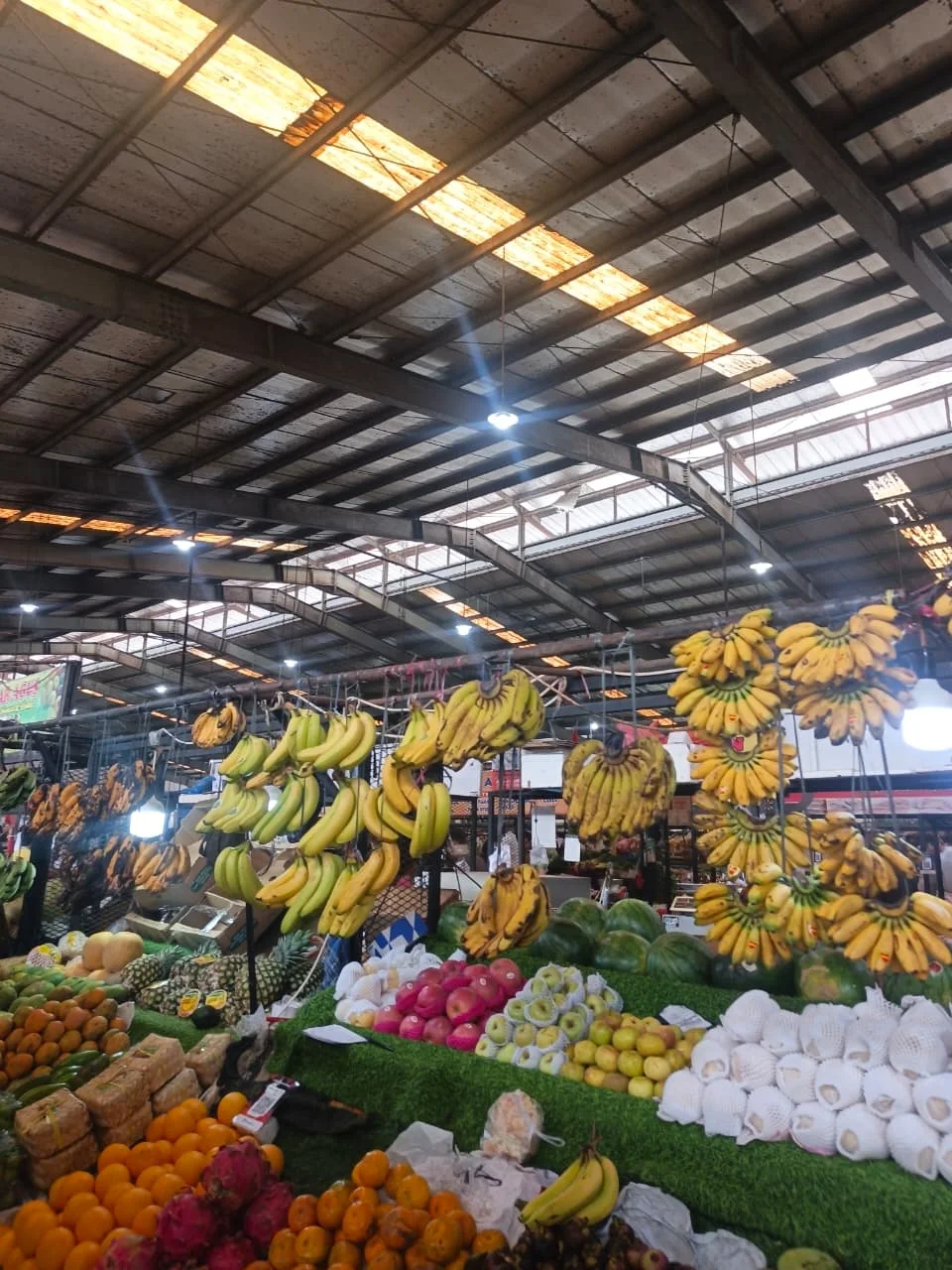
Both traders obtained supplies from PIBC with an inventory of about one ton. The selling price of the premium rice exceeded the HET and the wholesale price monitored by Bapanas.
This gap shows that prices at the retail level do not always move in line with wholesale prices.
A similar spike occurred in South Tangerang in 2025. At that time, five-kilogram packages of premium rice at a Superindo outlet in the Pamulang area were observed to reach Rp138,000, far above the usual price of around Rp74,000 (Republika, 2025).
Carrots and Hydroponic Tomatoes: Small Traders, Limited Stock
Brastagi carrots and hydroponic tomatoes are generally sold by traders with relatively limited inventory, namely about 10–15 kilograms each time they restock. Supplies are obtained from agents and the Kramat Jati Wholesale Market.
The price of carrots ranges from Rp20,000 to Rp22,000 per kilogram, while hydroponic tomatoes are sold for Rp25,000 to Rp27,000 per kilogram.
According to traders, the level of competition is quite high and the amount of inventory can be increased or decreased according to market conditions. This shows flexibility in the supply of both commodities.
In microeconomic theory, elastic supply describes a condition where the quantity of goods offered is relatively responsive to price changes (Sukirno, 2013; Mankiw, 2018).
However, one of the main vulnerabilities of carrots lies in their supply chain.
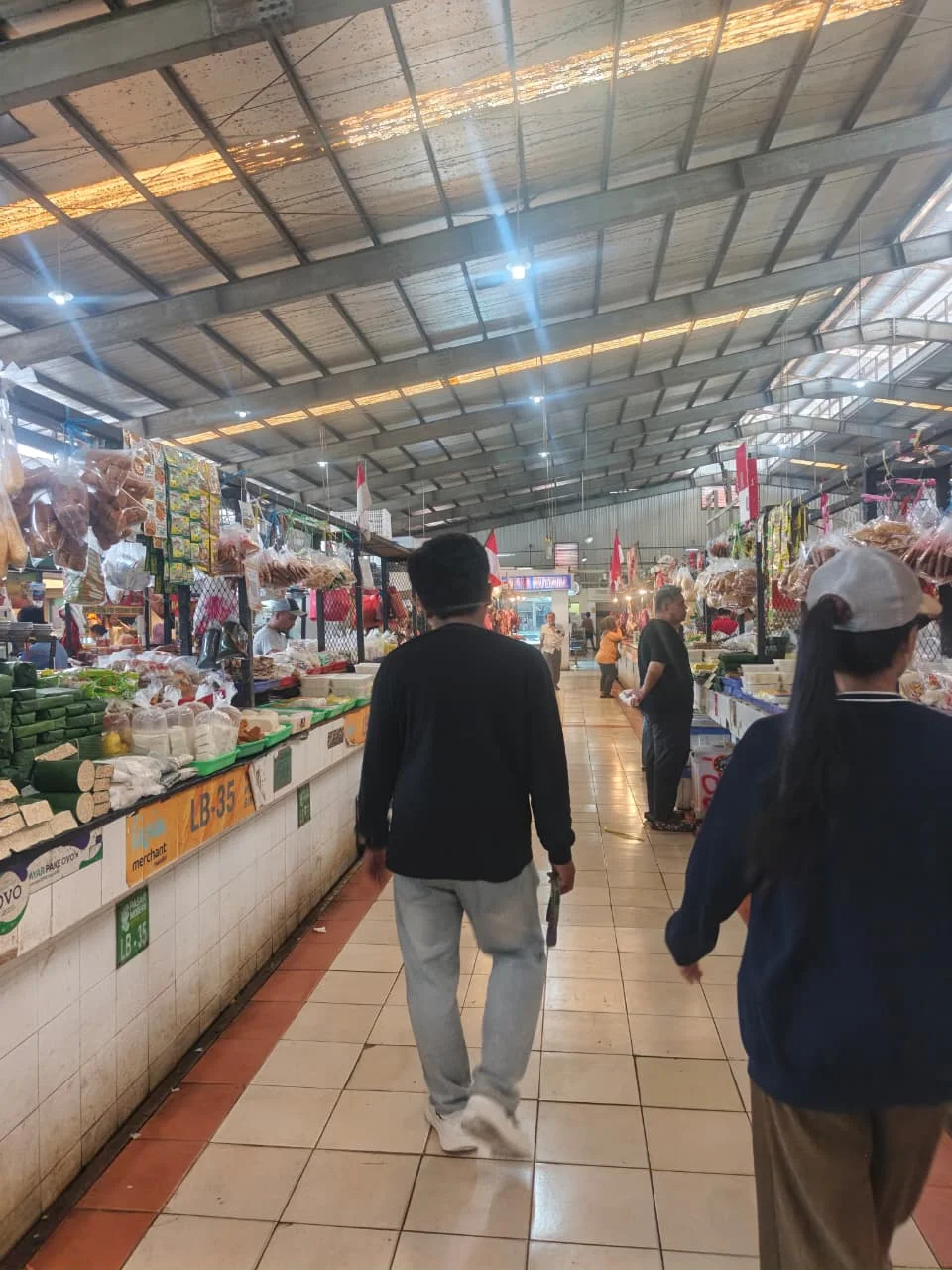
Research on the carrot supply chain in Magetan Regency identified the involvement of various actors, ranging from farmers, agents, stall traders, to mobile vendors.
The longer the distribution chain, the greater the potential for mechanical damage and harvest shrinkage during handling and distribution (Amilia et al., 2022).
Meanwhile, for hydroponic tomatoes, no regular price data or sales volume documented specifically in the Bintaro Jaya area has been found.
Therefore, the results of this survey should be understood as an initial overview of market conditions, not as a benchmark for prices that apply comprehensively.
Sunkist Oranges and Sunpride Bananas: Brands Maintain Demand
Premium Sunkist oranges are sold for around Rp28,400 to Rp30,000 per kilogram. This price is slightly lower than local or mandarin oranges, which are in the range of Rp30,000 per kilogram.
According to traders, Sunkist oranges are obtained from fruit distributors with an inventory of about 10–15 kilograms.
Meanwhile, Sunpride bananas are sold for Rp24,920 to Rp27,000 per kilogram, higher than local bananas, which range from Rp20,000 per kilogram. The supply of Sunpride bananas comes from PT Sewu Segar Nusantara.
This price difference does not seem to immediately reduce consumer interest in branded fruit products.
Research in modern markets in Bogor City, which is one of Jakarta's satellite areas, found that orange consumers are dominated by productive-age women with an income of more than Rp4 million per month.
In that study, taste and freshness were the most important attributes considered by consumers when buying oranges, both local and imported products (Nafisah et al., 2014).
Meanwhile, research in Bandar Lampung shows that brand loyalty is the variable that most influences the decision to purchase Sunpride bananas (Sujana et al., 2020).
Although both studies were conducted in different regions, the results can be used as comparative material to understand consumer behavior toward branded fruit products.
Thus, these findings do not directly describe the condition of consumers in Bintaro Jaya, but provide a perspective on the role of product quality and brand strength in influencing demand.
Broiler Chicken: Smooth Supply, Fluctuating Prices
Compared to other commodities, broiler chicken shows more dynamic price movements.
The traders surveyed sold broiler chicken at prices ranging from Rp40,000 to Rp45,000 per kilogram.
The amount of inventory is adjusted to the estimated daily demand because chicken meat is a commodity that is easily damaged if not handled and stored properly.
In August 2026, the price of chicken in traditional markets was reported to have increased from around Rp37,850 to Rp53,175 per kilogram (Kabar Bursa, 2026).
However, national data shows a different condition. The Central Statistics Agency (BPS) recorded an average price of purebred chicken meat of Rp39,712 per kilogram in the first week of August 2026, still below the consumer reference price of Rp40,000 per kilogram (Avinews, 2026).
This difference shows that prices in certain markets, including the Greater Jakarta area, can experience sharper movements than the national average.
From the production side, the price of live chicken in August 2026 was recorded at an average of Rp24,351 per kilogram, an increase of about 30.5 percent compared to the previous month (Bisnis.com, 2026).
However, entering early October 2026, farmers stated that the price of live chicken was in the range of Rp21,000 to Rp22,000 per kilogram, while production costs reached about Rp23,000 to Rp23,500 per kilogram (Kontan, 2026).
This condition shows different pressures between the consumer and producer levels.
On one hand, consumers face relatively high chicken meat prices. On the other hand, farmers are still dealing with live chicken selling prices that have not been able to cover production costs.
This difference illustrates that smooth supply at the trader level does not always reflect profitable business conditions for farmers.
What Does This Mean for Bintaro Jaya Residents?
The results of observations on these six food commodities show three main patterns in the supply mechanism.
First, price regulation policies, such as the HET on premium rice, can influence supplier decisions in distributing goods through certain sales channels. When the set selling price is not in line with the cost structure and distribution margins, supply in modern retail has the potential to experience obstacles.
Second, branded and imported commodities, such as Sunkist oranges and Sunpride bananas, have supply characteristics that are relatively managed through distributor networks. Product quality, availability of goods, and consumer loyalty to brands also play a role in maintaining demand.
Third, fresh food commodities with long supply chains, such as carrots and broiler chicken, tend to be more vulnerable to changes in distribution costs, damage risks, and price fluctuations at the producer and consumer levels.
For the people of Bintaro Jaya who rely on modern retail to meet their daily needs, understanding these supply patterns can help in making more rational consumption decisions.
Comparing prices between minimarkets, supermarkets, and traditional markets is one simple step to obtain prices that are more in line with spending capacity.
Overall, the condition of food supply in Bintaro Jaya shows that the availability of goods is not only determined by the amount of production, but is also influenced by price policies, distribution structures, commodity characteristics, and consumer behavior.
Bibliography
Amilia, W., Ulfa, E. J., Suryaningrat, I. B., & Suryadharma, B. (2022). Risk analysis of post-harvest loss in the carrot supply chain using the House of Risk method (case study in Magetan Regency). Journal of Research Results of the University of Jember, 1(1). https://doi.org/10.19184/jpsti.v1i1.93
Avinews. (2026, August). Purebred chicken meat prices rise in 188 regencies/cities. https://avinews.com/id/harga-daging-ayam-ras-naik-di-188-kabupaten-kota/
Bisnis.com. (2026, September 18). Chicken prices rise 30%, poultry issuer prospects strengthen. https://market.bisnis.com/read/20260918/189/2005177/harga-ayam-naik-30-prospek-emiten-unggas-menguat
Kabar Bursa. (2026). The surge in chicken prices and strengthening foreign transactions overshadow the performance of the poultry sector. https://www.kabarbursa.com/makro/lonjakan-harga-ayam-dan-menguatnya-transaksi-asing-bayangi-kinerja-sektor-perunggasan
Katadata. (2026a, September 4). Premium rice scarce in retail, suppliers reluctant to sell below HET. https://katadata.co.id/berita/industri/6a9a89c729c54/beras-premium-langka-di-ritel-pemasok-enggan-jual-di-bawah-het
Katadata. (2026b, September 3). Premium rice scarce in modern retail, producers switching to fortified rice? https://katadata.co.id/berita/industri/6a996246b61d8/beras-premium-langka-di-ritel-modern-produsen-beralih-ke-beras-fortifikasi
Group 3. (2026). Table of supply factors for six food commodities in Bintaro Jaya (revised) [Primary trader survey data, unpublished].
Kontan. (2026, October 4). Broiler chicken farmers under pressure, selling prices still below production costs. https://industri.kontan.co.id/news/peternak-ayam-broiler-tertekan-harga-jual-masih-di-bawah-hpp
Mankiw, N. G. (2018). Principles of economics (8th ed.). Cengage Learning.
Nafisah, S. N., Suharno, & Tinaprilla, N. (2014). Consumer attitudes and perceptions toward local and imported oranges in modern markets in Bogor City. Agribusiness Forum, 4(1), 71–84. https://doi.org/10.29244/fagb.4.1.71-84
Republika. (2025, August 25). Premium rice prices soar, breaking through Rp138 thousand. https://ekonomi.republika.co.id/berita/t1j31u416/harga-beras-premium-melonjak-tembus-rp138-ribu
Republika. (2026, September 30). Bapanas claims premium rice prices at PIBC are still reasonable. https://ekonomi.republika.co.id/berita/tm6990349/bapanas-klaim-harga-beras-premium-di-pibc-masih-wajar
Sujana, U. T., Irianto, H., & Khomah, I. (2020). The influence of brand equity elements on the purchasing decision of “Sunpride” bananas in Bandar Lampung City. Agrisep Journal, 19(1), 15–26. https://doi.org/10.31186/jagrisep.19.1.15-26
Sukirno, S. (2013). Microeconomics: Introductory theory (3rd ed.). Rajawali Pers.



Comments 0
Write a Comment Share your response