


JurnalPost.com - Every time the rainy season arrives, news of disasters seems to become a familiar occurrence. Massive floods, landslides, homes swept away by currents, and the loss of human life continue to dominate the headlines. Afterward, we often hear the same explanation: that the disaster occurred due to extremely high rainfall.
As a law student, I feel that this explanation should not be accepted at face value. Rain does fall from the sky, but did the rain cut down the forests in the upstream areas? Did the rain grant permits for construction in water catchment areas? Certainly not.
This question is important because disasters cannot always be understood merely as the result of natural phenomena. There are environmental factors, development policies, and human decisions that need to be examined to understand why the impact of a disaster can be so severe.
Rain Is Only a Trigger, Not the Sole Cause
Forests play a vital role as the natural protectors of the environment. The root systems of trees help maintain soil stability, vegetation reduces the direct impact of rainwater on the soil surface, and forest areas help regulate the process of water absorption and flow.
When forest areas are cleared for agriculture, mining, housing, or other developments without considering the environmental carrying capacity, these ecological functions can diminish. Consequently, the risk of erosion, surface runoff, flooding, and landslides can increase.
It is true that extreme rainfall can trigger disasters. However, the level of damage caused is also influenced by land cover conditions, soil characteristics, topography, drainage systems, and watershed management.
Therefore, in my opinion, the discussion regarding floods and landslides should not stop at the issue of weather. We also need to question who granted the land-use permits, how supervision is conducted, and whether environmental risks were calculated before a project was initiated.
This is where the issue of disasters is no longer just an environmental problem, but also a matter of legal responsibility.
What Does Indonesian Law Say?
Constitutionally, the right of the public to a good and healthy environment is guaranteed in Article 28H paragraph (1) of the 1945 Constitution of the Republic of Indonesia.
Meanwhile, Article 33 paragraph (3) of the 1945 Constitution asserts that the earth, water, and natural resources contained therein are controlled by the state and utilized for the greatest prosperity of the people.
For me, the meaning of the people's prosperity should not be limited to economic gain alone, but must also include public safety and environmental sustainability.
Indonesia actually already has a number of regulations that serve as the basis for environmental protection and disaster management.
Law Number 41 of 1999 concerning Forestry regulates the management and utilization of forests, including efforts to maintain the functions of forest areas.
Furthermore, Law Number 32 of 2009 concerning Environmental Protection and Management, as amended by provisions in the Job Creation Law, regulates environmental approvals, supervision, law enforcement, and accountability for environmental pollution or damage.
In environmental law, there is also the principle of strict liability or absolute liability as regulated in Article 88. This principle applies to activities that meet certain requirements according to the law and allows for accountability without having to prove the element of fault, while still considering the proof of loss and the causal relationship.
In addition, Law Number 24 of 2007 concerning Disaster Management places the central and regional governments as the parties responsible for organizing disaster management in accordance with their authority, including in prevention efforts.
This means that Indonesia does not lack legal rules. The question that needs to be asked is how these rules are applied and to what extent supervision is carried out consistently.
Three Cases Showing the Importance of Environmental Supervision
The issue of the relationship between disasters, forest management, and legal responsibility can be seen from several events that have occurred in Indonesia.
First, the floods and landslides in Sumatra in November 2025.
The disaster that struck Aceh, North Sumatra, and West Sumatra caused a massive humanitarian impact. Based on a report by the National Disaster Management Agency (BNPB) on January 22, 2026, the number of deaths reached 1,200.
The disaster also drew attention to the condition of watersheds, changes in land cover, and natural resource utilization activities.
On January 20, 2026, the government announced the revocation of permits for 28 companies related to violations in forest area utilization. The Ministry of Environment then announced the revocation of environmental approvals for 28 companies in Aceh, North Sumatra, and West Sumatra on January 21, 2026.
Previously, on January 15, 2026, the Ministry of Environment also filed a civil lawsuit against six companies for alleged environmental damage in North Sumatra with a claim value of approximately IDR 4.84 trillion.
This law enforcement step is important to ensure that alleged environmental violations are not ignored. However, the process of proof and accountability must still be carried out based on the applicable legal provisions.
In my opinion, the investigation also needs to include the process of permit issuance and the implementation of supervision, especially if indications of negligence or abuse of authority are found.
Second, the flash flood in Solok, West Sumatra, on September 21, 2026.
The flash flood that occurred in Solok Regency shows how high-intensity rain can cause damage to settlements and infrastructure.
However, to determine whether there was a contribution from land-use changes or environmental damage to the magnitude of the disaster's impact, further research and investigation are needed.
In conditions like this, I believe that the legal approach must be based on evidence. Environmental audits, spatial planning inspections, and evaluations of watershed management need to be conducted openly so that the public receives an accountable explanation.
Third, the rejection of forest area conversion in Pasuruan, East Java, in 2026.
In March 2026, thousands of residents in Prigen District, Pasuruan Regency, voiced their opposition to a plan to build a residential area on approximately 22.5 hectares of production forest land in the Arjuno-Welirang mountain area.
The rejection arose because the community was concerned about the impact of the development on environmental balance and the safety of the surrounding area.
For me, this event shows the importance of community involvement in overseeing land-use policies from the planning stage, not just after damage has occurred.
The three events certainly have different conditions and issues. However, they all show that environmental management, policy transparency, and supervision are important aspects that should not be ignored.
Who Should Be Held Responsible?
In my opinion, responsibility for environmental damage cannot be borne by only one party. There are at least three parties that need to be considered.
First, business actors.
Companies conducting mining, plantation, or construction activities in areas with ecological functions must ensure that their activities comply with legal provisions and do not cause environmental damage.
If violations are found that cause losses, business actors must be held accountable through administrative, civil, or criminal mechanisms in accordance with applicable provisions.
The polluter pays principle (polluter pays principle) is also an important basis so that the costs of environmental restoration are not solely borne by the community.
Second, the government as the approver and supervisor.
The government has an important role in setting policies for area utilization, granting business permits, approving environmental documents, and supervising activities that have the potential to cause ecological impacts.
If an activity obtains approval without adequately considering environmental risks, the decision-making process must be evaluable.
Likewise, if violations are found that are allowed to continue without the necessary supervision.
In my opinion, the accountability of public officials is an important part of environmental protection. However, the determination of legal responsibility must still be based on authority, evidence of violations, and applicable provisions.
Third, law enforcement officials.
Good regulations will not provide maximum protection if enforcement is weak.
In cases of environmental destruction, the investigation and law enforcement process should not stop at field operators. If there is evidence of the involvement of company management, those who gave orders, or other parties who benefited from illegal acts, their roles also need to be examined.
Law enforcement must be objective, transparent, and not differentiate between parties based on economic power or status.
Justice for Disaster Victims Is Often Forgotten
Amidst the debate regarding the causes of floods and landslides, there is one issue that I think should not be forgotten: the fate of the victims.
Communities that lose their homes, livelihoods, and even family members are often not the parties involved in decisions regarding forest area utilization.
However, they are the ones who have to face the most severe consequences when a disaster occurs.
Emergency aid is certainly very much needed. However, the recovery of the victims' lives is not enough through the distribution of temporary aid alone. They also need certainty of housing, economic recovery, and protection of their rights.
In the Indonesian legal system, there are a number of mechanisms that can be used to fight for the rights of the community, including class action lawsuits (class action), the right of environmental organizations to sue, and the citizen lawsuit mechanism (citizen lawsuit) in accordance with applicable legal requirements.
The Supreme Court has also issued Supreme Court Regulation Number 1 of 2023 concerning Guidelines for Adjudicating Environmental Cases.
The existence of this rule is an important part of supporting the handling of environmental cases. However, the next challenge is to ensure that the public has access to information, legal assistance, and affordable judicial processes.
Environmental justice should not only speak about imposing sanctions on perpetrators, but also about restoring the rights of the community that has suffered losses.
My View as a Law Student
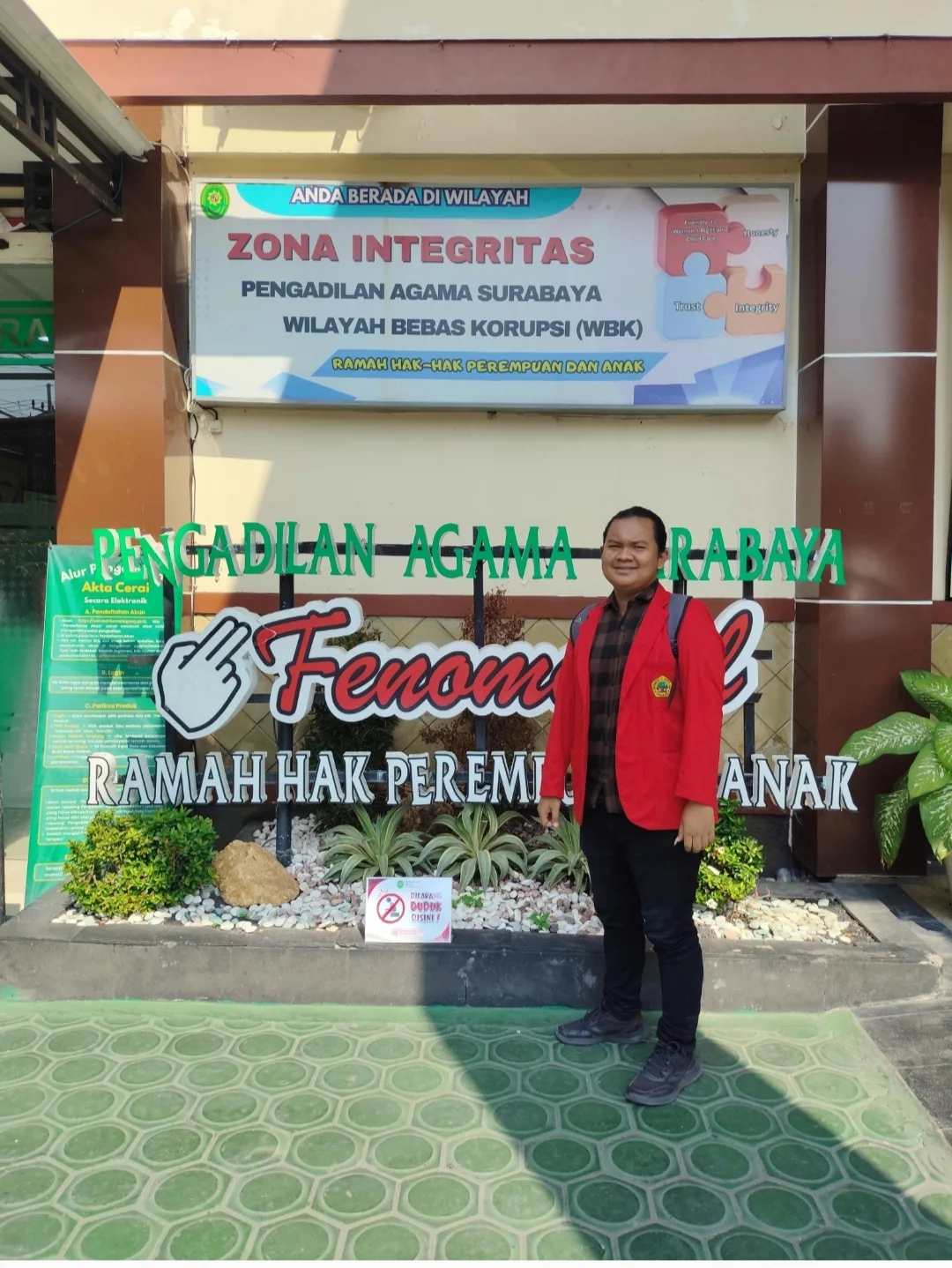
As a student of the Faculty of Law at Pamulang University, I believe that the recurring floods and landslides should be a reason to evaluate environmental management more seriously.
Economic development is indeed important. However, development that ignores environmental carrying capacity actually has the potential to cause much greater losses in the future.
There are five things that I think need attention.
Transparency of licensing information. Information regarding forest area utilization, environmental approvals, and land-use changes needs to be accessible to the public in accordance with legal provisions so that public oversight runs more effectively.
Law enforcement against business actors. Companies proven to have committed violations must be held accountable, including the obligation for environmental restoration if required by law.
Accountability of permit-issuing officials. The process of issuing approvals and implementing supervision must be evaluable. Allegations of negligence or abuse of authority should not be ignored.
Protection and access to justice for victims. The state needs to ensure that affected communities have the opportunity to obtain legal aid, recovery, and fair dispute resolution.
Involvement of the younger generation. Students and the younger generation need to be involved in overseeing environmental policies, public discussions, and nature conservation activities. Because it is the younger generation that will face the long-term impacts of various development decisions today.
In my opinion, these five steps are not just ideal demands, but part of an effort to ensure that development and environmental protection can go hand in hand.
Closing
Rain is a natural phenomenon that we cannot control. However, decisions regarding forest utilization, permit issuance, supervision, and law enforcement are things that can be regulated and accounted for.
When floods and landslides occur, we should not just ask, "How much rain fell?" We also need to ask, "What is the condition of the forest in that area, who manages it, and have environmental rules been followed?"
That question is important so that the public does not always accept disasters as something that is completely unavoidable.
Not all floods and landslides are caused by forest conversion. However, when there are indications that environmental damage increases the risk of disaster, the state is obliged to ensure that the cause is examined scientifically and that alleged legal violations are followed up.
For me, environmental law should not only appear after houses are washed away, land slides, and victims fall.
The law must work from before permits are issued, while activities are ongoing, until the time when restoration is needed. Because the main goal of environmental protection is not just to punish the guilty, but to prevent the public from continuing to be victims.


Comments 0
Write a Comment Share your response