


Slang as a Reflection of Gen Z Identity
Digital technological advancements have transformed how society communicates. Social media, particularly TikTok, has become more than just a source of entertainment; it is a space for self-expression, building social connections, and showcasing identity. One prominent phenomenon is the use of slang by Generation Z. Through their choice of words, young people demonstrate both their creativity and their understanding of their social environment.
Terms such as healing, insecure, overthinking, valid, relate, and slay have become familiar in digital conversations. These words do not merely follow trends. In specific contexts, these terms are used to convey feelings, experiences, judgments, or a sense of closeness with others.
For example, insecure is often used to describe a lack of self-confidence, while healing is frequently used to refer to the process of recovering after experiencing pressure. Their meaning and usage can change according to the context of the communication.
From a sociolinguistic perspective, language is closely linked to social life. Word choice can signal group affiliation, relationships, atmosphere, and the purpose of communication. When someone uses a popular term, they may be demonstrating that they understand current trends and are part of the ongoing conversation. Thus, language functions not only to convey messages but also to build social rapport.
This phenomenon should be understood wisely. The use of slang does not automatically indicate a person's low language proficiency. On the contrary, creativity in coining and spreading terms shows that language is dynamic. However, users still need to understand the meaning of each word to avoid using them incorrectly or simply imitating others without considering the context.
TikTok and the Space for Digital Identity Formation
TikTok provides a space for users to present themselves through videos, text, music, comments, and hashtags. Individuals can showcase their interests, sense of humor, lifestyle, and perspectives through the content they create or share. One's identity is formed not only through direct interaction but also through the communication trail visible in the digital space.
For instance, the term anak senja is often associated with someone who enjoys a calm atmosphere, music, or poetry. Meanwhile, the label introvert is frequently used to describe someone who is more comfortable in less crowded settings.
When users choose specific labels to describe themselves, they are engaging in self-labeling self-labeling. Such labels can help individuals find communities with similar interests, though they may not always capture a person's entire personality.
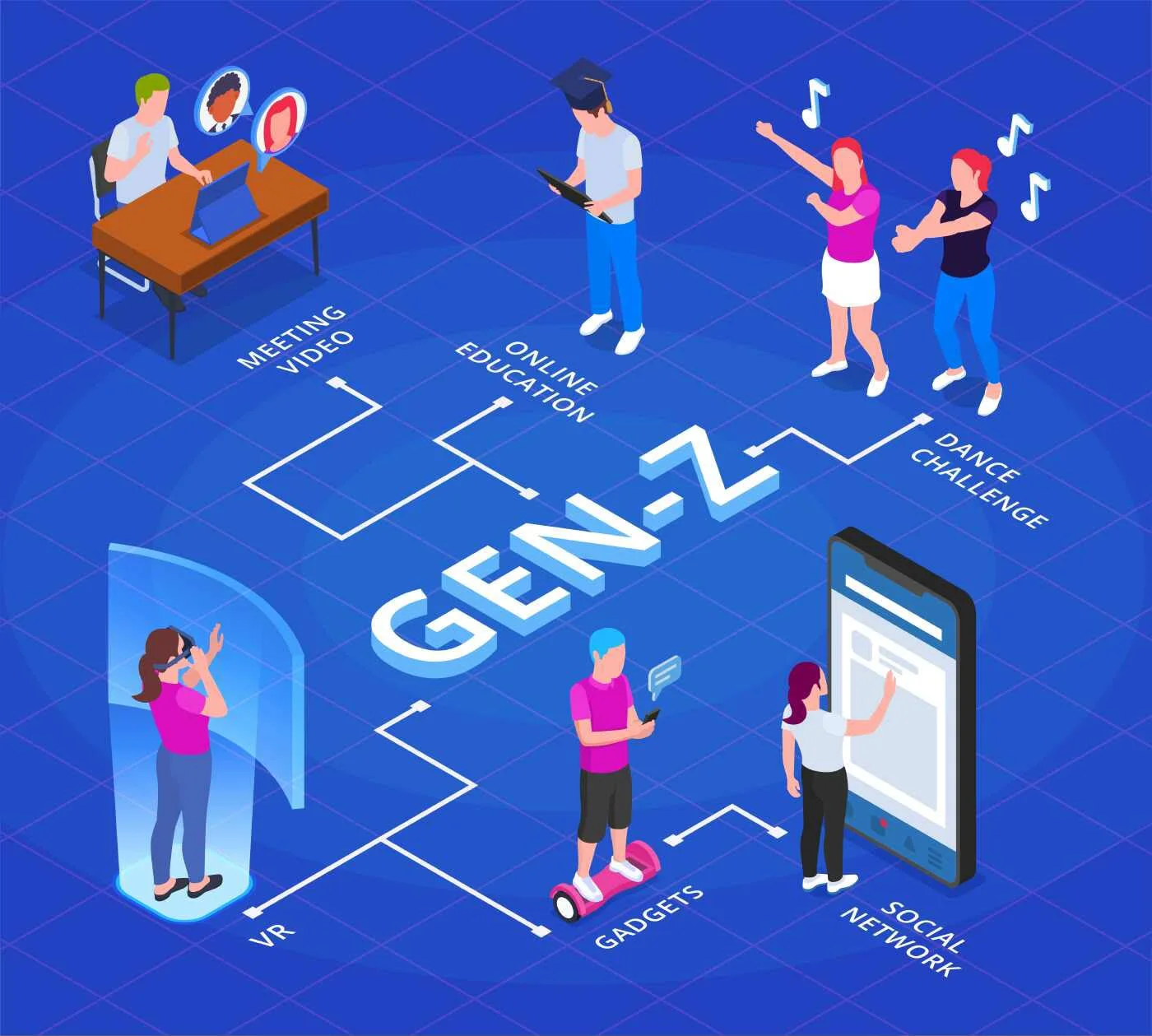
Digital identity formation is also influenced by the social environment. Trends, comments, view counts, and algorithmic recommendations can affect the content produced and the language chosen. Some users follow popular terms to be more easily understood, accepted, or to gain attention. This situation shows that digital identity is formed through a blend of personal choice and social influence.
The drive to always follow trends can be linked to fear of missing out (FoMO), which is the anxiety of being left behind from experiences or information currently being discussed.
Arsieta, Sulistyo, and Gusfa (2025) examined Gen Z's participation in FoMO cultural trends on social media through a netnographic study of the TikTok account @Skintific.Id. The study serves as a reminder that participation in trends is part of digital interaction, but it must be accompanied by a critical attitude. Users should not feel compelled to follow every trend just to gain social validation.
Thus, TikTok is not just a place to spread entertainment and information. The platform is also a space to shape one's self-image and build social relationships. However, what is displayed on the screen is only a fraction of a person's life.
Users need to understand the difference between their digital persona and their true self so they do not make the judgment of netizens the primary measure of their self-worth.
Maintaining Language Existence Amid Changing Times
Language change is a natural occurrence as society, culture, and technology evolve. The emergence of various new vocabulary among Gen Z shows that language continues to develop to meet the communication needs of society.
The challenge is not to stop the development of slang, but to ensure that linguistic creativity remains aligned with an understanding of the rules and proper usage of the Indonesian language.
Language suitable for casual conversation is not necessarily appropriate for scientific papers, official letters, academic discussions, or formal communication. If informal language is used without considering the situation, the message conveyed may become unclear or inconsistent with the purpose of the communication.
Therefore, the younger generation needs the ability to choose the appropriate language variety based on the interlocutor, situation, and communication objectives. The ability to switch from informal to standard varieties is a form of linguistic competence, not a rejection of creativity.
In the world of education, the phenomenon of Gen Z language on TikTok can be utilized as learning material that is close to the students' lives. Teachers and students can observe popular terms, explore their meanings, compare their usage in daily conversation versus formal writing, and then discuss the shifts in meaning that occur.
Such activities can train digital literacy, critical thinking skills, and the awareness that language use is always related to context. Students can also practice editing sentences to conform to Indonesian language rules without ignoring the original intent of the speaker.
Furthermore, social media users need to build responsible language habits. Before using or spreading a term, they should understand its meaning and potential impact on others. A term considered funny by one group may not be received in the same way by another.
Therefore, linguistic politeness remains important to maintain, both in direct conversation and in digital communication.
Slang is part of Gen Z's communication culture. Its presence can enrich expression and strengthen relationships between users as long as it is used consciously and appropriately according to context.
The younger generation does not need to choose between being creative and loving the Indonesian language. Both can go hand in hand. Slang can be used in informal communication, while mastery of Indonesian according to its rules remains necessary for academic, professional, and official purposes.
Ultimately, language may continue to evolve with the times, but politeness, cultural identity, and respect for the national language must be preserved. Technological progress should expand the younger generation's linguistic capabilities, not diminish their awareness of the nation's cultural values.



Comments 0
Write a Comment Share your response