

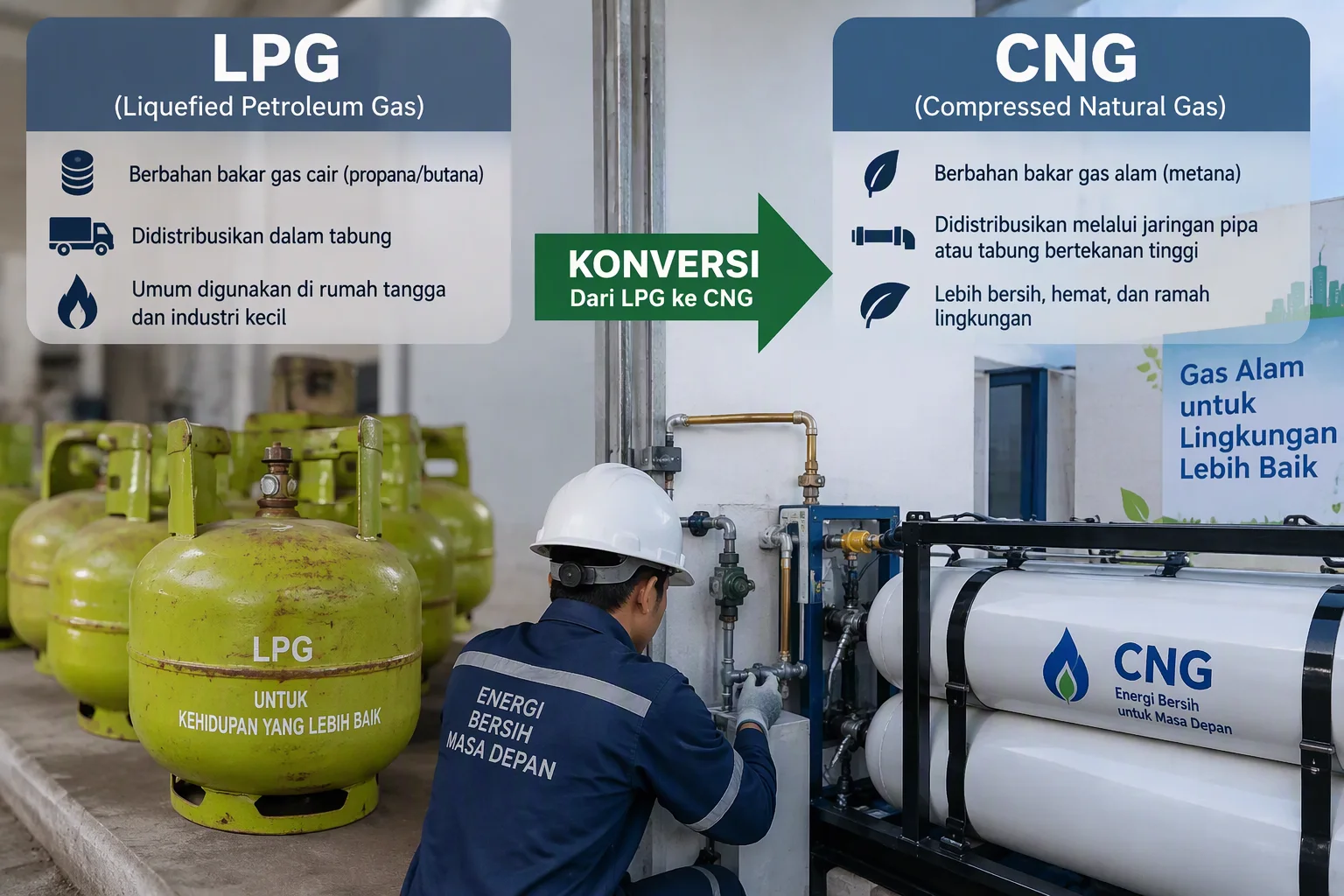
JurnalPost.com - The discourse on shifting from LPG to Compressed Natural Gas (CNG) has returned to the spotlight. This idea is compelling because it touches on issues far greater than merely choosing a cooking fuel.
It encompasses Indonesia's dependence on imported LPG, the burden of energy subsidies, the utilization of domestic natural gas, the development of household gas networks (jargas), and the direction of national energy security. From the perspective of electrical engineering and energy systems, it is clear that the idea of transitioning from LPG to CNG must be placed within a broader framework. What we should be discussing is not just replacing LPG with CNG, but redesigning Indonesia's household energy system.
Household energy is not just about the type of fuel. It is a system that includes energy sources, infrastructure, conversion technology, distribution, safety, economics, and consumer behavior.
The Issue is More Than Just LPG
Indonesia has long faced structural problems in LPG supply. National demand far exceeds domestic production capacity, necessitating imports to meet the shortfall. In such conditions, household LPG consumption has consequences for the nation's energy security and fiscal health. Any rise in global energy prices, exchange rate fluctuations, or international supply chain disruptions can pressure domestic energy supply costs.
At the same time, Indonesia possesses natural gas resources that could be utilized to meet domestic needs. This leads to a simple yet strategic question: why is domestically available energy not being utilized more effectively to meet our own household energy needs? The idea of utilizing CNG is relevant because, in principle, it allows natural gas to be used as a domestic fuel without waiting for a complete household gas pipeline network to be built. However, CNG should not be understood as a “new version of LPG.”
Technically, the characteristics of LPG and CNG differ. CNG is stored at high pressure, requiring different cylinders, valves, regulators, filling systems, transportation, and safety procedures. Thus, moving from LPG to CNG requires a change in the ecosystem, not just a change of cylinders.
CNG is Not the Final Goal
The most interesting position for CNG is not as an end goal, but as a bridge toward a more integrated household gas system. In densely populated urban areas, building gas networks (jargas) can provide better efficiency. Gas does not need to be packaged in cylinders and distributed from house to house; it can be delivered through a pipeline network directly to consumers.
Conceptually, we can envision three layers of a household energy system. First, jargas as permanent infrastructure in areas that are technically and economically viable. Second, CNG as a distribution mode for areas not yet reached by pipeline networks. Third, LPG as an energy source whose dependence can be gradually reduced once domestic alternatives are available with adequate levels of safety, reliability, and economic viability. With this approach, CNG functions as a bridge , not a final destination. Energy policy becomes more flexible because not all regions of Indonesia need to use the same technology.
Metropolitan areas might be better suited for jargas. More dispersed regions could utilize CNG. Meanwhile, areas with excellent electricity access and competitive electrification costs could be directed toward electric-based cooking appliances. In other words, Indonesia needs a mix of household energy technologies, not a single technology forced upon the entire country.
Compare Energy Based on the Same Units
As someone working in the power systems field, I see that one weakness in public energy discussions is the tendency to compare commodity prices directly. For example, comparing the price of one LPG cylinder to one CNG cylinder. In reality, such a comparison is technically insufficient. What should be compared is the cost of energy received by the consumer to produce the same service. Calculations need to include the cost per unit of energy, stove efficiency, device costs, distribution, storage, maintenance, and safety. Even more comprehensively, one should compare the levelized cost of service for household cooking needs.
With this approach, LPG, CNG, jargas, and electricity can be compared based on total system costs, not just fuel prices. Technology that is cheap in terms of fuel is not necessarily cheap in terms of infrastructure. Conversely, technology with higher initial costs can be more economical if operating costs are low and the infrastructure can be used in the long term.
Do Not Ignore Transition Costs
There is one aspect often overlooked in energy conversion discourse: the transition cost. For the government, the issue may be infrastructure investment. For energy companies, it relates to business models and return on investment. However, for the public, the question is much simpler: how much do I have to spend to switch?
If households must replace stoves, regulators, installations, cylinders, or other devices, all these costs must be accounted for. Therefore, conversion policies cannot only calculate savings after the system is running. The government must also account for the switching cost that the public must bear. A good transition program must ensure that the public does not become the party bearing the entire cost of change. Conversion subsidy schemes, phased financing, appliance incentives, and area-based financing can be part of the policy design. The principle is simple: energy transition must be technically, economically, and socially viable.
Safety Must Be the First Requirement
Safety should not be treated as a footnote. CNG is characterized by high-pressure storage. Therefore, safety aspects must be designed from the initial stage. Standards that need attention include cylinders, component certification, regulators, hoses, home installations, ventilation, leak detection systems, filling procedures, periodic inspections, and technician competence.
We must not repeat the pattern where technology is distributed en masse first, while supervision and education systems follow later. In energy systems, the principle of safety by design must be the foundation. Safety is not an addition after the system is built, but part of the system design from the start.
From Commodity Subsidies to Targeted Subsidies
The conversion of LPG to CNG also opens an opportunity to improve the energy subsidy paradigm. If LPG is replaced with CNG but the subsidy pattern remains the same, we are merely shifting the object of the subsidy: from LPG to CNG. If CNG comes from domestic gas, dependence on imports may potentially decrease. However, the issue of subsidy targeting is not automatically resolved.
Therefore, technological transition should go hand-in-hand with subsidy mechanism reform. Low-income households must still have access to affordable energy. However, subsidies should ideally be increasingly directed toward groups that truly need them, rather than being attached indefinitely to specific types of commodities. Thus, energy reform does not just change what is used, but also improves how energy is provided and who receives state support.
Do Not Forget Electricity and Renewable Energy
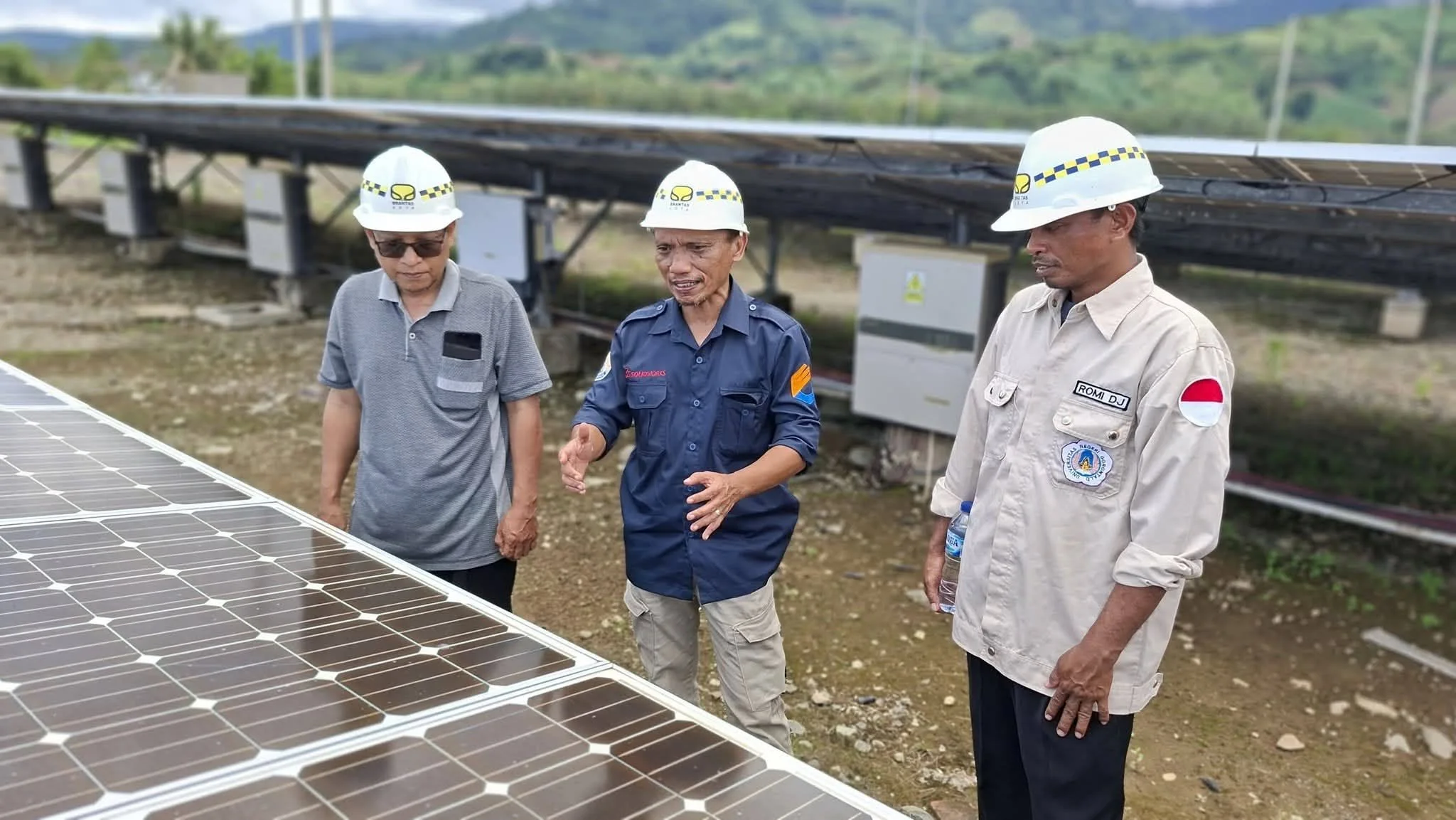
When discussing the future of household energy, the discussion should not stop at LPG versus CNG. We must also ask: what is the position of electricity in the future household energy system? Indonesia is developing renewable energy power plants, especially solar. If renewable energy penetration increases and power systems become more flexible, household sector electrification can be part of the energy transition strategy.
Cooking with electricity has different system characteristics compared to cooking with gas. This system requires adequate network capacity, appropriate devices, and load management. However, in certain regions, electrification can be a viable alternative. This means the future of Indonesia's household energy may not just be:
LPG → CNG
but rather:
LPG → CNG/Jargas + Electrification + Renewable Energy
The final choice must be determined based on regional characteristics, local energy sources, infrastructure, population density, load profiles, economics, and community needs.
Start with Regions, Not Directly National
The most rational approach is to start through area-based pilot projects. There is no need to convert millions of households immediately. The government can select a number of areas with different characteristics, such as dense urban areas, new housing developments, apartment complexes, industrial areas, tourist areas, or regions located near gas sources and infrastructure.
From these areas, a number of aspects can be measured in reality, including:
- household energy consumption;
- peak demand requirements;
- infrastructure costs;
- appliance efficiency;
- distribution costs;
- safety levels;
- public acceptance;
- conversion costs; and
- energy savings.
Data from pilot projects can then be used as a basis for determining the most appropriate model for each regional character. This kind of approach is much healthier than creating one national design and forcing it onto all of Indonesia. Indonesia has thousands of islands, highly diverse population densities, different energy network conditions, and unequal potential for local resources. Indonesia's energy design must acknowledge this diversity.
Time to Think in an Energy System Paradigm
Ultimately, the debate over LPG versus CNG should not stop at the question of which is cheaper. A much more important question is: what kind of household energy system do we want to build in the next 20–30 years?
If the answer is a system more resilient to global shocks, the utilization of domestic resources must be strengthened. If the answer is a more efficient system, infrastructure and technology must be designed based on actual energy needs. If the goal is to build a more sustainable system, gas should not be viewed as the only destination, but as part of the process of transitioning toward an increasingly clean energy mix. And if the goal is to realize a system that favors the public, costs, safety, accessibility, and subsidy accuracy must be part of the design from the beginning.
Therefore, we must view the idea of shifting from LPG to CNG as a momentum for reform, not just a fuel substitution program. CNG can be a bridge. Jargas can be the backbone of gas distribution in viable areas. Electricity can play a larger role as power systems are strengthened. Meanwhile, renewable energy can gradually increase the share of low-emission energy.
The final goal is not just to replace one cylinder with another. The true goal is to ensure every Indonesian household obtains energy that is safe, affordable, reliable, and increasingly sustainable. If that is the goal, then the question regarding LPG and CNG is merely the entry point. The real reform is how Indonesia redesigns its household energy system.



Comments 0
Write a Comment Share your response