


JAKARTA, JurnalPost.com — The availability of fresh tuna in modern markets across Jakarta, Bogor, Depok, Tangerang, and Bekasi (Jabodetabek) is determined by more than just the volume of the fishermen's catch. Weather conditions, distribution costs, storage technology, and supplier capacity are all critical factors influencing the amount of tuna available on retail shelves.
As one of Indonesia's premier fishery commodities, tuna serves a broad market ranging from household consumers and restaurants to processing and export industries. However, moving fish from the point of capture to the consumer requires a distribution system capable of maintaining product freshness and quality.
This presents a unique challenge for modern retail managers. On one hand, consumers expect high-quality fresh tuna at affordable prices. On the other, retailers must account for operational costs and the uncertainty of supply from vendors.
Indonesian Tuna Production and Supply Challenges
Indonesia is recognized as one of the world's largest tuna producers. Studies on tuna supply indicate that national production reaches approximately 1.1 million tons per year.
Despite this significant fishery potential, the sustainability of tuna supply faces several issues. A summary of studies citing the Indonesia Tuna Consortium notes a decline in catches of approximately 20–30 percent in recent years, attributed to overfishing or overfishing and climate change.
These figures require further verification against primary reports and their observation periods. Nevertheless, the issue of fish resource sustainability remains a vital concern in maintaining tuna availability for the domestic market.
Research by Zahra et al. in 2022 also discussed the utilization rate of bigeye tuna (Thunnus obesus), which reached 69 percent of its sustainable potential.
Meanwhile, research by Nursya'ban et al. in 2024 shows that Indonesia holds a comparative advantage in the tuna trade, particularly for yellowfin tuna (Thunnus albacares) and bigeye tuna.
This advantage must be supported by sustainable resource management so that domestic and export market needs can be met without placing excessive pressure on fish populations.
Marine Weather Affects Tuna Availability at Superindo
Based on field observations summarized in a study on large tuna supply at Superindo outlets, weather conditions are among the most influential factors regarding product availability.
When the west monsoon or high waves occur, fishing activities can be disrupted. Consequently, the volume of tuna shipped by suppliers decreases.
This situation affects the stock of fresh tuna displayed in the fish section. In certain conditions, outlets adjust the amount of product on display or offer frozen tuna as an alternative.
Adjustments are also made when tuna prices rise. Consumers may switch to other protein sources deemed more affordable, such as mackerel, gourami, or chicken.
Conversely, when outlets hold promotions or discounts, inventory levels may be increased to anticipate higher purchase volumes.
This condition demonstrates that tuna supply in modern markets is influenced by the relationship between product availability, selling price, and consumer behavior.
Cold Chain Costs as a Key Factor
Beyond weather, storage and transportation costs are primary considerations in the distribution of fresh tuna.
Fish is a commodity that degrades quickly if not handled properly. Therefore, its distribution requires a cold chain system to maintain product temperature from the supplier to the retail outlet. cold chain to maintain product temperature from the supplier to the retail outlet.
This system includes the use of ice, refrigerated vehicles, cold storage rooms, and fishery product handling facilities.
The longer the distribution chain, the higher the costs that must be borne by businesses. Rising energy and transportation costs can increase procurement expenses, thereby affecting the volume of products offered to consumers.
However, technological developments also provide opportunities to improve distribution efficiency.
The use of chill storage facilities helps maintain the storage temperature of fresh fish, while blast freezing technology allows products to be frozen quickly to maintain quality during frozen storage.
Integrated inventory management systems can also help outlet managers estimate stock needs, reduce product waste, and align procurement with consumer purchasing patterns.
With proper management, cooling technology can help maintain supply continuity even when distribution faces various obstacles.
Price Comparison of Tuna in Modern Markets and Online
Tuna prices in modern markets are not uniform, as they are influenced by the type of cut, size, quality, storage process, and distribution channels.
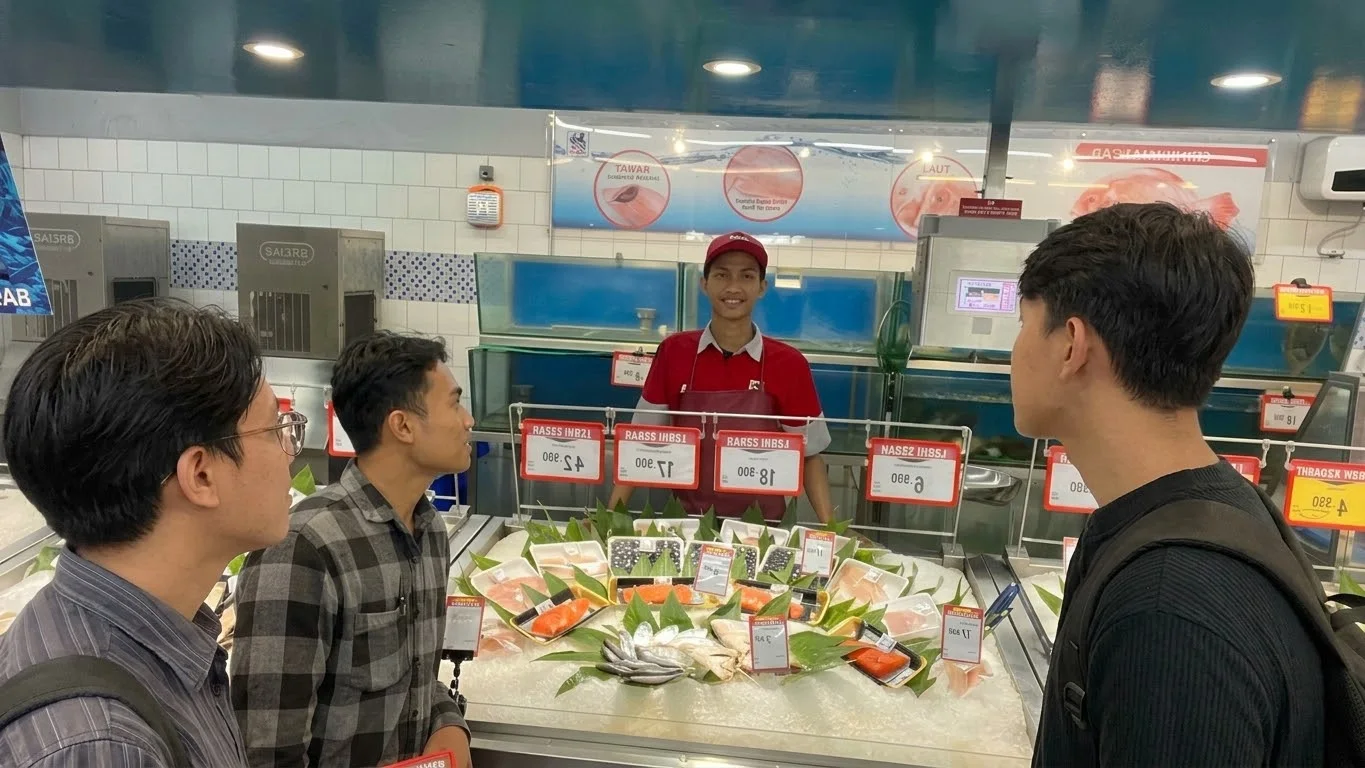
Based on observation data listed in the study materials, fresh tuna in the form of fillets or large steaks at Superindo ranges from IDR 13,000 to IDR 18,000 per 100 grams.
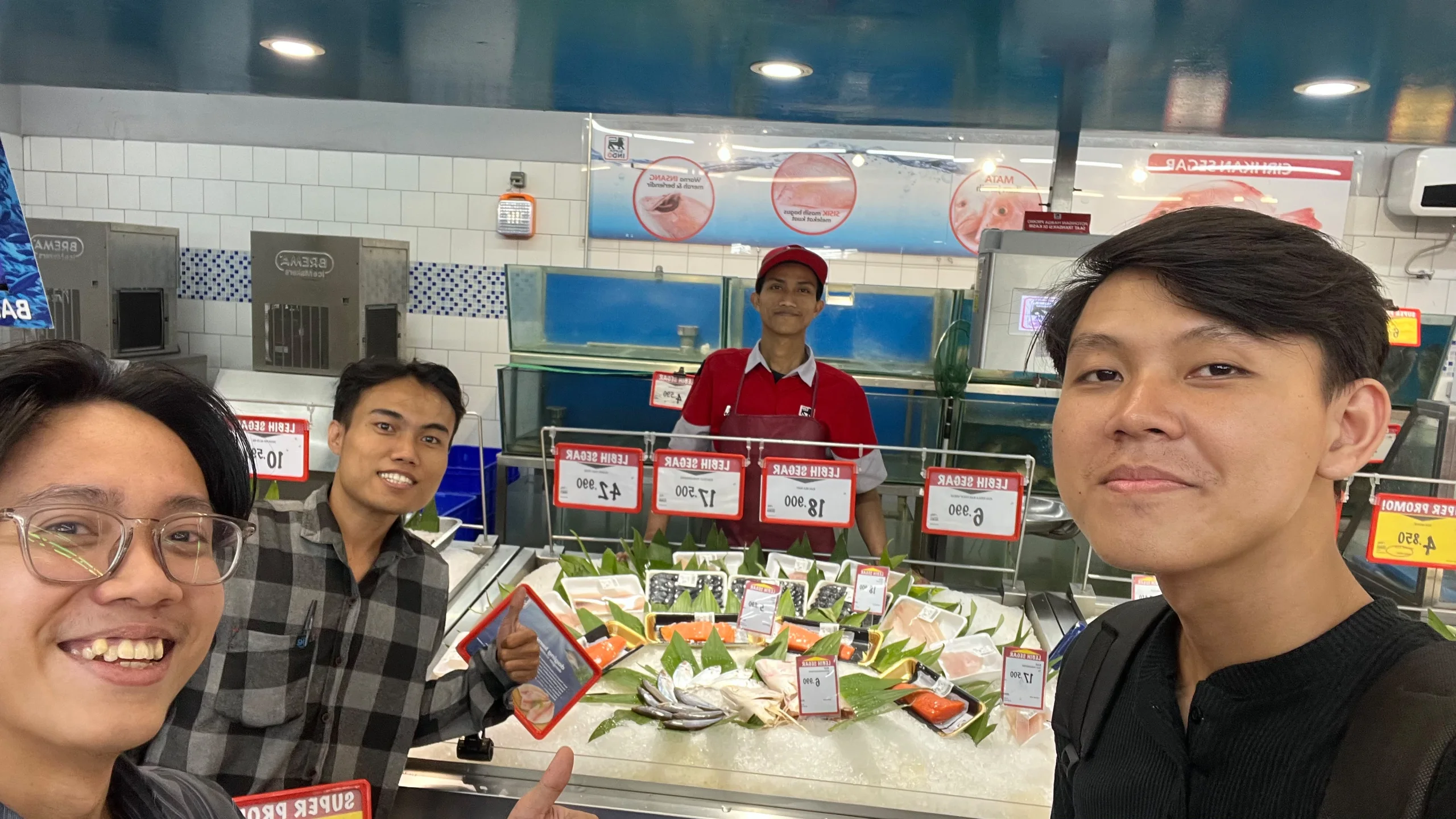
When converted to one kilogram, this price is equivalent to approximately IDR 130,000 to IDR 180,000.
Meanwhile, prices listed in the study materials for several products on online trading platforms show the following variations.
| Product Type | Weight | Price |
|---|---|---|
| Fresh tuna fillet/steak at Superindo | 100 grams | IDR 13,000–IDR 18,000 |
| Frozen tuna saku fillet | 1 kg | IDR 111,000 |
| Fresh cut tuna | 1 kg | IDR 90,000 |
| Premium tuna cubes | 475 grams | IDR 38,500 |
These price differences indicate market segmentation based on product form and consumer needs.
Fresh tuna sold through modern outlets has different characteristics compared to frozen tuna or products pre-cut into specific sizes.
Therefore, price comparisons must consider quality, freshness, packaging size, and the distribution services provided by each seller.
It should be noted that the price data in the study does not include the date of observation and therefore cannot be used as a reference for the latest market prices.
Balancing Tuna Supply and Demand
In economics, market equilibrium occurs when the quantity of goods supplied aligns with the quantity demanded at a certain price level.
This principle also applies to tuna sales in modern markets.
When tuna prices are too high, some consumers may reduce purchases or choose substitute products. This condition has the potential to result in unsold inventory.
For outlet managers, the accumulation of fresh fish is a problem because the product has a limited shelf life.
To reduce the risk of loss, sellers can apply price discounts toward the end of the sales period or adjust stock levels for subsequent procurement.
Conversely, when tuna prices drop due to promotions, consumer demand may increase. If inventory is limited, products may sell out before the outlet's operating hours end.
Therefore, retail managers must be able to estimate purchase volumes and determine stock allocations that align with market needs.
Why is Tuna Supply Tending to be Inelastic?
One economic concept that can be used to understand the tuna trade is the elasticity of supply.
The elasticity of supply describes how much the quantity of goods supplied changes when there is a change in price.
In the short term, the supply of fresh tuna tends to be inelastic. This means that price increases do not immediately allow sellers to increase the amount of tuna in a short time.
This occurs because supply depends on fishermen's catches, weather conditions, shipping schedules, and storage capacity.
For example, when tuna prices rise due to high demand, supermarket managers cannot immediately increase stock if suppliers do not have fish ready for distribution.
However, in the long term, supply capacity can become more flexible through the addition of suppliers, increased storage capacity, and improvements in distribution networks.
Thus, investment in cold chain infrastructure and logistics systems becomes a key factor in improving the market's ability to meet consumer needs.
Strengthening Distribution and Fishery Sustainability
The development of Indonesia's tuna trade cannot rely solely on the magnitude of marine potential.
Research by Cristy et al. in 2024 highlights opportunities to strengthen tuna competitiveness through international trade, technological innovation, and supply chain digitalization.
For the domestic market, increasing distribution efficiency can help reduce operational costs while maintaining product quality for consumers.
On the other hand, the government and industry players need to pay attention to resource sustainability through catch regulations, supervision of fishery activities, and the implementation of product quality standards.
Supplier capacity must also be strengthened so that modern markets are not overly dependent on supplies from a limited number of distributors.
The availability of fresh tuna in Jabodetabek ultimately reflects the close relationship between fishing activities at sea and trading activities on land.
Conclusion
The supply of fresh tuna in Jabodetabek's modern markets is influenced by various interrelated factors, ranging from natural conditions and catch volumes to cold chain costs and storage technology developments.
In the short term, supply is relatively difficult to increase quickly because it depends on fishing activities and distribution processes. Meanwhile, in the long term, increasing logistics capacity, utilizing technology, and managing resources sustainably can help create a more stable market.
Through strengthening the supply chain and proper fishery management, tuna availability in modern markets is expected to be maintained with good quality and more competitive prices for consumers.
References
Nursya'ban et al. (2024). Study on the comparative advantage of Indonesian tuna through the Revealed Comparative Advantageapproach.
Sidik et al. (2013). Research on the quality, price, and landing of tuna at PPS Nizam Zachman and PPS Benoa.
Zahra et al. (2022). Study on the utilization rate of bigeye tuna.
Cristy et al. (2024). Study on free trade and tuna supply chain digitalization.
Field observation report on large tuna supply at Superindo outlets.



Comments 0
Write a Comment Share your response