

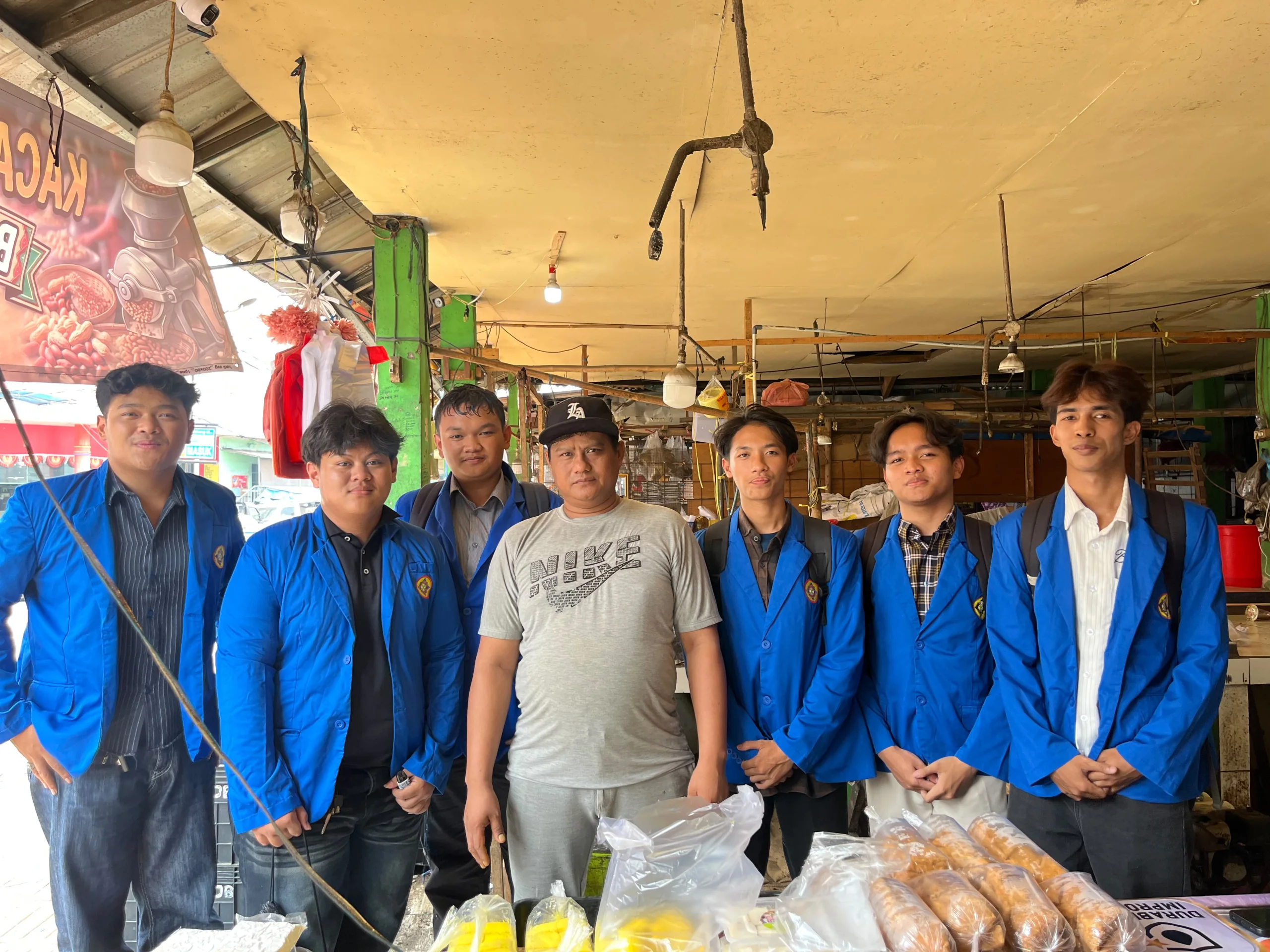
Enforcement actions without providing alternative spaces risk merely displacing the problem. Urban planning, zoning, and vendor support serve as alternatives to maintain city order without sacrificing the local economy.
South Tangerang, JurnalPost.com — Around Serpong Market, Ciputat Market, and several other densely populated areas in South Tangerang, the presence of street vendors (PKL) is often a point of contention in urban spatial planning. Stalls occupying sidewalks and parts of the road are considered disruptive to traffic, pedestrian comfort, and environmental aesthetics.
However, behind these issues lies economic activity that serves as the livelihood for many families. For some, trading on the roadside is a way to earn an income and a starting point for building an independent business.
Therefore, the issue of street vendors cannot be solved simply by choosing between allowing them to trade or conducting evictions. The more fundamental challenge is how to create an orderly and comfortable urban area without eliminating the opportunities for small-scale citizens to earn a living.
Street Vendors as Business Actors and Local Economic Drivers
From the perspective of employment and entrepreneurship, street vendors are part of the self-employed sector. Most operate with limited capital, work individually, and do not employ formal staff.
Nevertheless, their activities reflect entrepreneurial practices. Vendors must determine prices, read consumer needs, manage inventory, maintain customer relationships, and face daily business risks.
Research by Widjajanti et al. (2025) explains that street vendors play a role in providing employment as well as affordable goods and services. Their presence also contributes to urban food security.
Amidst infrastructure limitations, vendors often develop independent strategies to sustain their businesses, including sharing access to electricity and clean water.
This condition is relevant to the character of South Tangerang as a satellite city of Jakarta, which has high levels of economic activity and public consumption.
The culinary sector is one of the growing business fields in this region. Many vendors utilize market areas, residential zones, and public activity centers as locations to trade.
Therefore, clearing street vendors without careful planning has the potential to affect the sustainability of small businesses and the economic activity of the surrounding community.
Overview of MSMEs and Economic Activity in South Tangerang
Population data and the development of MSMEs provide an overview of the significant economic potential of the South Tangerang community.
Based on data from the Central Statistics Agency (BPS) and the Department of Population and Civil Registration, the population of South Tangerang in 2024 was approximately 1.43 million people.
Meanwhile, the number of MSMEs was recorded at 92,783 units in 2023. In 2025, the number of MSME actors was estimated to be close to 149,000 people, based on data referenced from the Department of Cooperatives and SMEs.
It should be noted that these two figures come from different years and calculation units, so they cannot be directly used to conclude the growth rate of MSMEs.
The culinary sector is one of the leading business fields in South Tangerang and serves as an economic space for many small traders, including street vendors.
However, the official number of street vendors in South Tangerang still needs to be verified through local government data collection.
The availability of accurate data is a crucial step so that vendor management policies are not based solely on visible conditions in the field, but also consider the economic needs of the community.
Regulations Exist, but Management Still Faces Obstacles
The South Tangerang City Government actually has a legal basis for regulating street vendors, namely Regional Regulation Number 8 of 2014 concerning the Arrangement and Empowerment of Street Vendors.
This regulation serves as one of the foundations for enforcement by the Public Order Agency (Satpol PP), including in the Serpong Market area.
However, several studies on the implementation of street vendor policies have found that execution still faces various obstacles.
Field studies noted the absence of technical regulations in the form of Mayoral Decrees during the research period. Additionally, the division of tasks between regional government agencies (OPD) and the provision of business locations for vendors remain issues.
Research on policy implementation in Serpong District also found that socialization through social media, official letters, and announcement boards has not been fully effective.
Some vendors do not understand the content of the policy, while supervision after enforcement is considered inconsistent.
Although the approach of the Public Order Agency is described as tending to be persuasive and humanistic, enforcement without long-term solutions risks vendors returning to their previous locations.
Similar issues have actually existed for a long time.
In 2013, as many as 90 Public Order Agency officers were deployed to clear street vendors in the Ciputat Market area. At that time, some vendors stated they would return to trading because no clear relocation plan was available.
Local officials also acknowledged that no suitable location had been found to accommodate the vendors.
This experience shows that physical enforcement alone is insufficient if the issues of business location and the sustainability of vendor income are not resolved.
Public Voice: Order is Necessary, but Income Must Be Protected
In field interviews, a local resident who works as a factory employee described the condition of street vendor activity in the market area.
According to them, the crowd of vendors usually occurs at 06.00–09.00 and 16.00–19.00. These times coincide with the increased mobility of people leaving for and returning from work.
During those hours, the use of sidewalks and roads for trading activities can disrupt the movement of pedestrians and vehicles.
Nevertheless, the source believes that a total ban on trading is not the right solution.
“The government should not immediately ban street vendors, but rather regulate the location and trading hours so that vendors can still earn a living,” they said.
They support the implementation of trading zones and operational hour regulations as long as business activities do not block sidewalks, vehicle access, or market entrances.
The source also believes that using uniform stall designs could help create a neater market area.
However, such policies need to consider the economic capacity of vendors who have limited capital.
“The government should provide cart assistance or subsidies, not just require them to follow a certain design,” they said.
From the consumer's point of view, cleanliness, price, and ease of access remain the main considerations when buying food or goods from street vendors.
Simple stalls can still attract customers if they are organized, clean, and easily accessible.
Relocation Must Consider Buyer Behavior
One of the risks in managing street vendors is a decrease in the number of customers after vendors are moved to a new location.
According to the source, people who are in a hurry to get to work or return home tend to choose roadside vendors because it is more practical.
If the relocation site is too far from the path of public activity, the potential for a decline in sales becomes greater.
Therefore, moving vendors needs to be accompanied by strategies to maintain the appeal of the new location.
Arranging layouts based on the type of merchandise, providing signage, promoting the trading area, and organizing bazaars or weekend markets can be alternatives.
With this approach, relocation does not just move the place of business, but also attempts to rebuild the vendors' economic activity.
Meanwhile, information regarding the implementation of standard stall designs and special coaching programs for relocated street vendors still requires confirmation from the relevant agencies.
Transparent Data Collection and Vendor Involvement
Managing street vendors also requires open data collection that involves vendors from the planning stage.
The source emphasized that relocation should not be done unilaterally.
Vendors need to know the reasons for the move, the alternative business location, rental costs if applicable, and the rules that must be followed.
In this process, vendor associations or groups can act as a bridge between the government and business actors.
Their involvement can help the government understand the character of trade in each area, ranging from the types of goods sold and operational hours to locations considered strategic.
Data collection should include vendor identity, type of merchandise, length of time trading, business location, and the status of space usage.
The government also needs to identify empty kiosks or business spaces that could be utilized as alternative locations.
For vendors who come from outside South Tangerang, the source believes that differences in domicile should not immediately be a reason for rejection.
If there are administrative or domicile requirements, the provisions need to be communicated clearly and transparently.
Strengthening Businesses through Mentoring and Digitalization
Managing street vendors is not only related to the trading location but also to improving business capabilities.
The Department of Cooperatives and SMEs has carried out various training programs, technical guidance, and business clinics to help develop small business actors.
However, the implementation of these programs has not always been followed by the participants' ability to apply the material sustainably.
Financial recording, for example, remains an aspect often ignored by some business actors.
According to the source, the assistance most needed by vendors includes access to capital and marketing mentoring conducted periodically.
Coaching programs also need to have success metrics so that their benefits can be evaluated.
On the other hand, the use of digital technology has the potential to help street vendors expand their consumer reach.
Payments using QRIS, ordering via WhatsApp, and online delivery services can provide more practical transaction alternatives.
The source admitted that it would be helpful to be able to order necessities via WhatsApp before leaving or after returning from work.
However, the adoption of technology still faces obstacles, such as limited devices, lack of understanding of application usage, and concerns about service fees.
Research by Nuraini (2021) shows that online sales can help increase the turnover of traditional market vendors as a complement to conventional sales.
These findings show that digitalization has the potential to support business sustainability if applied according to the needs and capabilities of the vendors.
Learning from Street Vendor Management in Other Cities
The experience of other regions can be considered in formulating street vendor policies in South Tangerang.
Tangerang City, for example, once implemented a management approach through the division of three trading zones.
Local regional regulations also govern the ownership of a Business Registration Certificate (TDU), which can be obtained for free and is valid for two years.
In a government statement on 2016, the number of street vendors in Tangerang City was said to reach more than 9,000 people, with about 4,000 vendors coming from outside the city.
Department officials at the time stated that the vendors generally accepted the arrangement because it provided clarity regarding the location and terms of trading.
Although this information comes from 2016 and the results of its implementation require further review, an approach based on regulatory certainty can be a source of learning.
Research by Rizkiansah and Pradifta (2024) also emphasizes that a dialogical approach involving street vendors in urban planning can reduce tension between the informal and formal sectors.
Conversely, a repressive approach that prioritizes eviction is considered to have the potential to worsen the condition of vendors, as discussed in Dimas's study (2008).
The management experience in Tasikmalaya shows that relocation to areas far from the center of activity can encourage vendors to return to the streets.
Meanwhile, a management approach that involves vendors, such as the one once implemented in Solo, is considered relatively more successful.
This comparison shows that strategic locations, regulatory certainty, and vendor participation are important factors in the success of management.
Five Steps to Finding a Middle Ground in Street Vendor Management
Based on these various issues and findings, there are five steps that the South Tangerang City Government can consider in formulating street vendor management policies.
1. Conduct Data Collection and Establish Trading Zoning
The government needs to map the presence of street vendors in each district based on the type of merchandise, length of time in business, and location of trading activities.
The results of the data collection can be the basis for dividing areas into green zones for permitted trading activities, yellow zones with operational hour restrictions, and red zones in locations that cannot be used for trading, such as main roads and sidewalks.
2. Provide Suitable and Strategic Business Locations
Relocation must consider the potential number of buyers and ease of access.
Locations near stations, campuses, office areas, and public activity centers can be options according to regional conditions.
Another alternative is to provide night culinary centers or temporary markets on weekends to accommodate the needs of vendors.
3. Combine Area Aesthetics with Business Function
Stall management can be done through the use of carts with standardized sizes and designs, the provision of trash bins, lighting, and business signage.
However, its implementation needs to adjust to the financial capabilities of the vendors.
The government can consider subsidies or support through corporate social responsibility (CSR) programs so that management does not add excessive costs.
4. Increase Vendor Capacity and Competitiveness
Registered street vendors can be connected to training programs for simple bookkeeping, product packaging, QRIS usage, WhatsApp Business utilization, Business Identification Number (NIB) processing, and micro-financing access.
With proper mentoring, vendors can improve the quality of their businesses while expanding their market.
5. Involve Vendors in Decision Making
The formation of street vendor associations in each area can help the communication process and the drafting of joint rules.
Vendors need to be involved in discussions regarding operational hours, environmental cleanliness, the use of public facilities, and membership fees if necessary.
This participation is expected to increase understanding and compliance with the implemented policies.
Building an Orderly City Without Sacrificing the People's Economy
Managing street vendors in South Tangerang does not fundamentally have to pit the interests of city aesthetics against the economic sustainability of the community.
Clean, orderly, and comfortable areas can still be realized without eliminating the opportunities for small traders to earn an income.
However, the success of the policy requires more than just enforcement. The government needs to ensure the availability of suitable business spaces, transparent data collection, vendor involvement, and sustainable economic mentoring.
This approach can help reduce conflicts over public space usage while strengthening the role of the informal sector in the city's economy.
Ultimately, the success of management is not only seen from the reduction of stalls on sidewalks or roads, but also from the ability of vendors to maintain and develop their businesses.
With the right policies, street vendors are no longer viewed solely as an order issue, but as part of the economic activity that helps shape the urban life of South Tangerang.



Comments 0
Write a Comment Share your response