


GREATER JAKARTA, JurnalPost.com — Selling omega eggs in traditional markets comes with its own set of challenges. Amidst growing public interest in nutritious food, vendors must calculate carefully before increasing their inventory. Limited demand compared to regular chicken eggs, relatively high prices, and supplier policies that prohibit product returns are the primary considerations.
In several traditional markets across Greater Jakarta, omega eggs are generally sold in limited quantities. While these eggs, known for their higher omega-3 fatty acid content, have a dedicated customer base, not all vendors are willing to stock them in large volumes.
The main issue is not just the ability to source the product, but the risk of financial loss if the eggs go unsold, break, or suffer a decline in quality.
Ani, a vendor at Parung Raya Market in Bogor Regency, for instance, chooses to limit the number of omega eggs she sells daily. When stock has been held for about three days, she typically lowers the price to ensure the goods sell faster.
This strategy is one way vendors maintain capital turnover while reducing the potential for losses due to eggs being stored for too long.
Limited Stock Due to Unstable Demand
Interviews with several vendors at Parung Raya Market, Rumpin, Parung Panjang, Pasar Pocong in Bekasi, Pasar Malabar in Tangerang, and the Gang Kancil area in West Jakarta reveal variations in omega egg inventory levels.
At Parung Raya Market, Ani stocks about 3–4 kilograms of omega eggs per day. This amount is significantly lower than the 10–15 kilograms of regular chicken eggs she carries.
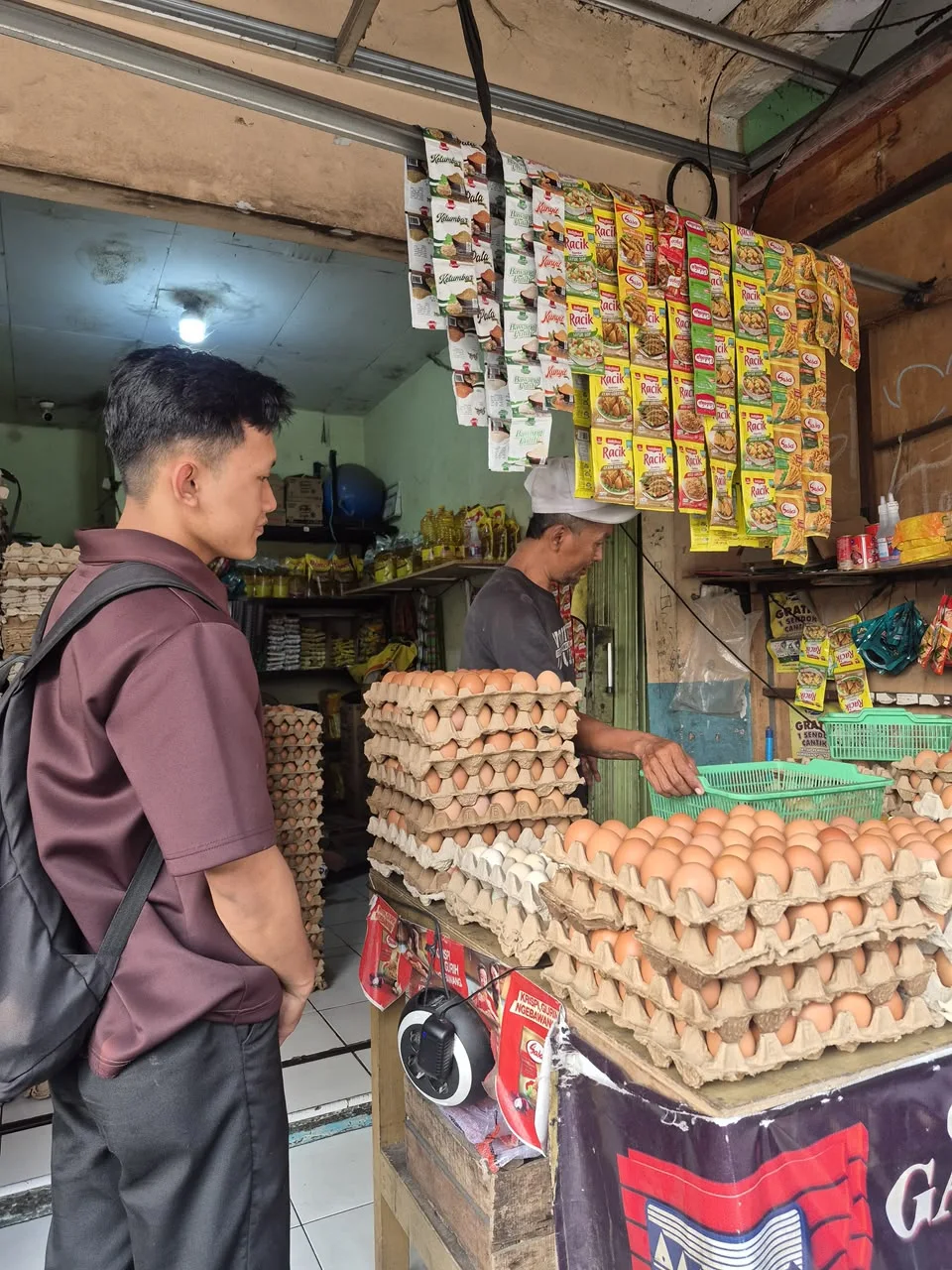
A similar situation is found with Adang, a vendor in Rumpin, who stocks about 4–5 kilograms, while Yeti, a vendor in Tangerang, only keeps about one kilogram of omega eggs.
In Parung Panjang, Abdul chooses to provide one crate of omega eggs to cover sales needs for three to four days.
Unlike other vendors, Anto at Pasar Pocong, Bekasi, stated that his inventory volume can reach approximately 1,000 kilograms over three days, a figure reflecting the disparity in business scale among sellers.
The number of omega egg vendors in the observed markets is also relatively small, ranging from two to four sellers at each location.
This condition shows that omega eggs still occupy a more limited market segment than regular chicken eggs. Vendors tend to adjust inventory to match consumer purchasing patterns so that capital is not tied up in stock for too long.
Different Prices, Relatively Thin Profit Margins
Price differences are a key factor in a consumer's decision to purchase omega eggs.
At Pasar Pocong, Bekasi, omega eggs are sold for around IDR 28,000 per kilogram, while regular chicken eggs are in the range of IDR 26,000 per kilogram.
Meanwhile, based on observations in several other markets, the price of omega eggs ranges from IDR 27,000 to IDR 33,000 per kilogram.
These price differences are influenced by purchase costs from suppliers, competitive conditions, market location, and the purchasing power of the community.
From the vendor's perspective, the profits earned are not always large.
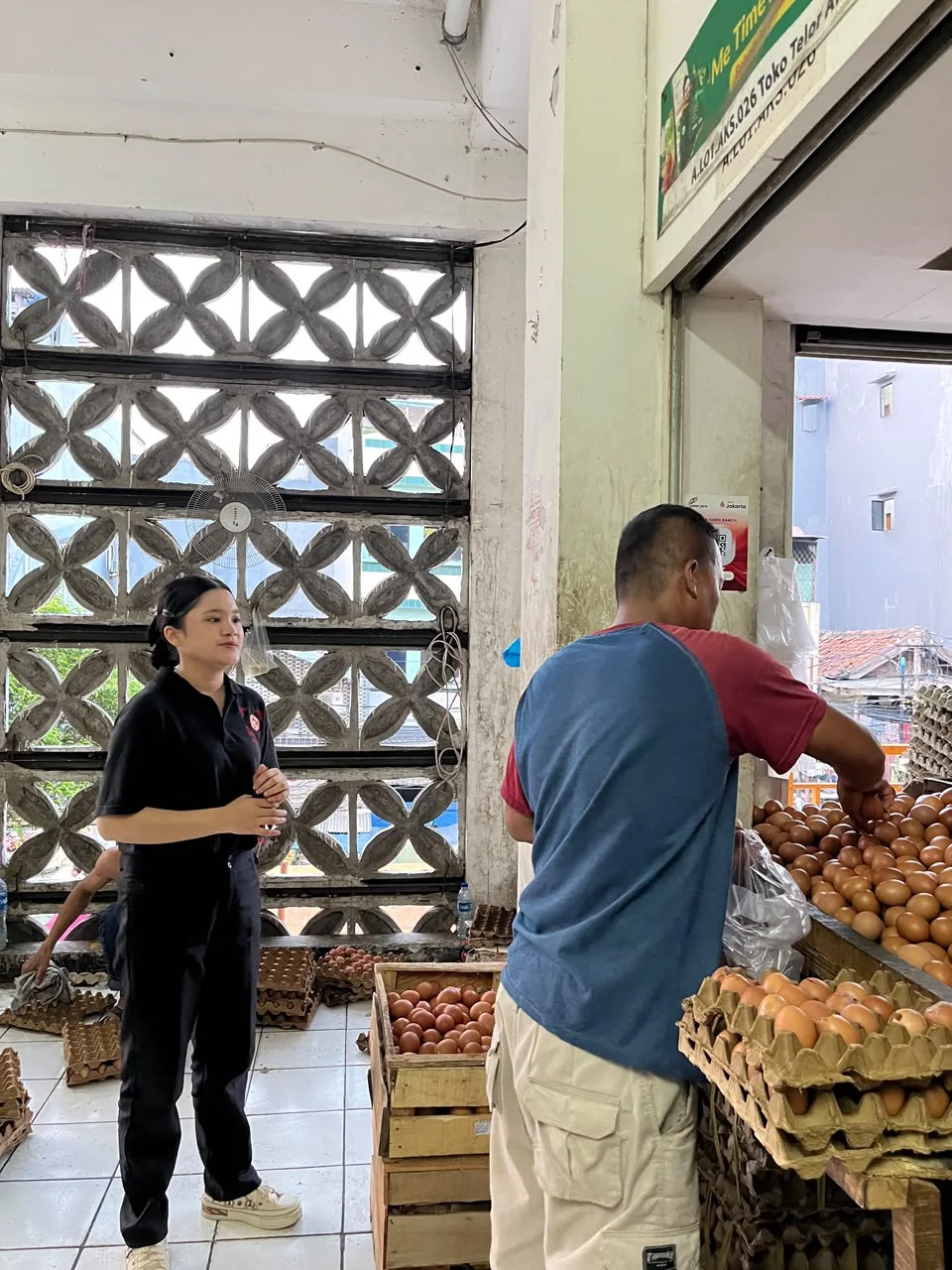
Ani, for example, mentioned that the purchase price for one crate of eggs is IDR 72,000, and the selling price reaches IDR 90,000. Thus, there is a gross price difference of about IDR 18,000 before accounting for operational costs or the risk of damage.
Meanwhile, Abdul and Yanti admitted to taking a sales margin of about IDR 1,000–IDR 2,000 per kilogram.
The relatively small margin forces vendors to ensure that goods are sold before their quality declines.
The ease of obtaining supplies also varies. Vendors who rely on agents, such as Ani, need about two to three days to get additional stock.
Conversely, Anto, who has direct access to several farms, claims it is easier to increase inventory when demand rises.
Buyers Have Choices, Regular Eggs Become an Alternative
Consumers of omega eggs come from various groups, ranging from housewives and families with children to culinary business owners such as cake makers.
Some buyers choose omega eggs because they consider the nutritional content and product characteristics. However, purchasing decisions are still influenced by price and product availability.
When omega eggs are unavailable or the price is considered too high, some consumers choose to switch to regular chicken eggs.
In economics, this condition describes the relationship between two products that can function as substitute goods.
Nevertheless, not all consumers exhibit the same behavior.
Some buyers continue to look for omega eggs elsewhere because they feel the product is more in line with their needs and preferences.
Assessments regarding taste, texture, and perceived benefits are subjective consumer experiences, not conclusions from laboratory testing or clinical research.
Sweet Soy Sauce as a Complementary Good
In addition to substitute goods, egg consumption can also be linked to the concept of complementary goods, or items used together.
One example is sweet soy sauce, which is often a complement to various egg dishes, such as fried eggs and omelets.
Based on price observations, sweet soy sauce in sachets is sold for around IDR 1,000–IDR 2,000, while small bottles of 135–189 milliliters range from IDR 10,000–IDR 12,000.
In economic theory, an increase in the price of a complementary good can affect the consumption patterns of the product used with it.
However, the relationship between the price of soy sauce and the demand for omega eggs cannot be concluded directly without additional data. The influence depends on consumption habits, preferences, and the purchasing power of each household.
No-Return Policy Makes Vendors More Cautious
One of the most frequently cited issues by vendors is the policy regarding returning goods to suppliers.
Not all suppliers are willing to accept eggs that are damaged after being received by the vendor.
Abdul explained that eggs that break or become damaged while at the point of sale are the responsibility of the vendor based on the purchase agreement.
Anto also stated that returning rotten eggs can only be done if the damage is discovered when the goods are received from the supplier.
This means that once the transaction for receiving goods is complete, the vendor must bear the risks that arise during storage and sales.
This situation makes inventory management crucial. Providing too many eggs can increase the risk of unsold goods, while too little inventory can potentially lead to lost sales opportunities.
Therefore, some vendors prefer to make small but frequent purchases rather than keeping large stocks for a long time.
How Vendors Convince Buyers of Egg Quality
Another challenge arises because omega eggs and regular chicken eggs are not always easy to distinguish just by the appearance of the shell.
To help consumers identify the product, vendors use several simple methods.
Ani, for example, shows examples of eggs that have been cracked open and points out the "OMEGA" stamp on the packaging.
Meanwhile, Adang uses a flashlight to check the condition of the inside of the egg without having to break the shell.
Anto chooses to separate omega eggs from regular eggs and labels the storage crates.
These methods assist in the physical inspection and identification process. However, visual inspection alone cannot confirm the omega-3 levels in the eggs. Certainty of nutritional content still requires reliable product information or appropriate testing.
In sales practice, the vendor's explanation regarding the origin of the goods, the condition of the eggs, and the differences in the product is an important part of building buyer trust.
Most vendors also use digital scales to ensure the weight of the goods sold matches the purchase amount.
Feed Prices and Weather Conditions Potentially Affect Supply
The trade of omega eggs cannot be separated from production conditions at the farm level.
Corn is one of the main ingredients in layer hen feed. When corn production is disrupted due to weather conditions or other agricultural factors, feed costs have the potential to increase.
This increase in production costs can affect the price of eggs offered by farmers or suppliers to market vendors.
In addition to production factors, demand for eggs from various sectors also needs to be considered, including household needs, the food industry, and nutritious food provision programs.
The Free Nutritious Meal Program is one factor that has the potential to affect national egg requirements. However, the direct influence of this program on the availability of omega eggs at the research locations could not be confirmed based on the interviews conducted.
For vendors, changes in prices from suppliers are a consideration before determining purchase quantities and selling prices to consumers.
Consumer Trust Determines Business Continuity
Findings from several traditional markets in Greater Jakarta show that the trade of omega eggs has different characteristics compared to regular chicken eggs.
Relatively higher prices, a limited number of buyers, and the risk of damage without a guarantee of return make vendors have to be more careful in determining inventory.
From an economic perspective, supply decisions are not only influenced by selling prices but also by purchase costs, ease of obtaining supplies, demand forecasts, and the risks that the seller must bear.
Meanwhile, from the consumer side, price and preferences for product quality are factors that influence purchasing decisions.
Trust is an important element in bringing these two interests together. Vendors need to provide clear product information, ensure the condition of the goods remains good, and maintain relationships with customers.
Ultimately, the success of omega egg sales is not solely determined by the size of the inventory, but also by the vendor's ability to manage risk and understand market needs.
These findings describe the experiences of respondents in several traditional markets in Greater Jakarta and are not intended to represent all omega egg vendors in the region.



Comments 0
Write a Comment Share your response