


SURABAYA, JurnalPost.com — Efforts to improve awareness of women's health do not always have to start in hospitals or healthcare facilities. Within the community, health volunteers hold a strategic position to disseminate information, build awareness, and encourage women to be more attentive to changes in their bodies.
This role is a key focus for the Faculty of Medicine at Nahdlatul Ulama University Surabaya (FK UNUSA) through a community service program held in Wonocolo District, Surabaya.
Held at the Wonocolo District Hall, the event titled “Transforming Health Literacy Through the Formation of Breast Cancer Support Groups Among Community Volunteers” was attended by 48 health volunteers from five sub-districts: Bendul Merisi, Jemur Wonosari, Margorejo, Sidosermo, and Siwalankerto.
The event, which took place from 09.00 to 12.00 WIB, was chaired by Dr. Aditya Bhayusakti, Sp.B, FINACS.
The volunteers received education on breast cancer, warning signs to watch for, the importance of recognizing normal breast conditions, and how to perform breast self-examinations (SADARI).
Recognizing Changes Early
Breast cancer occurs when cells in breast tissue grow uncontrollably. One sign that may be detected is the appearance of a lump or thickening in the breast.
However, not every lump indicates cancer.
Changes in breast size or shape, changes to the skin surface, the appearance of dimples or puckering, inverted nipples, and unusual nipple discharge are also conditions that require attention.
Awareness of these changes is the foundation of early detection.
One of the primary topics introduced to the volunteers was SADARI. This simple examination aims to help women recognize their normal breast condition so that new changes can be identified more quickly.
SADARI is recommended to be performed routinely every month. For women who still menstruate, the examination is generally performed around day 7 to day 10 after the first day of menstruation. Meanwhile, women who have reached menopause can choose the same date each month to ensure the examination is performed consistently.
SADARI Starts with Looking and Feeling
In practice, SADARI can begin by observing the condition of the breasts in front of a mirror.
Women can check for changes in breast shape or size, changes in skin color or texture, the appearance of dimples or wrinkles, and changes in nipple position.
The next stage involves palpating the entire breast area systematically to determine if there are any lumps or thickenings that were not previously felt.
The underarm area should also be checked.
The examination can be performed while standing or lying down. The lying position can help breast tissue spread more evenly, making some areas easier to palpate.
During this activity, participants not only received theoretical explanations but also engaged in hands-on practice regarding the steps of SADARI.
This approach was taken so that volunteers would not just learn terms or concepts, but truly understand the examination steps so they can pass this information on to women in their respective neighborhoods.
Volunteers as Bridges for Health Information
The participants' enthusiasm was evident from their involvement throughout the event.
Volunteers actively followed the material, participated in discussions, asked questions, and practiced the SADARI steps. This interaction demonstrated that health education becomes more meaningful when participants are not just listeners, but are involved in the learning process.
Selecting volunteers as participants also serves a long-term goal.
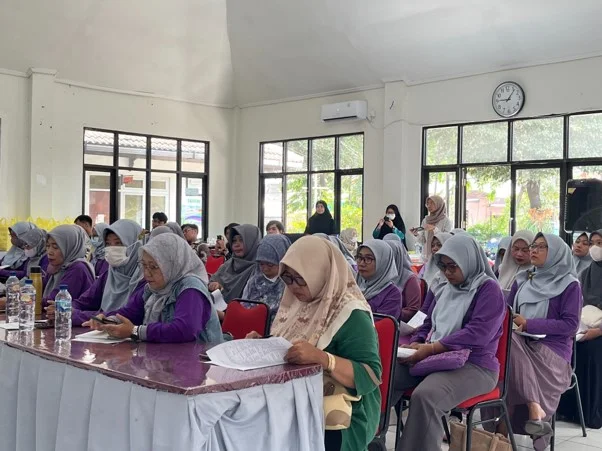
Volunteers are part of the community and have close ties to families and their local environment. They understand the character of the people around them and have communication channels that are often more accessible than formal approaches through healthcare facilities.
This position can be a strength in expanding breast health literacy.
Knowledge received by one volunteer can be passed on to family, neighbors, women's groups, and the wider community.
Finding a Lump Does Not Mean It Is Automatically Cancer
One important message that the public needs to understand is not to immediately jump to a diagnosis when finding changes in the breast.
If a lump, change in shape, change in skin or nipple, or unusual discharge is found during SADARI, the recommended step is to consult a healthcare professional.
Further examination is needed to determine the cause of these changes.
Healthcare professionals can perform a Clinical Breast Examination (SADANIS). If necessary, the examination can be continued using methods such as ultrasound (USG), mammography, or tissue examination (biopsy) according to medical indications.
Thus, the goal of SADARI is not for someone to self-diagnose cancer, but to help recognize changes early and encourage professional examination when something unusual is found.
Support Groups to Strengthen Assistance
In addition to education on SADARI, this activity was also directed toward the formation of support groups for breast cancer at the community volunteer level.
FK UNUSA aims to encourage the creation of an environment that not only has knowledge about breast cancer but also cares for women facing these health issues.
Support groups can serve as a space to share information, experiences, and encouragement, while also encouraging the community to be more open about discussing breast health.
The existence of social support is important because health issues are not always just about physical conditions. Anxiety, fear, or reluctance to undergo examinations can affect a person's decision to seek help.
Volunteers who understand this situation are expected to act as a bridge between the community and healthcare facilities.
From 48 Volunteers, Information Is Expected to Reach More Women
The success of health education is not measured only by how much material participants understood during the event.
A greater impact can emerge when that knowledge is taken home, discussed again, and applied within the community.
The 48 volunteers who participated in the Wonocolo event are expected to be the starting point for spreading information about breast cancer more widely.
When one volunteer shares knowledge with their family and surrounding environment, a single educational activity can reach more people than the number of participants present in the room.
FK UNUSA hopes that this volunteer-based approach can encourage the community to become more aware of breast health, be more sensitive when finding changes in their bodies, and not delay examinations when there are signs that need to be consulted.
At the same time, the community is expected to be able to provide better support to women who need examinations or are undergoing treatment.
Efforts to improve public health literacy are also in line with the Sustainable Development Goals (SDGs) Goal 3: Good Health and Well-being.
Through SADARI education and the formation of support groups at the volunteer level, this activity supports efforts for the prevention and early detection of non-communicable diseases, including breast cancer, through an approach that is closer to the community.
Ultimately, simple knowledge passed on consistently can have a greater impact.
From informed volunteers, it is hoped that a society will emerge that is more aware, more caring, and more courageous in taking action when finding changes in their breast health.









Comments 0
Write a Comment Share your response