


Bad weather, supply disruptions from producing regions, and competition from online shopping are challenges for shallot traders in traditional markets across Greater Jakarta (Jabodetabek). Despite price fluctuations, the public continues to buy because shallots are a primary kitchen staple.
Reporter: Group 2 Team, Pamulang University Students
JAKARTA, JurnalPost.com — Shallot prices in several traditional markets across the Jakarta, Bogor, Depok, Tangerang, and Bekasi (Jabodetabek) area are experiencing fluctuations. Amid price changes influenced by weather conditions and supply, public demand for this commodity remains resilient.
Field observations and interviews conducted by Pamulang University students show that shallot prices in several markets range from IDR 30,000 to IDR 50,000 per kilogram. One trader even reported that the price of the commodity reached IDR 65,000 per kilogram the previous month.
This condition was found in several markets, including Pondok Labu, Ciputat, Cimanggis, Lenteng Agung, and Kelapa Gading. Each market has different selling prices, depending on the quality of the shallots, supply availability, and local trading conditions.
Data from Bank Indonesia's Strategic Food Price Information Center (PIHPS), compiled in this report, shows that the price of medium-sized shallots in Jakarta's traditional markets was IDR 37,950 per kilogram on September 9, 2026.
Although prices have shown a downward trend, traders believe this condition may not last long. Changes in weather, distribution, and demand levels can affect prices again in a short time.
These findings were obtained through interviews with five traditional market traders and one consumer, supplemented by price data and a literature review on shallot demand behavior.
Shallot Prices Vary by Market
At Pondok Labu Market, South Jakarta, a trader named Erik Irwandi sells shallots for IDR 45,000 to IDR 50,000 per kilogram.
Erik revealed that the price previously soared to IDR 65,000 per kilogram due to limited supply from producing regions on the island of Java.
Meanwhile, at Ciputat Market, a trader named Bang Idrus offers shallots based on size. Large shallots are sold for IDR 40,000 per kilogram, while small ones are IDR 35,000 per kilogram.
These prices have increased compared to the previous month, when large shallots were still sold for IDR 35,000 and small ones for IDR 30,000 per kilogram.
A different situation was found at Cimanggis Market. A trader named Sarip mentioned that the price of shallots actually dropped from IDR 40,000 to IDR 30,000 per kilogram.

At Lenteng Agung Market, a trader named Pujiati sells shallots for around IDR 40,000 per kilogram, slightly lower than the previous period.
Meanwhile, at Kelapa Gading Market, a trader named Nila noted that shallot prices are in the range of IDR 44,000 to IDR 50,000 per kilogram and tend to be rising.
According to Nila, prices can change almost every day. These changes are influenced by the type and quality of the shallots, weather conditions, and the prevailing prices at the Kramat Jati Central Market.
Price differences are also visible in records from previous periods. In April 2026, the price of shallots at Pasar Minggu was recorded at IDR 50,000 per kilogram. Meanwhile, in February 2026, prices at Pasar Rumput reached IDR 55,000 to IDR 65,000 per kilogram.
Bad Weather and Supply Disruptions Affect Prices
Weather is one of the factors most frequently cited by traders as the cause of rising shallot prices.
High rainfall can disrupt the planting process, increase the risk of pest attacks, and reduce yields in production centers. This condition affects the amount of shallots available in the market.
In addition to production issues, distribution obstacles from producing regions to central markets can also cause delays in the delivery of goods.
Several traders mentioned that supply from Brebes, Central Java, is an important factor in maintaining the availability of shallots in Jabodetabek traditional markets.
When shipments from that region decrease, traders must adjust their stock purchases and selling prices to consumers.
Seasonal factors also influence price movements. Approaching Ramadan, Eid al-Fitr, and Eid al-Adha, public demand for various food ingredients, including shallots, generally increases.
In certain conditions, an increase in demand that is not matched by supply can push prices higher.
On the production side, the high cost of seeds is also a problem for farmers. This condition can affect farmers' decisions in determining which commodities to plant.
Prices Rise, Buyers Reduce Shopping Amounts
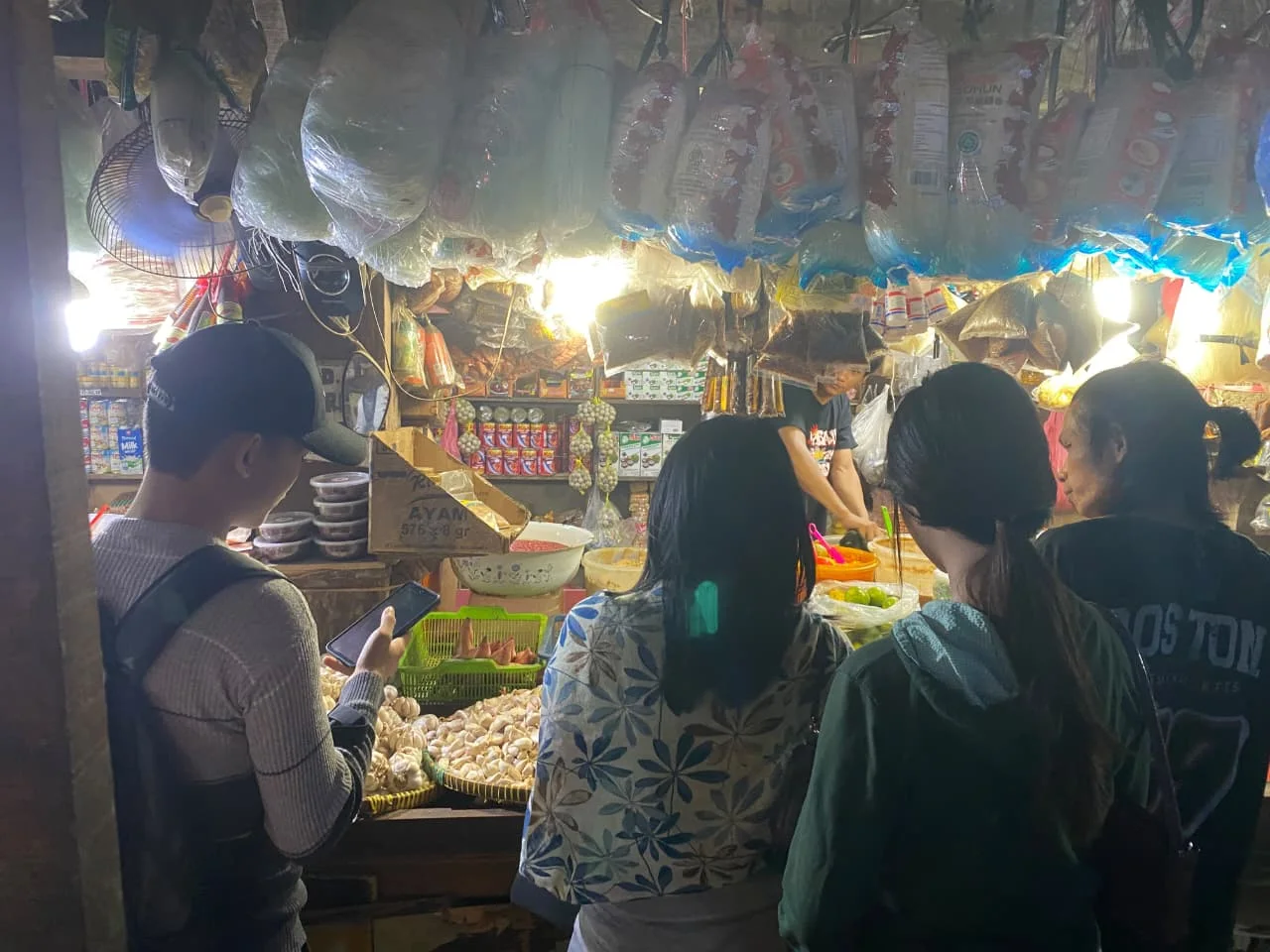
Shallot price fluctuations not only impact traders but also affect people's shopping habits.
Traders revealed that when prices rise sharply, some consumers choose to reduce the amount they purchase.
Buyers who usually buy one kilogram of shallots may adjust their shopping to half a kilogram or buy according to their daily needs.
For traders, this condition affects capital turnover. Higher purchase prices from suppliers force them to spend more capital, while the volume of consumer purchases tends to decline.
However, price increases do not necessarily make people stop buying shallots.
One consumer and business owner, Ros, admitted that she still buys about one kilogram of shallots every week through two separate purchases.
According to her, the price of IDR 45,000 per kilogram is already expensive. However, shallots must still be bought because they are an essential ingredient in daily cooking.
She chooses to adjust the amount of her purchase rather than replace shallots with other ingredients.
In fact, when prices exceed IDR 50,000 per kilogram approaching Ramadan or Eid, the need for shallots is still difficult to avoid.
This behavior illustrates a relatively inelastic demand trend. This means that price increases do not always lead to a decrease in the amount of purchases in the same proportion.
Even so, the exact level of demand elasticity still requires measurement using broader price and purchase volume data.
Brebes Shallots Remain the Traders' Choice
Shallots from Brebes, Central Java, are one of the types frequently mentioned in field interviews.
A number of traders and consumers consider Brebes shallots to have good quality, relatively large sizes, and characteristics that suit cooking needs.
Besides Brebes, shallot supplies in several markets also come from Wonogiri, Dieng, and Sukabumi.
The distribution chain generally starts from farmers in production centers. The harvest is then sent to wholesalers or distributors before entering the central market.
From the central market, shallots are distributed to retail traders and subsequently sold to household consumers and culinary business owners.
In field interviews, traders at Pondok Labu, Cimanggis, and Kelapa Gading markets mentioned that the stock managed ranges from 10 to 25 kilograms per day.
Meanwhile, traders at Ciputat Market noted a stock requirement of about 50 to 70 kilograms per week.
This amount is not always fixed because traders adjust it based on purchase prices, market conditions, and demand forecasts.
When prices are relatively cheap, traders tend to increase stock. Conversely, when prices rise, stock purchases are made more cautiously to reduce the risk of loss.
Risk of Rotten Shallots Adds to Traders' Burden
In addition to facing price changes, shallot traders must also pay attention to the quality of goods during storage.
Shallots are a commodity prone to quality degradation, especially if stored in damp conditions or with poor air circulation.
During the rainy season, the risk of damage becomes even greater because air humidity increases.
A number of traders overcome this problem by spreading shallots in a dry place with adequate air circulation.
Storage also needs to pay attention to the condition of the shallots so they do not become too damp and rot.
Shallots that begin to decline in quality are sometimes processed into peeled shallots, ground spices, or fried shallots as long as they are still fit for consumption.
This method is one of the traders' efforts to reduce losses due to goods that cannot be sold in fresh condition.
Online Shopping Competition Starting to Be Felt
The challenges for traditional market traders do not only come from price and supply changes. The development of digital commerce is also starting to affect business competition.
A trader at Lenteng Agung Market admitted to feeling a change in the number of buyers as there are more shopping options through online platforms.
According to their observations, cheaper price offers on platforms like TikTok Shop are one of the attractions for some consumers.
This change in shopping habits is considered an additional challenge for traditional traders, especially those who still rely on direct transactions in the market.
However, these interview findings are not enough to conclude that online shopping is the main cause of the decline in market visitors.
Factors such as price, location, convenience, and people's purchasing power can also influence consumer decisions in choosing where to shop.
On the other hand, fresh shallots still have their own market because consumers can see the quality, size, and condition of the goods directly before buying.
Ground Shallots Become an Alternative, but Have Not Fully Replaced Fresh Ones
Amid price fluctuations, some consumers are starting to consider using more practical alternative ingredients.
One of them is ground shallots, which in field observations were said to be sold for around IDR 30,000 per kilogram.
Ground shallots offer convenience because they can be used directly as a cooking spice without needing to be peeled and ground again.
However, some consumers still prefer fresh shallots because they can determine the quality and amount of ingredients used themselves.
Shallots are also often bought together with garlic and other kitchen necessities.
Traders at Pondok Labu and Lenteng Agung markets observed that price changes for both commodities do not always move in the same direction.
In one observation, garlic was sold for IDR 48,000 per kilogram when the price of shallots was at IDR 40,000 per kilogram.
Because both ingredients are often used together, an increase in the price of one can still increase household spending on kitchen spices.
Price Stabilization and Consumer Information Needs
Efforts to maintain food price stability are important, especially when price increases begin to affect people's purchasing power.
Local governments and related agencies have a role in monitoring supply availability, smoothing distribution, and organizing affordable food programs.
In the research material, the DKI Jakarta Provincial Government through the Food, Marine, and Agriculture Security Agency (KPKP) is mentioned as coordinating with Perumda Pasar Jaya regarding the implementation of low-cost markets.
Programs of this kind aim to help the public obtain food ingredients at more affordable prices while simultaneously dampening the pressure of price increases.
However, one consumer interviewed admitted that they did not know much about the program.
This shows the importance of disseminating information so that the public can know the location, schedule, and types of food ingredients available through price stabilization programs.
Demand Remains Amid Price Uncertainty
Observations in several Jabodetabek traditional markets show that shallots remain a necessity that is difficult for the public to abandon.
Although prices move up and down, consumers tend to adjust the amount of their shopping rather than stop purchasing entirely.
For traders, price changes are a challenge in themselves because they affect capital requirements, stock management, and business profits.
Meanwhile, for consumers, price increases require them to manage household expenses more carefully.
This condition shows that shallot price stability is not only related to the amount of production but is also influenced by the smoothness of distribution, weather conditions, consumption patterns, and people's ability to meet daily needs.
Therefore, strengthening supply from producing regions, better distribution management, and price information transparency are important to maintain market balance.
As long as shallots remain a primary ingredient in various Indonesian dishes, demand is expected to remain steady. However, price changes will continue to be a concern for both traders and consumers.



Comments 0
Write a Comment Share your response