

JurnalPost.com - Food is a basic human necessity that must be available in sufficient quantities, possess high quality, and be safe for consumption. As the population grows, the demand for food in Indonesia continues to rise. This condition necessitates a food management system capable of maintaining the availability of food supplies while ensuring their quality until they reach the consumer.
However, efforts to meet food needs still face various challenges. One of these is the spoilage of food products after harvest. Fruits, vegetables, and various other agricultural products have characteristics that make them prone to quality degradation if not handled properly.
Such damage can occur during storage, transportation, or the distribution process. Consequently, some food products that have been produced at the expense of time, labor, and costs cannot be utilized optimally.
On the other hand, climate change, limited agricultural land, and uneven distribution of storage facilities continue to place pressure on the national food system.
In addressing these issues, food technology plays a vital role. Through the application of appropriate processing, preservation, storage, and packaging methods, food technology can help maintain product quality, extend shelf life, and reduce food loss and waste.
The Challenge of Post-Harvest Food Spoilage in Indonesia
Food spoilage after harvest is a problem that still requires serious attention. Harvested agricultural products cannot always be immediately marketed or consumed because they must go through a series of stages, ranging from collection and sorting to storage and distribution.
Each of these stages carries a risk of quality degradation, especially if the handling process is not carried out optimally.
Fresh fruits and vegetables, for example, continue to undergo physiological activity after being harvested. This process can cause changes in color, texture, aroma, and freshness levels. If storage conditions are not appropriate, spoilage can occur more rapidly.
This problem can lead to economic losses for both farmers and traders. Farmers risk losing a portion of their harvest value, while traders face the risk of losses when products no longer meet the quality standards expected by consumers.
In fact, every piece of wasted food has already required various resources to produce, including water, land, energy, labor, and operational costs.
Therefore, reducing food loss or food loss is an important step in increasing the efficiency of the food system.
Another issue that also needs attention is the dependence on a few primary food commodities. Indonesia has diverse food sources, but their utilization has not yet fully developed evenly.
Various local commodities, such as cassava, sago, and sorghum, still have great potential to be developed into value-added alternative food products.
Limited Storage and the Impact of Climate Change
One factor influencing the high risk of food spoilage is the limitation of post-harvest technology and storage facilities.
Not all farmers have access to adequate storage facilities. As a result, perishable agricultural products often have to be sold immediately even if market conditions are not necessarily favorable.
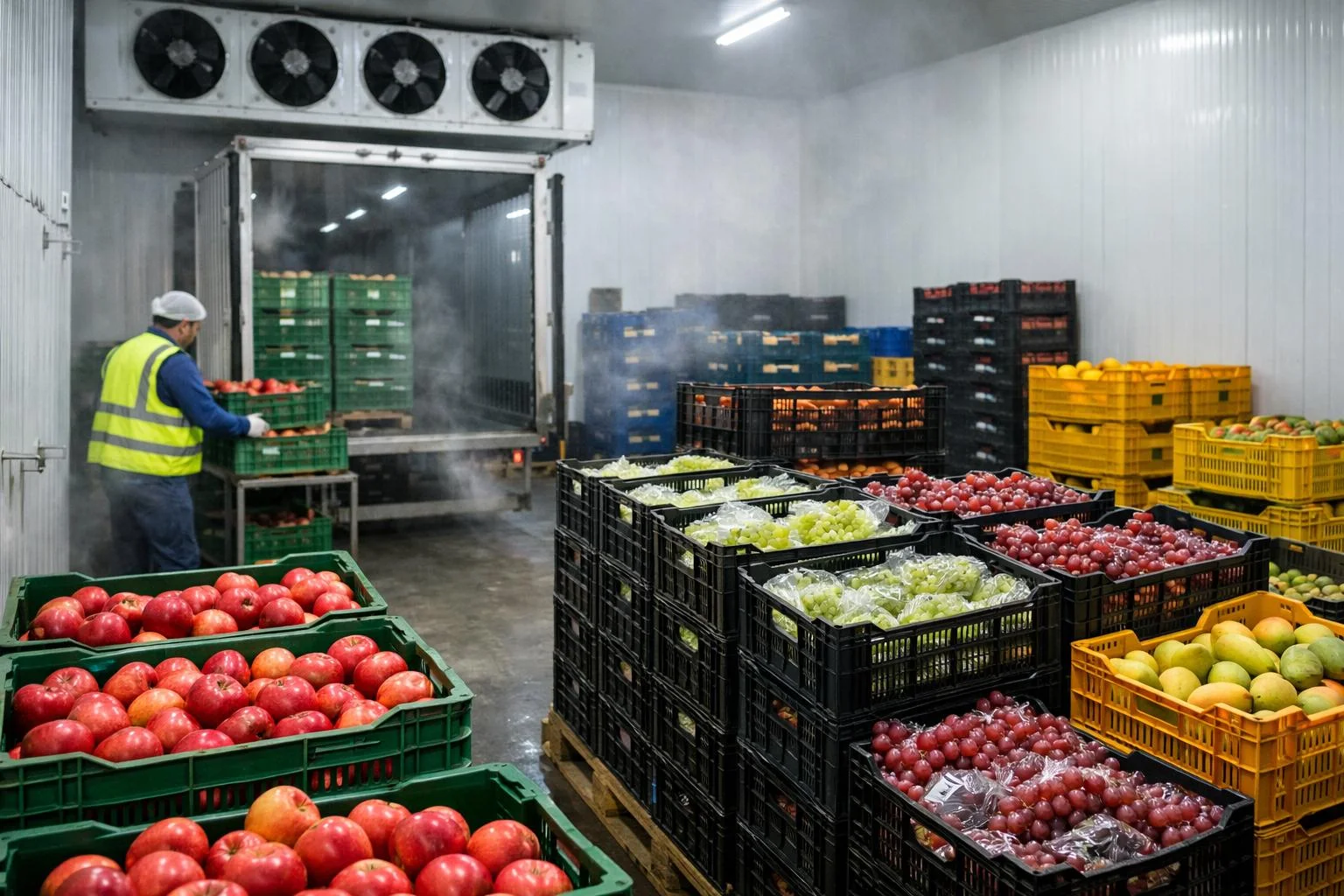
The limitation of cold chain facilities or cold chain is also a challenge, especially in the distribution of products that require temperature control.
A cold chain is a storage and transportation system designed to maintain product temperatures according to their characteristics. This system is essential for various perishable food items, including certain horticultural products, meat, fish, and dairy.
If storage temperatures are not maintained, quality degradation can occur more quickly. Under certain conditions, improper handling can also increase the risk of microorganism growth that endangers food safety.
In addition to storage issues, climate change affects the sustainability of food production. Droughts, floods, changing rainfall patterns, and extreme weather conditions can disrupt agricultural activities and affect both the quantity and quality of harvests.
This situation indicates that increasing food production alone is not enough. A handling and processing system capable of maintaining agricultural products so they can be utilized to the maximum is also required.
Processing Technology to Extend Food Shelf Life
The application of food technology is one approach that can be taken to reduce the spoilage of agricultural products.
One method widely used is drying. This technology works by reducing the moisture content in food so that the activity of microorganisms and a number of reactions causing spoilage can be controlled.
An example is the processing of cassava into flour. Through the right processing stages, cassava can be transformed into a product that is more practical to store, easy to distribute, and can be utilized as a raw material for various types of food.
Besides drying, preservation technology can also be carried out through fermentation, cooling, freezing, and the use of packaging that is appropriate for the product's characteristics.
One approach that continues to be developed in the field of food technology is biopreservation.
Biopreservation is a preservation method that utilizes specific microorganisms or natural antimicrobial compounds to help inhibit the growth of unwanted microorganisms.
The application of this method needs to be adjusted to the characteristics of the food and must still consider aspects of safety and effectiveness.
Packaging technology also has an important function. Appropriate packaging can help protect food from contamination, excessive humidity, and environmental influences that have the potential to accelerate spoilage.
With the selection of appropriate processing and storage methods, agricultural products can have higher utility value and the risk of food loss can be minimized.
The Importance of Maintaining Food Safety for Consumers
In addition to maintaining availability, food technology also plays a role in maintaining the safety of food consumed by the public.
Food security and food safety are two things that are interrelated but have different focuses.
Food security relates to the availability, access, utilization, and stability of food supplies. Meanwhile, food safety focuses on efforts to prevent food from being contaminated by biological, chemical, or physical hazards that can harm consumer health.
Food that looks fresh is not necessarily completely safe if the production, handling, and storage processes do not meet hygiene and sanitation requirements.
Therefore, the application of food safety principles must be carried out from the stage of selecting raw materials until the product is distributed.
The use of clean equipment, temperature control, selection of appropriate packaging, and monitoring for contamination are important parts of this process.
In the food industry, safety control can also be carried out through the application of good processed food production practices and hazard control systems according to the needs and scale of the business.
Thus, food technology does not only aim to make products last longer, but also helps ensure that the food produced remains safe and fit for consumption.
Local Food Diversification to Support Food Security
Indonesia has diverse local food sources that can be utilized as alternatives to meet the needs of the community.
Cassava, sago, and sorghum are some examples of commodities that have the potential to be developed through the application of food processing technology.
Cassava can be processed into flour, chips, and various other food products. Sago can be used as a base for noodles or traditional food products, while sorghum has the potential to be developed into flour, snacks, and various processed products.
The development of these various commodities can increase the food choices of the community while reducing dependence on a single type of food.
Food diversification can also provide economic benefits for farmers and business actors. Agricultural products that were previously only sold in raw form can be processed into products with higher added value.
However, the development of local food products needs to consider nutritional content, material characteristics, consumer acceptance, production efficiency, and market feasibility.
Through continuous research and innovation, local food has the potential to become an important part of strengthening the national food system.
Collaboration between Government, Universities, and Industry
The application of food technology cannot be carried out by one party alone. Cooperation between the government, farmers, universities, industry, and the community is needed so that innovation can be applied more broadly.
The government has a role in supporting the development of post-harvest infrastructure, providing training, and expanding access to processing and storage technology.
Universities can contribute through research oriented toward real problems in the community.
Such research can include the development of preservation methods, product quality improvement, packaging innovation, and the utilization of local food ingredients that have not been processed optimally.
Meanwhile, the food industry has the opportunity to develop research results into products that are in accordance with consumer needs and have competitiveness in the market.
The involvement of farmers and micro, small, and medium enterprises is also very important because they are part of the food production and distribution chain.
Through continuous collaboration, food technology does not only develop as a result of laboratory research, but can also be applied in daily production and processing activities.
Building a Safer and More Sustainable Food System
Food technology has a strategic role in supporting national food security and safety. Through appropriate processing, preservation, storage, and packaging, food spoilage can be reduced so that agricultural products can be utilized more optimally.
The development of local food sources is also an important step in creating a more diverse food system that does not depend on specific commodities.
However, technological progress needs to be balanced with the improvement of facilities, public knowledge, the application of food safety standards, and sustainable policy support.
Ultimately, maintaining food security is not just a matter of producing food in large quantities, but also how the quality of that food can be maintained, distributed efficiently, and consumed safely.
With the use of appropriate food technology and the cooperation of various parties, Indonesia has the opportunity to build a food system that is more efficient, safe, high-quality, and sustainable for future generations.








Comments 0
Write a Comment Share your response