


Teluk Wondama, JurnalPost.com — The University of Indonesia (UI) Patriot Expedition Team 18 held a Focus Group Discussion (FGD) to discuss strengthening connectivity and developing the potential of the Werianggi transmigration area in Teluk Wondama Regency, West Papua. The event took place at the Sasana Karya Building on Friday (10/2/2026).
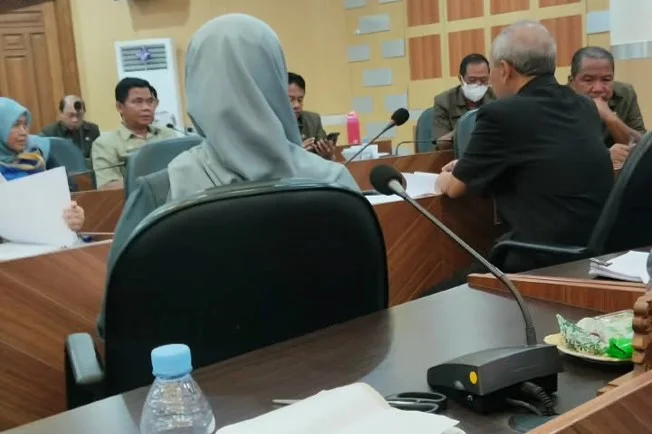
The discussion brought together local government officials, relevant agencies, and farmer representatives from both the transmigration community and local Werianggi residents. The meeting served as a platform to identify connectivity issues, explore local commodity potential, and discuss opportunities for community economic development.
Deputy Regent of Teluk Wondama, Anthonius Alex Marani, S.IP., Kp., attended the event alongside representatives from the Department of Transmigration, Department of Transportation, Department of Agriculture, Department of Public Works and Spatial Planning (PUPR), the Wasior Port Authority (UPP), police, military, and local farmer groups.
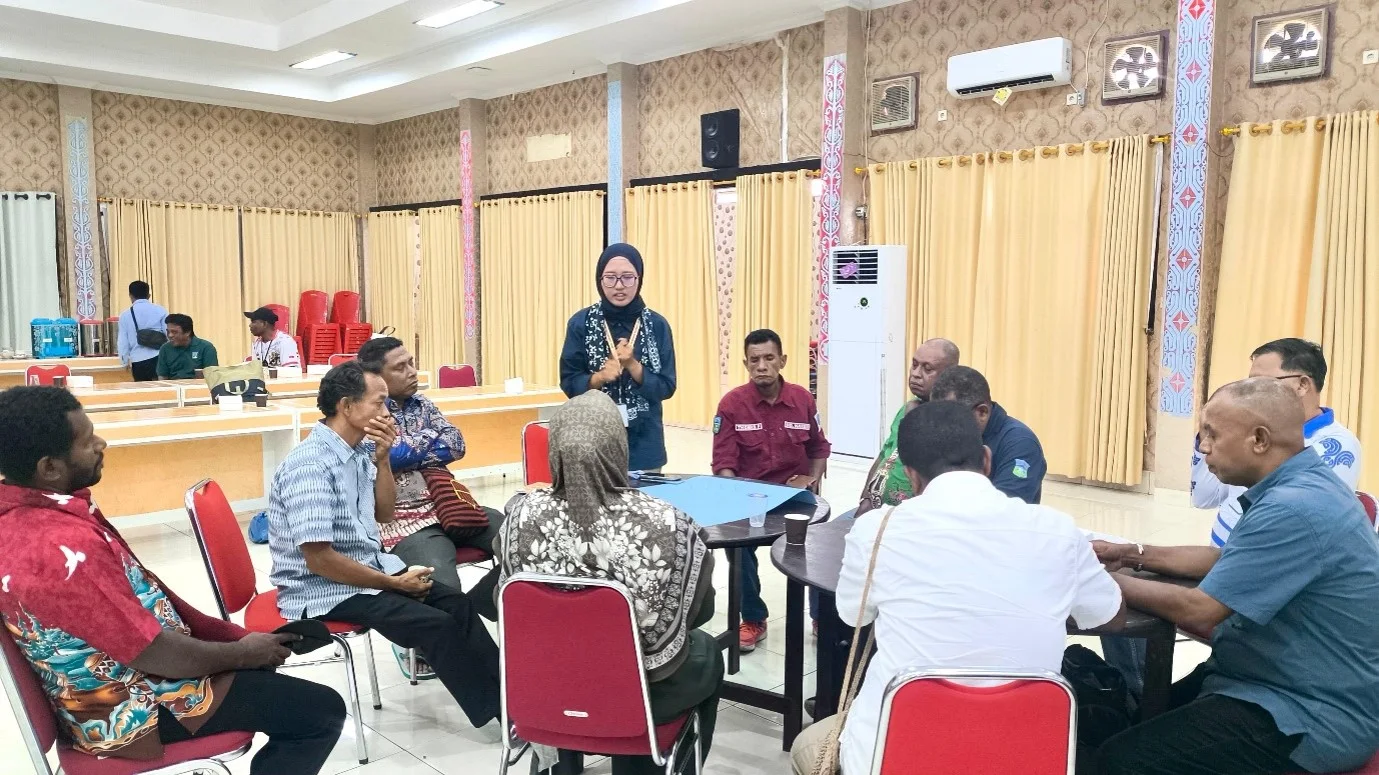
This FGD follows up on data collection activities previously conducted by the UI Patriot Expedition Team 18 through interviews and mapping of community conditions in the research area.
Based on field observations and analysis, the team identified local commodities with development potential. However, this development still faces several challenges, particularly regarding the distribution of produce and the connectivity between agricultural zones, transport routes, and market access.
These findings were discussed with the government and the community to gather input and align research results with the daily realities faced by residents.
Three Focus Areas of the FGD
During the session, the UI Patriot Expedition Team 18 divided the discussion into three main themes: commodity strengthening, logistics and connectivity, and institutional governance of the area.
The first theme focused on the potential commodities produced by the Werianggi community. Discussions covered opportunities for increasing production, the need to develop flagship commodities, and efforts to expand market access for agricultural products.
The second theme addressed logistics and transport connectivity. The discussion focused on linking production centers with road networks, the Windesi Port, and sea transport services that facilitate the distribution of goods to target regions.
Meanwhile, the third theme highlighted institutional and governance aspects. This included the division of roles and coordination between the local government, the community, port management, and other stakeholders to support a sustainable distribution system.
Through this thematic division, participants were able to share perspectives based on their respective experiences and areas of authority.
Farmers, for instance, had the opportunity to explain production conditions, obstacles in transporting agricultural goods, and the needs they face in reaching markets.
On the other hand, government agencies provided explanations regarding policies, infrastructure availability, transport services, and potential program support relevant to the area's needs.
Promoting Integrated Regional Development
The UI Patriot Expedition Team 18 is led by Prof. Dr. Dewi Susiloningtyas, S.Si., M.Si., with members Amanda Damayanti Wibowo, S.Si., Amelia Insan Pratiwi, S.Si., Fashihatul Lisaniyah, S.Hum., Iskandar, S.Pi., M.Si., and Muh Imadudin Burhanuddin, S.Tr.Li.
Through this activity, the team aims to examine the connectivity of the transmigration area more comprehensively. Accessibility issues are viewed not only in terms of road availability or port facilities but also through the relationship between commodity potential, logistics systems, and inter-institutional coordination.
This approach is considered essential because increased agricultural production must be balanced with an adequate distribution system to ensure that community produce can reach markets more effectively.
Furthermore, community involvement in the discussion process is a crucial step to ensure that the needs and constraints identified through research align with actual conditions on the ground.
The results of the FGD are expected to serve as a basis for drafting a more integrated development model for the Werianggi transmigration area, particularly in strengthening the links between production centers, transport infrastructure, and marketing networks.
With improved connectivity and better coordination among stakeholders, the economic potential of the Werianggi area is expected to grow, providing benefits to both the transmigration community and local residents in Teluk Wondama Regency.



Comments 0
Write a Comment Share your response