


Surabaya, JurnalPost.com — Three lecturers from the Faculty of Law at the Universitas Pembangunan Nasional (UPN) “Veteran” East Java, along with several students, provided education on bullying prevention to students at SD Miftahul Ulum, Rungkut Tengah, Surabaya, on Friday, September 25, 2026.
The Community Service (PKM) activity, titled “Anti-Bullying Socialization,” featured Nur Persmawati Sahar Putri, S.H., M.H., Veronica Cynthia Wibowo, S.H., M.H., and Dinda Bhawika Wimala Pastika, S.H., M.H. as speakers.
During the event, students were introduced to various forms of bullying, the potential impact on victims and the school environment, and the steps they can take when experiencing or witnessing such actions.
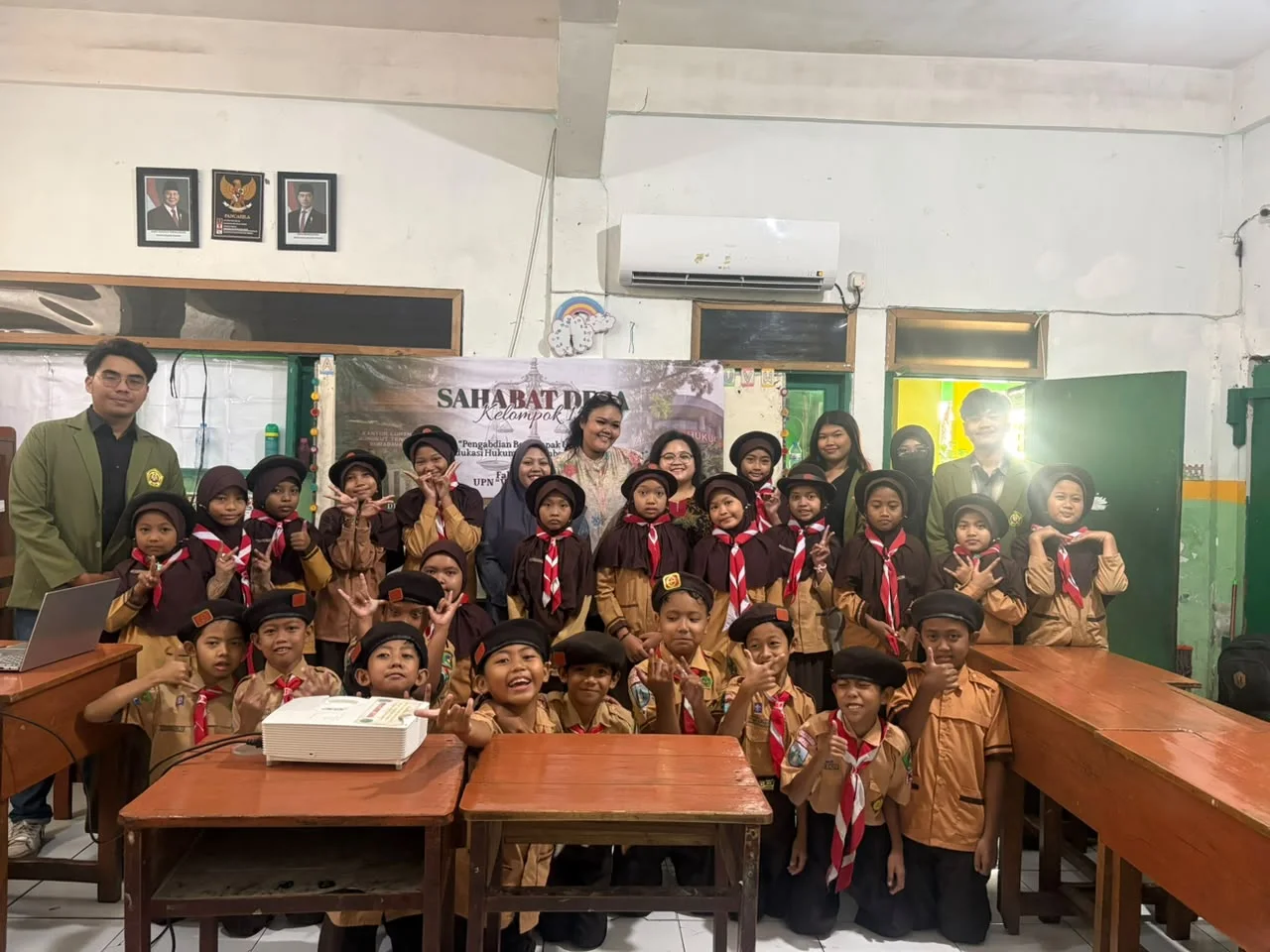
In addition to the lecturers, four students from the UPN “Veteran” East Java Faculty of Law participated: Ahmad Alexander Firdaus Titihalawa, Tiara Nur Cahyani, Mada Yasir Sidiq, and Yeslar Manda Natalia Manalu.
The four students are currently completing an internship at the Rungkut Tengah sub-district office. Their involvement is part of a collaboration between the university, students, local government, and the school to provide legal education to the community, particularly primary school-aged children.
Introducing Bullying Through Everyday Situations
The socialization material was designed using an approach that is simple and relatable to the students' daily lives. Beyond explanations from the lecturers, students were given examples of behaviors that can be categorized as bullying within the school environment and daily social interactions.
This approach was used so that students would not only recognize the term bullying but also understand the types of behavior that have the potential to hurt or harm others.
Students were introduced to verbal bullying and specific behaviors that can make peers feel pressured, afraid, or uncomfortable.
One of the topics discussed was the boundary between joking and actions that can hurt others. Students were encouraged to understand that something considered a joke by one person may not be received as such by the target.
This understanding is considered important because bullying among children often starts from habits of teasing, name-calling, ostracizing, or performing certain actions that are dismissed as just joking.
Education Packaged Through Games
To make the material easier to grasp, the activity was also packaged through games and direct interaction with the students.
Through this method, students were invited to identify situations that could be categorized as bullying while determining the appropriate response when facing similar incidents.
Students were also given an overview of how to act when they see a friend being targeted by bullying.
This interactive method ensured that students were not just listeners but were actively involved in the learning process. The speakers were also able to gauge the students' level of understanding regarding the material presented.
The game-based approach was deemed suitable for the character of primary school students, as the anti-bullying message could be delivered in a lighter way without compromising the substance of the material.
Students Encouraged to Seek Help
In addition to recognizing bullying, students were given guidance on how to handle such actions.
One of the key messages conveyed was that students do not need to face bullying alone. If they experience or witness harmful actions against a friend, they can seek help from trusted adults.
Teachers, parents, homeroom teachers, and school authorities are among those who can be approached when students need to report incidents they have experienced or witnessed.
Bullying prevention cannot be solely the responsibility of the victim or the perpetrator. The school environment as a whole plays a role in creating a safe learning atmosphere for children.
Therefore, the involvement of students, teachers, parents, and the school is a crucial part of preventing violence and bullying from developing within the educational environment.
Collaboration Between Lecturers and Students
The involvement of students added a unique dimension to the event. The students did not just assist with the logistics but also interacted with the children throughout the educational process.
The activity also served as a space for students to apply the knowledge gained at the university to community service activities.
The presence of students interning at the Rungkut Tengah sub-district office bridged academic activities with local community needs.
The collaboration between the UPN “Veteran” East Java Law Faculty lecturers, students, the Rungkut Tengah sub-district, and SD Miftahul Ulum demonstrates that legal education can be delivered using approaches tailored to the age and character of the participants.
For primary school students, material does not have to be presented in the form of theoretical legal discussions. Explanations can be packaged using dialogue, illustrations, games, and concrete examples easily found in daily life.
Building Anti-Bullying Awareness Early
Anti-bullying education from the primary school level is one effort to build awareness about the importance of mutual respect in the educational environment.
Students are expected to understand that their words and actions toward friends can have specific consequences. They are also encouraged to have the courage to seek help when they experience or witness bullying.
The activity at SD Miftahul Ulum also serves as part of the implementation of the university's three pillars of higher education, specifically community service.
Through an interactive and contextual approach, it is hoped that anti-bullying education will not only be understood during the event but also applied by students when interacting with friends at school and in their daily lives.








Comments 0
Write a Comment Share your response