

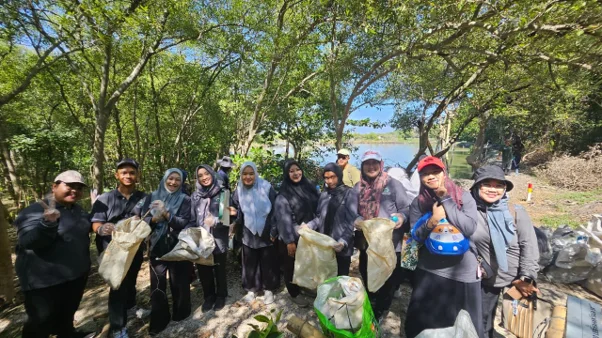
Surabaya, JurnalPost.com - The issue of plastic waste in coastal areas was the focus of a community service project conducted by lecturers from the Accounting Study Program, Faculty of Economics and Business, Universitas Pembangunan Nasional (UPN) “Veteran” East Java, at the East Surabaya mangrove ecotourism site on Thursday (16/7/2026).
Through an initiative titled International Community Service, the lecturers, students, international participants, and mangrove site managers carried out a cleanup operation while providing education on the importance of maintaining coastal environmental hygiene.
The event, organized in collaboration with the UPN “Veteran” East Java International Office, serves as a form of university engagement in addressing environmental issues, particularly waste pollution that threatens the sustainability of mangrove ecosystems.
Plastic Waste as a Threat to Mangrove Ecosystems
Before beginning the cleanup, participants attended a briefing and educational session on the impact of waste on the mangrove environment.
During the session, participants gained an understanding of how waste, especially plastic, can disrupt the balance of coastal ecosystems.
Waste carried by water currents and trapped among mangrove roots has the potential to hinder plant growth, disrupt coastal biota, and degrade environmental quality.
Beyond the ecological impact, waste accumulation can also reduce visitor comfort and the appeal of the mangrove area as an ecotourism destination.
Following the educational session, participants went directly into several mangrove areas to collect waste using prepared gloves and sacks.
The collected waste was then sorted for further processing. Through this activity, participants were encouraged to understand that maintaining environmental cleanliness requires more than just picking up trash; it also necessitates habits of reducing, sorting, and disposing of waste responsibly.
Promoting Sustainable Environmental Awareness
This mangrove cleanup action does not only focus on the cleanliness of the environment during the event but is also aimed at building long-term awareness.
The service team hopes that the hands-on experience will increase the concern of students and the community regarding waste issues, particularly in coastal regions.
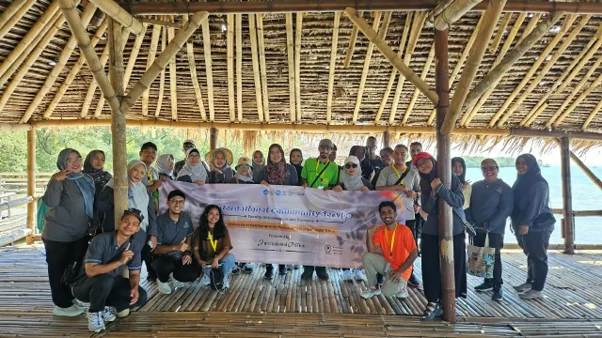
The involvement of international participants also provided an opportunity to exchange experiences and broaden understanding regarding the importance of environmental conservation.
From an accounting perspective, the activity also opened opportunities for developing waste management that holds economic value.
Sorted waste, for instance, has the potential to be managed through more structured recording and economic valuation systems. This approach could become an avenue for community empowerment if developed sustainably.
Thus, efforts to maintain environmental cleanliness can be linked to resource management and the development of economic benefits for the surrounding community.
Supporting Sustainable Development Goals
The waste cleanup and environmental education activities in the East Surabaya mangrove area are also aligned with several Sustainable Development Goals or Sustainable Development Goals (SDGs).
Through educational activities, participants gained knowledge and direct experience regarding environmental protection, which aligns with SDG 4 (Quality Education).
Efforts to reduce waste in coastal areas support SDG 6 (Clean Water and Sanitation) and SDG 11 (Sustainable Cities and Communities), particularly in creating a cleaner and healthier environment.
Meanwhile, education regarding waste sorting and management relates to SDG 12 (Responsible Consumption and Production).
Maintaining the cleanliness of the mangrove area also has a connection to SDG 14 (Life Below Water) and SDG 15 (Life on Land) because the mangrove ecosystem is an important habitat for various types of coastal organisms.
Furthermore, the collaboration between the university, mangrove site managers, and international participants reflects the spirit of SDG 17 (Partnerships for the Goals).
Serving as a Learning Medium for Students Outside the Campus
In addition to benefiting the environment, this activity serves as a learning medium for students through direct experience in the community.
Student involvement in field activities aligns with the spirit of the Key Performance Indicators (IKU) 2, which emphasizes learning experiences outside the campus.
The participation of lecturers in community service programs relates to IKU 3, while the potential for the community to utilize the results of the activity and international recognition has relevance to IKU 5.
Collaboration with mangrove managers and the International Office further strengthens partnerships related to IKU 6. Meanwhile, the joint execution of the activity reflects the collaborative and participatory learning approach emphasized in IKU 7.
Through this activity, students not only gain theoretical understanding regarding social and environmental responsibility but also have the opportunity to face real-world issues in the community.
The waste cleanup action in the East Surabaya mangrove area simultaneously demonstrates that environmental conservation requires the involvement of various parties.
The awareness to maintain cleanliness, reduce plastic usage, and manage waste responsibly is an important step to ensure that the mangrove area remains preserved as a coastal habitat and an ecotourism space for the community.







Comments 0
Write a Comment Share your response