


Barru, JurnalPost.com - The Barru Regency Government, in collaboration with the National Zakat Agency (Baznas) of Barru Regency, has officially launched the 2026 Sustainable and Sufficient Economic-Based Poverty Alleviation Program.
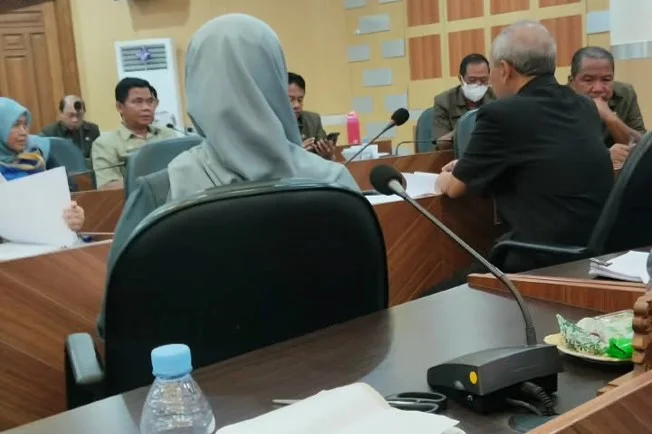
The launch of the program, which was combined with the signing of a Cooperation Agreement (PKS), was opened by the Regent of Barru, Andi Ina Kartika Sari, S.H., M.Si., at the Bapperida Barru 2nd Floor Meeting Room on Friday (9/11/2026).
Carrying the theme “Building Economic Independence Together Toward Prosperous Families”, this program serves as a collaborative step by the Barru Regency Government, Baznas, and various stakeholders to encourage poor and vulnerable families to develop more productive and sustainable sources of income.
In her remarks, Barru Regent Andi Ina Kartika Sari expressed her appreciation to the Vice Regent of Barru, Dr. Ir. Abustan A. Bintang, M.Si., who was credited as one of the initiators of the program.
“Thank you to the Vice Regent, as this program is the result of his ideas,” said Andi Ina.
According to Andi Ina, the issue of poverty is not solely related to limited income. Poverty is also influenced by limited access to income sources, skills, markets, capital, and the ability to develop economic activities sustainably.
Therefore, poverty alleviation efforts are considered insufficient if they only rely on consumptive aid. The government needs to promote empowerment programs that can increase community capacity while creating new sources of income for beneficiary families.
“We hope that those who were previously aid recipients will no longer need assistance in the future, but will instead be capable of providing aid to others,” she explained.
Aid Must Become a Productive Asset
Andi Ina emphasized that aid in this program must be viewed as business capital and a productive asset, rather than mere assistance that is exhausted upon receipt.
Beneficiaries are asked to maintain, manage, and develop the aid provided. It is also expected that the proceeds from their businesses will not be entirely used for consumption, but that a portion will be reinvested as capital to maintain business sustainability.
“This is not aid that disappears after it is received. The assistance provided must be maintained, developed, and managed correctly,” Andi Ina asserted.
The Regent also requested that relevant regional agencies, sub-district, village, and urban village governments, Baznas, and other involved parties provide ongoing guidance, monitoring, and evaluation.
According to her, the success of the program is not measured solely by the amount of aid distributed, but by the increase in beneficiary productivity, business development, growth in family income, and the number of people who successfully escape poverty.
“True success is when, months or years later, we see their businesses growing, family incomes increasing, and they are able to lift themselves out of poverty,” she said.
Initial Phase Reaches 18 Households
The Chairperson of the Organizing Committee, who is also the Head of Bapperida Barru, H. A. Unru, ST., M.SP., explained that the program launch and the signing of the PKS serve as momentum to strengthen the commitment between the Barru Regency Government and all stakeholders in poverty alleviation.
The program is designed to build synergy between the government, the business sector, financial institutions, universities, the community, and development partners.
Furthermore, the program is directed toward expanding access for poor and vulnerable families to business opportunities, productive economic resources, capital, skills, production, processing, and marketing of business products.
One of the agenda items during the event was the signing of a PKS between urban village heads across Barru Regency and Baznas Barru as a follow-up to the cooperation between the local government and Baznas.
H. A. Unru stated that 18 poor households in deciles 1 through 5 are the beneficiaries of the initial phase. They are spread across several urban villages in Barru Regency.
Moving forward, the program is planned to be expanded to reach poor households in all villages, while still adhering to the established beneficiary criteria and technical guidelines.
“On this occasion, we also report that nine villages are ready to implement this activity using village funds,” he explained.
Chickens, Ducks, and Horticultural Seeds Distributed
During the event, a number of productive aid items were handed over to the beneficiaries. The aid included 100 chickens, 35 egg-laying ducks, 10 polybags with horticultural plant seeds, as well as cages and their equipment.
This aid is expected to serve as initial capital for beneficiaries to develop productive economic activities that can provide additional income for their families.
The Barru Regency Government also emphasized the importance of continuous guidance so that the aid does not stop at the distribution stage, but truly develops into a productive business with long-term prospects.
The event was also attended by Vice Regent of Barru Dr. Ir. Abustan A. Bintang, M.Si., Chairman of the Barru Regional House of Representatives (DPRD) Drs. H. Syamsuddin Muhiddin, M.Si., Regional Secretary of Barru Andi Syarifuddin, S.IP., M.Si., Assistant for Economic and Development Administration Drs. Fariadi Abujahja, M.M., heads of relevant regional agencies, sub-district heads, urban village and village heads throughout Barru Regency, the Chairman of Baznas Barru, leaders of state-owned and regional-owned enterprises, and the beneficiaries.






Comments 0
Write a Comment Share your response