

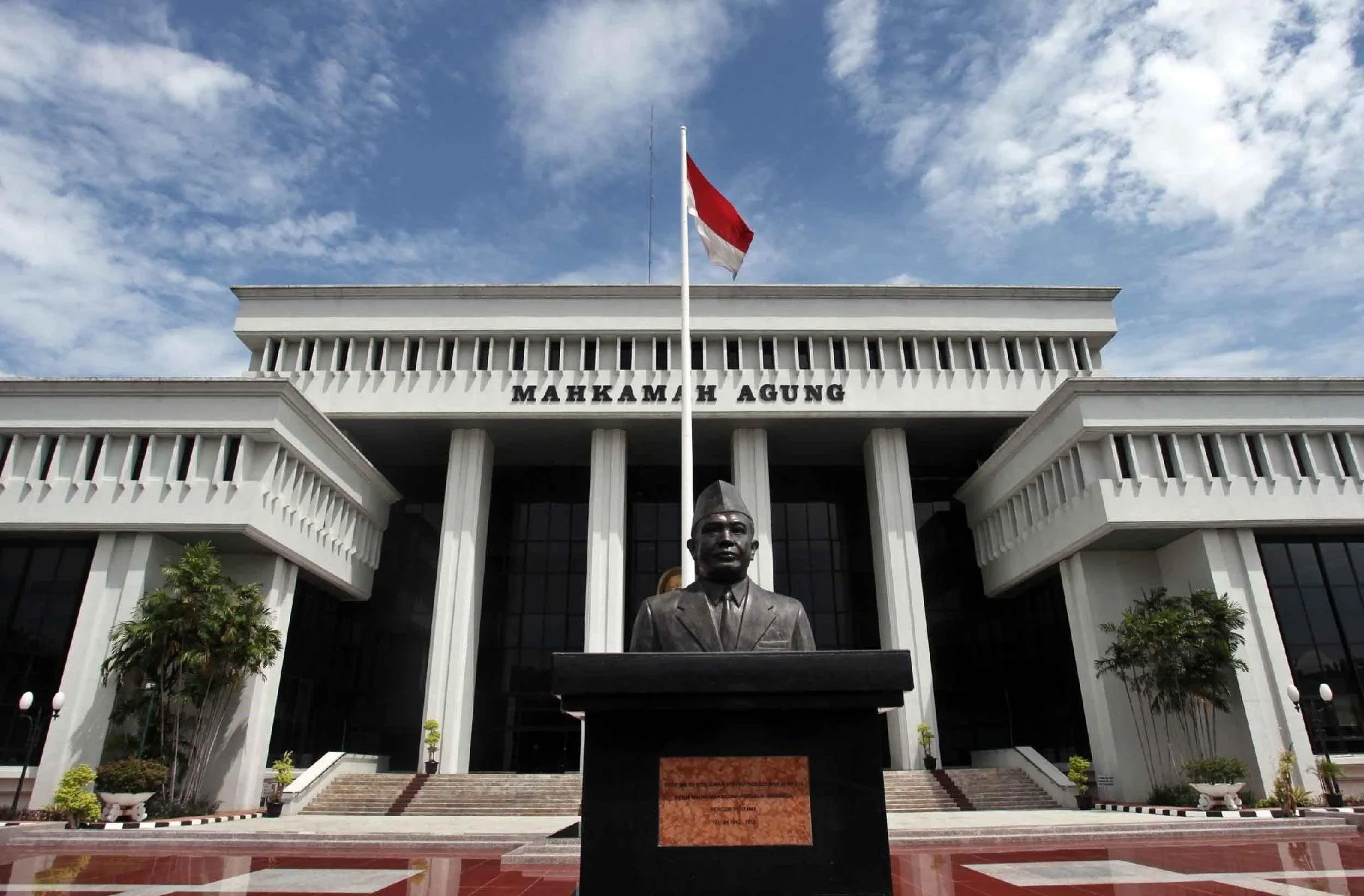
JAKARTA, JurnalPost.com — Supreme Court (MA) Ruling Number 19 P/HUM/2026, which corrects several provisions regarding the governance of health institutions, is considered a momentum for the government to carry out a comprehensive overhaul of the Professional Disciplinary Council (MDP).
The Secretary General of MDP-WATCH, Dr. Tedy Hartono, S.H., M.C.S., has urged the Minister of Health to take concrete steps to follow up on the ruling. These steps include performance evaluations, restructuring of authority, a complete overhaul of membership, and the establishment of a more transparent and independent selection mechanism for the MDP.
According to Tedy, the Supreme Court ruling should not be viewed merely as a matter of revoking certain articles in government or ministerial regulations. More importantly, the ruling concerns the legitimacy and independence of the body responsible for enforcing discipline among medical and health professionals.
"Supreme Court Ruling Number 19 P/HUM/2026 is not just a correction of a few regulatory articles. It is a momentum to correct the governance and institutional legitimacy of the Professional Disciplinary Council (MDP)," Tedy said in a written statement dated 1 November 2026.
He emphasized that the Ministry of Health must not ignore the legal consequences of the ruling, particularly those related to the relationship of authority between the government, the Indonesian Health Council (KKI), and the MDP.
Supreme Court Ruling Serves as Basis for MDP Institutional Evaluation
Supreme Court Ruling Number 19 P/HUM/2026 granted a petition for judicial review against several provisions in Government Regulation Number 28 of 2024, Minister of Health Regulation Number 12 of 2024, Minister of Health Regulation Number 3 of 2025, and Minister of Health Decree Number HK.01.07/MENKES/775/2025.
Certain provisions in these regulations were declared to be in conflict with higher legislation and must be followed up in accordance with the court's decision.
Tedy believes one of the important aspects of this case relates to strengthening the independence of professional ethics and disciplinary oversight.
He referred to Constitutional Court Ruling Number 111/PUU-XXII/2024, which affirmed that the supervision of professional ethics and discipline is not conducted by the government, but by a special body formed by the Indonesian Health Council involving relevant elements.
According to him, this affirmation has significant consequences for the arrangement of the MDP's position and accountability mechanism.
"This is a fundamental change, not just an administrative one," he asserted.
Therefore, Tedy requested that the Minister of Health openly announce the follow-up steps to the Supreme Court ruling, including which regulations will be revoked or adjusted.
He believes that government statements merely expressing a commitment to follow up on the ruling are insufficient without concrete action.
Tedy Hartono Proposes Replacing All MDP Members
In addition to regulatory adjustments, Tedy is pushing for a comprehensive evaluation of the current MDP members.
This evaluation, he said, should cover the appointment process, the execution of duties, the mechanism for handling complaints, and accountability for decisions already issued.
He emphasized that the evaluation is not intended as a judgment of individuals, but as an institutional step to ensure all processes run according to the principles of law and good governance.
"All currently serving MDP members should be asked to report their performance openly: how they were appointed, how duties were carried out, how complaints were handled, and how decisions were accounted for," he said.
Furthermore, Tedy proposed that the government overhaul the MDP membership as part of an effort to restore the trust of the public and the health profession.
"I am of the opinion that replacing all current MDP members is necessary to restore public trust," he stated.
However, he emphasized that the proposal to replace all members is a recommendation for institutional reform, not an order explicitly stated in the Supreme Court's ruling.
Therefore, its implementation must still observe applicable legal mechanisms to avoid creating new issues of legality.
Pushing for a Moratorium and Transition Mechanism
Tedy also proposed a moratorium on the formation, appointment, and exercise of authority by the MDP, which still relies on provisions declared invalid.
According to him, a clear transition mechanism is needed until the MDP is reorganized through procedures that comply with the court's ruling.
However, such transition policies must be designed carefully so as not to result in a vacuum of professional disciplinary enforcement.
Ongoing cases, including public complaints and examinations of medical and health professionals, must still receive certainty in their handling.
"This moratorium must be designed carefully: ongoing cases must remain guaranteed, and the rights of complainants and health professionals must not be neglected," he explained.
According to Tedy, institutional improvement must not disadvantage patients seeking justice or health professionals in need of legal certainty.
MDP Member Selection Must Be Open and Free from Intervention
In the process of forming future MDP membership, Tedy emphasized the importance of a recruitment system that is open, transparent, and subject to public oversight.
The selection stages he proposed include the announcement of candidate registration, administrative review, competency testing, track record verification, integrity assessment, and fit-and-proper testing.
He warned that filling MDP seats should not become a space for compromising interests or distributing positions to certain groups.
"There must be no scenarios, interventions, or seat-sharing for certain groups. MDP seats must be determined by capacity, independence, and a commitment to justice," he asserted.
Tedy believes that the credibility of a professional disciplinary enforcement body depends heavily on the independence of the people exercising its authority.
Therefore, the selection process must prioritize professional competence, objectivity, integrity, and the ability to provide decisions that can be accounted for.
Patient and Health Professional Protection Must Be Balanced
Tedy emphasized that MDP reform must ultimately be directed toward strengthening protection for patients while simultaneously guaranteeing the rights of medical and health professionals.
Examinations of alleged disciplinary violations must be based on applicable professional standards, service standards, and operational procedures.
Furthermore, every party must be given the opportunity to defend themselves, undergo a balanced examination, and receive a decision with clear and testable considerations.
According to him, the MDP must not become an instrument of pressure or a tool of power used for the interests of certain parties.
He also reminded that Supreme Court Ruling Number 19 P/HUM/2026 cannot be interpreted as an order to abolish the existence of the MDP.
What must be fixed is the regulatory basis, formation mechanism, authority relationship, and institutional accountability to align with the principles of independence and legal provisions.
Tedy hopes the government will use the ruling as a starting point for the reform of health professional disciplinary governance, rather than just a formality of regulatory change.
"The MDP must be a house of professional disciplinary justice, not a house of power. The Supreme Court has provided the legal direction. Now, what is being tested is the government's courage to implement it," concluded Tedy Hartono, Secretary General of MDP-WATCH.









Comments 0
Write a Comment Share your response