

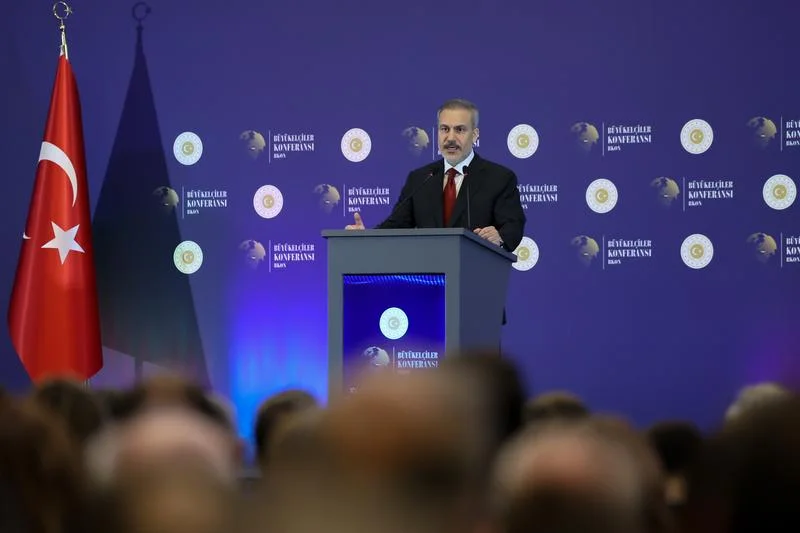
DOHA, JurnalPost.com — The government of Qatar is stepping up diplomatic efforts to de-escalate tensions in the Middle East. The Prime Minister and Minister of Foreign Affairs of Qatar, Sheikh Mohammed bin Abdulrahman bin Jassim Al-Thani, has communicated with senior officials from Turkey, Jordan, Egypt, and Lebanon to discuss regional security developments and opportunities for conflict resolution through negotiation.
The series of telephone conversations took place on Monday (2/11/2026), as announced by the Qatari Ministry of Foreign Affairs in several official statements.
This move reflects Doha's efforts to strengthen diplomatic coordination amidst regional security uncertainty, including the issue of freedom of navigation, which remains a key concern for countries in the region.
Qatar reaffirmed its support for peaceful resolutions and encouraged the achievement of a comprehensive agreement capable of fostering long-term stability.
Qatar Intensifies Communication with Four Nations
During these communications, Sheikh Mohammed spoke separately with Turkish Foreign Minister Hakan Fidan, Jordanian Deputy Prime Minister and Minister of Foreign Affairs Ayman Safadi, Egyptian Foreign Minister Badr Abdelatty, and Lebanese Foreign Minister Youssef Raggi.
The discussions covered not only the security situation in the Middle East but also bilateral relations and opportunities to strengthen cooperation between the nations.
According to the Qatari Ministry of Foreign Affairs, all communications emphasized the importance of joint coordination to reduce escalation and prevent the regional security situation from deteriorating further.
The Qatari government views dialogue as a vital path to bridge conflicting interests while opening opportunities for agreements acceptable to all parties.
In its official statement, the Qatari Ministry of Foreign Affairs noted that Sheikh Mohammed reaffirmed Doha's support for all diplomatic efforts aimed at ensuring freedom of maritime navigation.
"Qatar supports all diplomatic efforts and initiatives to reach solutions that guarantee freedom of navigation and pave the way for a comprehensive agreement for sustainable peace in the region," stated the Qatari Ministry of Foreign Affairs on Monday (2/11/2026).
The statement highlights that the security of shipping lanes has become a primary focus in Qatar's diplomatic outreach to its partners.
Freedom of Navigation a Key Concern
Maritime security issues hold strategic significance for Middle Eastern nations, particularly the Gulf region, which serves as a primary artery for international energy trade.
Political and military tensions in the region have the potential to disrupt the distribution of oil and natural gas, as well as cross-border trade activities.
This situation makes freedom of navigation not only a regional security issue but also a matter of global economic stability.
The focus on maritime security comes as discussions regarding the reopening of the Strait of Hormuz remain part of diplomatic efforts between Iran and the United States.
On 2 November 2026, Iranian Foreign Minister Abbas Araghchi stated that consultations with mediators, including Qatar and Pakistan, are ongoing to find a way out of the negotiation stalemate.
Iran also revealed that adjustments to the proposed phased agreement are being considered, including the possibility of accelerating the process of reopening shipping lanes if certain conditions are met.
However, these developments have not yet indicated that a final agreement between the involved parties has been reached.
In its statement regarding the communications with the four nations, the Qatari Ministry of Foreign Affairs did not announce any new agreements or joint decisions regarding maritime security mechanisms.
Qatar Emphasizes Importance of Lebanon's Stability
In addition to communicating with foreign ministers, Sheikh Mohammed held a telephone conversation with Lebanese Prime Minister Nawaf Salam on the same day.
The two discussed regional developments, bilateral relations, and diplomatic steps to reduce tensions.
During the conversation, Qatar reiterated its support for Lebanon's stability, including its sovereignty and territorial integrity.
Doha also expressed its commitment to continue showing solidarity with the people of Lebanon amidst the security challenges facing the region.
Diplomatic relations between Qatar and Lebanon were also a focus during Sheikh Mohammed's visit to Beirut in mid-October 2026.
At that time, discussions between the two countries covered opportunities to strengthen economic cooperation, energy, investment, and support for Lebanese state institutions.
The latest communication demonstrates that bilateral relations remain a core component of Qatar's diplomatic approach to addressing regional security issues.
Regional Diplomacy Continues Amidst Uncertainty
Qatar's outreach to these nations comes as various mediation efforts continue to face significant challenges.
Divergent political interests, security demands, and trust issues between parties remain obstacles that must be overcome before a comprehensive agreement can be realized.
Qatar itself has been involved in numerous diplomatic initiatives to promote conflict resolution through dialogue.
In June 2026, the Qatari government welcomed the signing of a memorandum of understanding between the United States and Iran regarding several unresolved issues, including the cessation of military operations and freedom of navigation in the Strait of Hormuz.
In a statement at the time, Doha also appreciated the role of Pakistan and other nations in facilitating communication and narrowing differences in perspective.
Nevertheless, subsequent diplomatic developments indicate that the implementation of agreements and the resolution of disputes still require further negotiation.
Qatar's series of communications with Turkey, Jordan, Egypt, and Lebanon in early November is part of an effort to maintain channels of dialogue amidst growing concerns over regional security.
While no new agreements have been announced, the talks underscore the importance of regional coordination to prevent wider escalation.
The future success of these diplomatic efforts will depend on the ability of the involved parties to find common ground, particularly in ensuring the security of shipping lanes and building a foundation for sustainable peace in the Middle East.








Comments 0
Write a Comment Share your response