

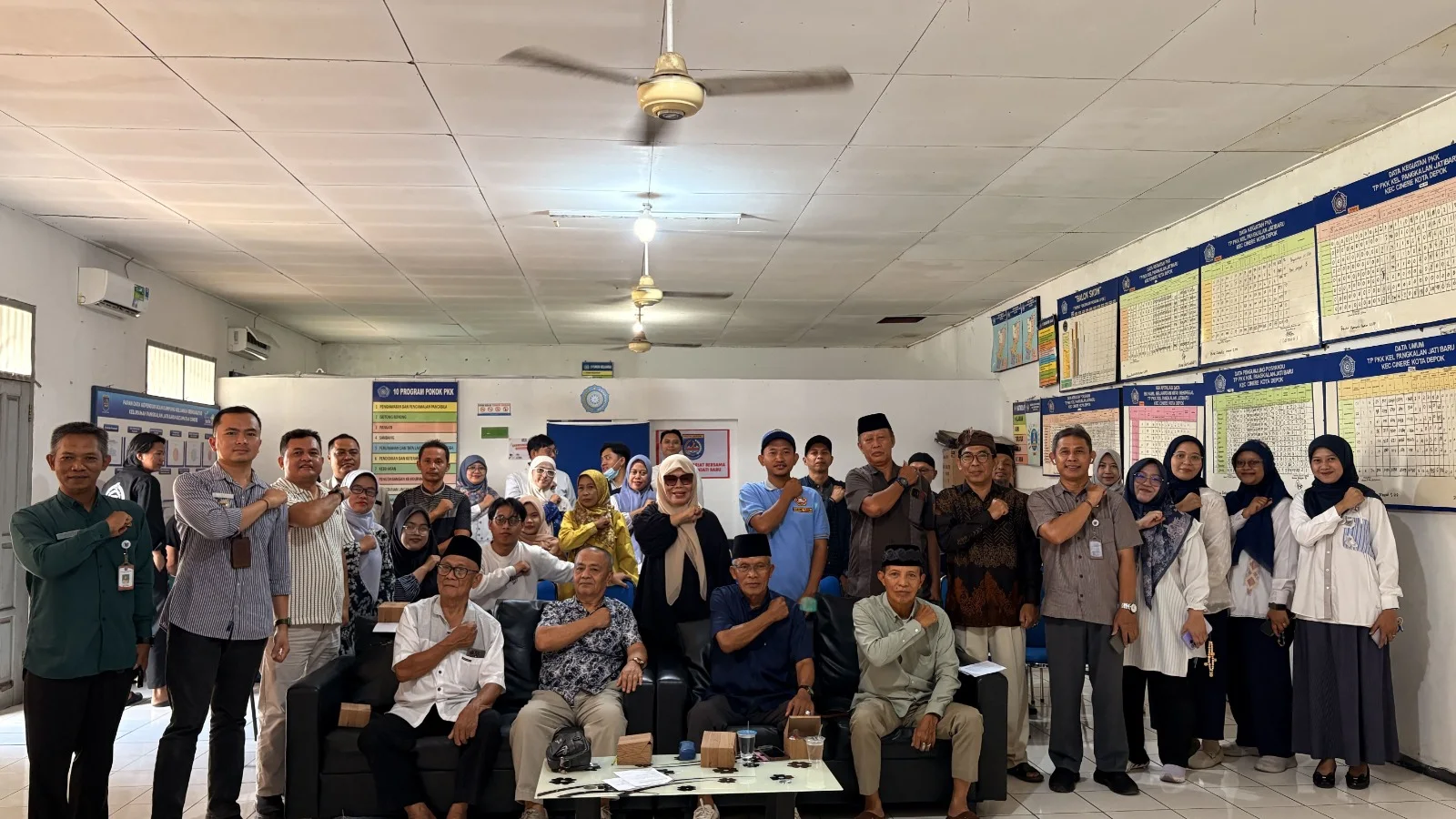
DEPOK, JurnalPost.com – The Faculty of Medicine at the Universitas Pembangunan Nasional (UPN) “Veteran” Jakarta held a community service program, inviting residents of Pangkalan Jati Baru Village, Cinere District, Depok City, to utilize moringa leaves as a nutritious food source to support stunting prevention efforts.
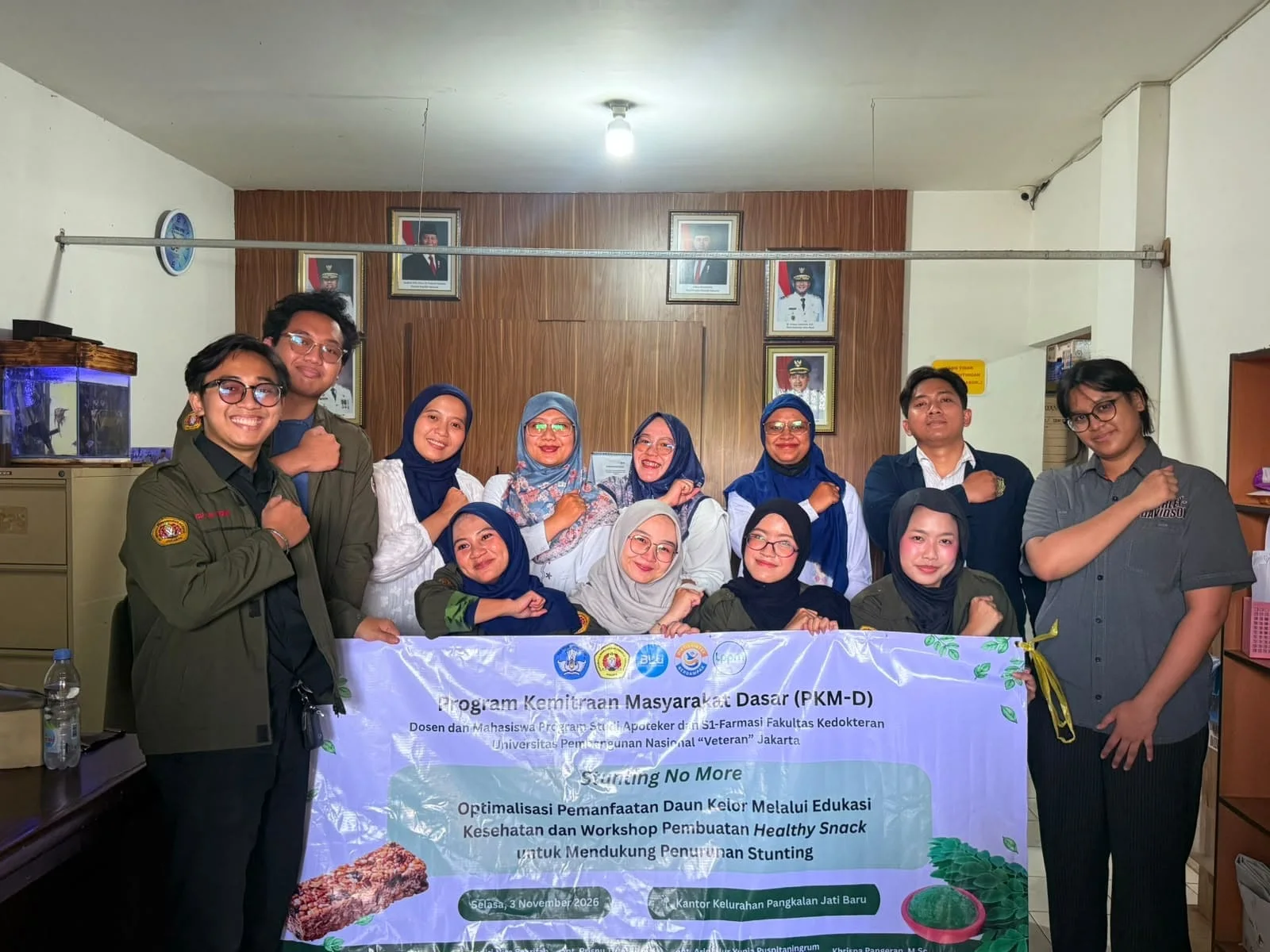
The event, which took place at the Pangkalan Jati Baru Village Office on Tuesday (3/11/2026), carried the theme “Stunting No More: Optimizing the Use of Moringa Leaves through Health Education and Healthy Snack Workshops to Support Stunting Reduction.”
This program combined health education with training on making snack bars using moringa leaves. Through this activity, the community is expected to not only understand the importance of meeting family nutritional needs but also gain the skills to process local food ingredients into practical and nutritious meals.
The activity was led by apt. Ariska Deffy Anggarany, S.Farm., M.Farm., along with a team of lecturers consisting of apt. Andiri Niza Syarifah, S.Farm., M.Farm.; apt. Prisnu Tirta Nirmala, S.Farm., M.Farm.; apt. Arini Nur Yunia Puspitaningrum Rahmawati, S.Farm., M.Farm.; and Khrisna Pangeran, M.Sc.
The team represented various scientific fields, including clinical pharmacy, pharmaceutical technology, pharmaceutical biology, and pharmaceutical chemistry. This interdisciplinary collaboration allowed the activity to be carried out comprehensively, from delivering health materials to practical food processing while paying attention to product quality and safety aspects.
Nutritional Education and Stunting Prevention
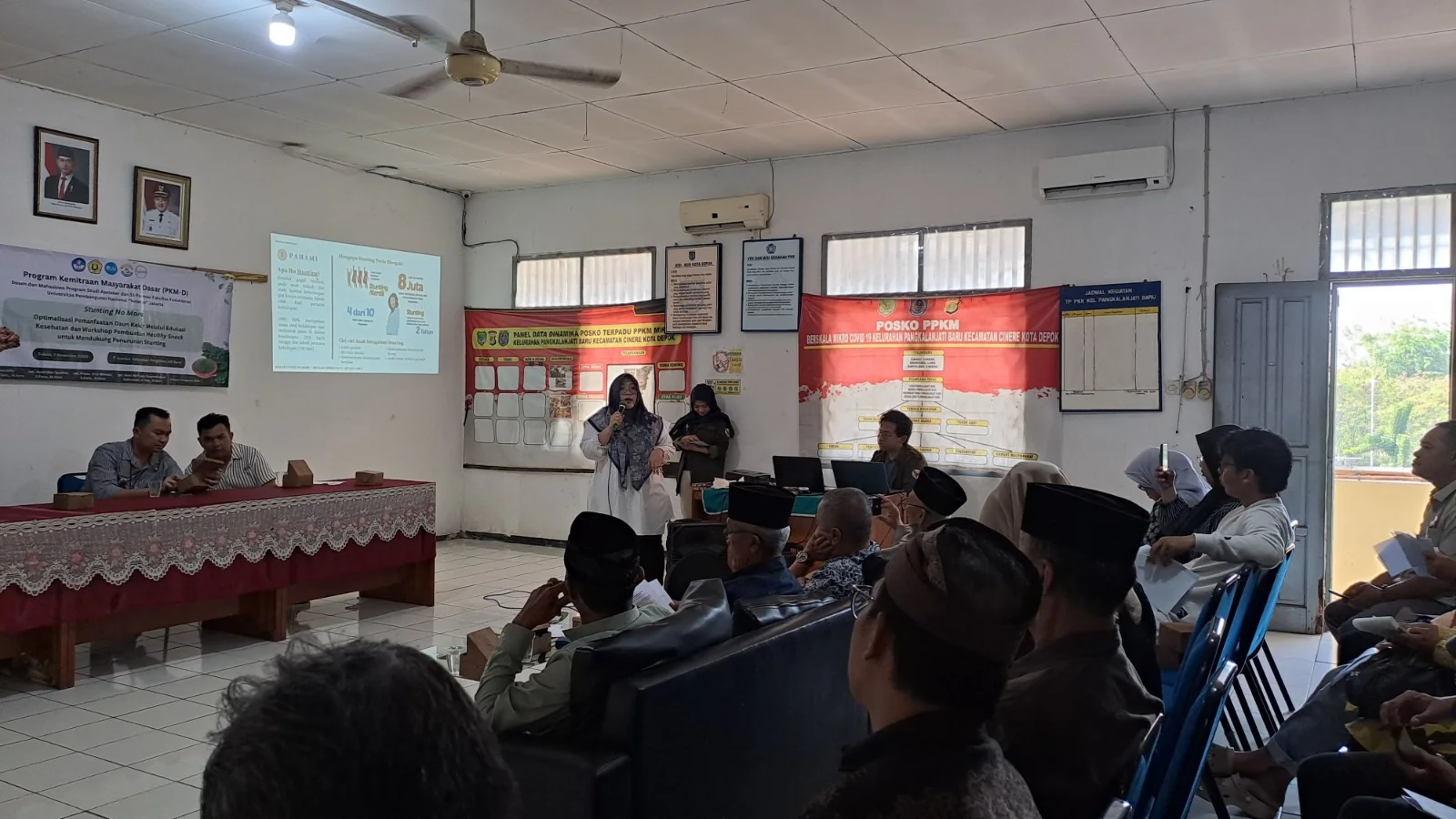
The series of activities began with education regarding stunting, the importance of meeting nutritional needs, and preventive steps that can be applied in daily life.
Participants were given the understanding that stunting prevention is not only related to food adequacy but also requires attention to the quality of nutritional intake, maternal and child health, environmental hygiene, and the adoption of clean and healthy living behaviors.
One of the materials highlighted in this activity was the potential of moringa leaves (Moringa oleifera) as a local food ingredient that can be used to enrich family food variations.
Moringa leaves are known to contain a number of nutrients, including protein, iron, calcium, and provitamin A. This content makes moringa a potential additive in the processing of nutritious food.
However, the use of moringa leaves still needs to be combined with a balanced nutritious diet. Moringa leaves are not the only solution to prevent or overcome stunting, but rather one of the food options that can support the diversity of family consumption.
Through this education, the community is expected to better understand the importance of stunting prevention efforts carried out consistently, especially during pregnancy and the early period of a child's life.
Residents Invited to Process Moringa Leaves into Snack Bars
After attending the health education session, participants continued the activity with a practical session on making snack bars using moringa leaves.
This workshop was an important part of the program because it provided an opportunity for the community to learn how to process local food ingredients into more practical and attractive food.
In the activity, participants were introduced to the use of moringa leaves as an additive in making snacks. This approach is expected to encourage family creativity in serving more diverse food.
In addition to introducing food innovation, the training also emphasized the importance of paying attention to hygiene during the processing, selecting safe ingredients, and the quality of the resulting products.
Processing moringa leaves into snack bars also demonstrates that food ingredients available in the surrounding environment have the potential to be developed into value-added food products.
The skills acquired through the training are expected to be applied by the participants in their respective family environments.
However, the use of the product as a snack still needs to be adjusted to the nutritional needs, age, and food safety for the groups consuming it.
Involving Students and Village Government
The Stunting No More program is also a form of implementing the Tri Dharma of Higher Education, specifically community service.
Through this program, knowledge developed in the academic environment is intended to provide direct benefits to the community, especially in improving health literacy and local food processing skills.
In addition to lecturers, students were involved in various stages of the activity, ranging from preparation, information delivery, participant assistance, documentation, to program evaluation.
Student involvement serves as a learning medium to develop communication skills, social awareness, and experience in applying pharmaceutical science in community empowerment activities.
As part of the evaluation, the implementation team also measured participant knowledge through a pre-test and post-test.
The measurement aimed to obtain an overview of participant understanding before and after attending the education session. The evaluation results are expected to be a consideration for the development of similar activities in the future.
The implementation team also expressed their appreciation to the Pangkalan Jati Baru Village Government, especially Village Head M. Reza Tanzila Putra, and all parties who provided support for the implementation of the activity.
The support of the village government is considered to have an important role in strengthening cooperation between universities and the community, while simultaneously expanding the reach of health education at the neighborhood level.
Supporting Four Sustainable Development Goals
In addition to focusing on increasing public knowledge, the Stunting No More program was designed to support the achievement of the Sustainable Development Goals or Sustainable Development Goals (SDGs).
There are at least four goals that are the focus of this program's contribution.
First, SDG 2: Zero Hunger, through increasing nutritional literacy and introducing nutritious local food ingredients to support meeting family nutritional needs.
Second, SDG 3: Good Health and Well-being, through health education and strengthening public understanding regarding promotive and preventive steps in stunting prevention.
Third, SDG 4: Quality Education, through the implementation of community-based education and practical skills training that can be applied in daily life.
Fourth, SDG 12: Responsible Consumption and Production, through the optimization of local food ingredients and the introduction of food processing processes that pay attention to quality and safety aspects.
Through this activity, the Pharmacist Professional Education Study Program and the S-1 Pharmacy Study Program of the Faculty of Medicine, UPN “Veteran” Jakarta, hope that cooperation with the community can continue to be developed sustainably.
Education combined with direct practice is expected to increase family knowledge about nutrition, encourage the use of local food ingredients, and strengthen community involvement in stunting prevention efforts.
The program also demonstrates that simple innovations based on local potential, such as processing moringa leaves into snack bars, can be an educational tool that bridges academic knowledge with community needs.








Comments 0
Write a Comment Share your response