


KUPANG, JurnalPost.com – Scratched plastic cutting boards, cloudy baby bottles, and plastic toys frequently chewed on by children are items that require attention at home.
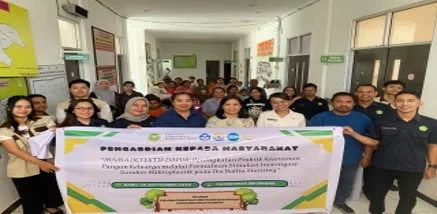
A total of 40 mothers with stunted toddlers in Kupang were invited to recognize potential microplastic exposure through an educational activity titled “Mama Kitchen Detective” at the Sikumana Community Health Center (Puskesmas) hall on Wednesday (30/9/2026).
During the event, participants did not just attend a lecture; they acted as detectives searching for household items that could potentially release microplastic particles.
The mothers toured several simulation stations representing daily conditions, ranging from the kitchen, storage shelves, water dispensers and jugs, laundry areas, personal care product racks, to children's play areas.
At each station, participants were asked to identify items that could be sources of microplastics and determine safer practices to implement at home.
This community service activity was organized by the Medical Education Study Program team from the Faculty of Medicine and Veterinary Medicine at Nusa Cendana University (Undana), in collaboration with the Sikumana Community Health Center.
The team was led by Insani Fitrahulil Jannah, S.K.M., M.Biomed, with members Dr. dr. Christina Olly Lada, M.Gizi; Rahel Rara Woda, S.Si., M.K.M.; Syahrir, S.Kep., M.Si.; Antonius Adolf Gebang, S.Kep., M.P.H.; and Dr. Audrey Gracelia Riwu, S.Kep., Ns., M.Imun.
Recognizing Microplastics in Everyday Items
Microplastics are plastic particles measuring less than five millimeters. Their tiny size makes some particles difficult to observe directly with the naked eye.
These particles can originate from plastic objects subjected to friction, scratches, heat exposure, pressure, or weathering during use.
In a household setting, potential sources of microplastics can be found in various everyday items, such as plastic cutting boards and containers, food boxes exposed to heat, long-used baby bottles, dishwashing sponges, synthetic clothing, household dust, and plastic toys.
Packaging and water jugs are also items that must be used and stored correctly.
In general, plastic that is worn out, thin, heavily scratched, or used repeatedly increases the likelihood of particle release from its surface.
Toddlers Are a Group Requiring Special Attention
The education specifically targeted mothers of toddlers because children are in a phase of very rapid growth and development.
Toddler activities, such as crawling on the floor, holding and putting objects in their mouths, and using various food and drink containers, result in different environmental exposure patterns compared to adults.
Microplastics can enter the body through ingested food or drinks, as well as particles inhaled with dust.
In addition to the plastic particles themselves, attention is also given to various additives used in plastic products and pollutants that can adhere to their surfaces.
Various studies continue to examine the potential health impacts of microplastic exposure on humans, including possible effects on the digestive system, immune system, metabolism, and other biological processes.
Microplastics Are Not the Sole Cause of Stunting
The service team emphasized that the activity was not intended to claim that microplastics are a direct or sole cause of stunting.
Stunting is a child growth and development disorder associated with various factors, primarily chronic malnutrition and recurrent infections, especially during the 1,000 first days of life.
Based on the 2024 Indonesian Nutritional Status Survey used in the activity materials, the stunting prevalence in Kupang was recorded at 26.9 percent, while in East Nusa Tenggara Province it was 37 percent.
Scientific evidence directly linking microplastic exposure to stunting in toddlers remains limited.
Therefore, education on reducing microplastic exposure is positioned as an environmental prevention step that families can take, rather than a replacement for primary interventions such as improving nutritional intake, health, sanitation, and parenting patterns.
Participant Knowledge Scores Increased
To measure the effectiveness of the activity, participants took a pre-test before the education and a post-test after the entire series of activities was completed.
The material was presented by Amanda Jelita Eka Riani Johannis, S.K.M., M.P.H., followed by the “Mama Kitchen Detective” simulation game.
Evaluation results showed that the average participant knowledge score increased from 65.00 to 83.75.
A total of 75 percent of participants experienced a score increase, while no participants experienced a decrease.
The proportion of participants categorized as having good knowledge also increased from 60 percent to 75 percent.
The largest score increase was found in the group of mothers with junior high school education, at 31.25 points, followed by the elementary school education group at 25 points.
According to the implementation team, these results show that game and simulation methods can help convey information to participants with diverse educational backgrounds.
However, there were still eight participants, or about 20 percent, who fell into the low knowledge category. These participants are planned to receive more personalized guidance from community health volunteers (kader posyandu).
No Need to Avoid All Plastics
One of the main messages conveyed to participants is that families do not have to completely abandon the use of plastic.
What is more important is to recognize items that are starting to deteriorate or pose a risk and to improve how they are used and stored.
The team provided several simple steps that families can take, namely:
Avoid pouring very hot food or drinks into plastic containers and choose glass or ceramic containers if possible.
Replace plastic cutting boards, food containers, baby bottles, or toys that are heavily scratched, cracked, or have become cloudy.
Store water jugs in a cool place away from direct sunlight.
Clean the house regularly, especially children's play areas, and maintain ventilation to prevent excessive dust accumulation.
Through a simple and interactive approach, the “Mama Kitchen Detective” activity is expected to help mothers be more critical in recognizing the condition of items used by their families every day while building a safer home environment for child growth and development.





Comments 0
Write a Comment Share your response