


KLATEN, JurnalPost.com — The Bachelor of Physics Program 1 at the Faculty of Science and Technology (FST), Universitas Airlangga (UNAIR), held a community service program at the Polanharjo Community Health Center in Klaten Regency, Central Java, on Saturday (3/10/2026).
The event, titled “Empowering Healthcare Workers through Training on the Use of Electrostimulators Based on Basic Electrical Concepts to Improve the Quality of Physiotherapy Services at Polanharjo Community Health Center, Klaten, Central Java” was attended by approximately 50 healthcare workers from the area surrounding the Polanharjo Community Health Center.
The training focused on understanding basic electrical concepts, electrostimulator technology, and practical application to support physiotherapy services.
The activity took place at the Polanharjo Community Health Center, located on Jalan Cokro–Tulung, Plumbon, Karanglo, Polanharjo District, Klaten Regency.
The community service team was led by Prof. Dr. Suryani Dyah Astuti, M.Si., with members Prof. Dr. Khusnul Ain, M.Si., Deny Arifianto, M.T., and Winarno, M.T.
The implementation also involved educational staff from the UNAIR Bachelor of Physics Program 1 as well as students from the Bachelor 1, Master 2, and Doctoral 3 levels at the UNAIR Faculty of Science and Technology.
Additionally, students from the Diploma 4 Program in Traditional Medicine at the Faculty of Vocational Studies, UNAIR, participated in supporting the training.
Promoting Technology Utilization in Physiotherapy Services
The event began with an opening ceremony and an overview of the community service program by the UNAIR FST Bachelor of Physics Program 1.
Participants received an explanation regarding the importance of understanding electrical-based technology as a support for physiotherapy services in primary healthcare facilities.
The Head of the Polanharjo Community Health Center, Dr. Ambar Retnoningsih, expressed her appreciation for the event.
“We are very pleased and grateful that the Polanharjo Community Health Center was trusted as a partner in this community service activity. We hope that guidance and training activities like this can continue consistently and be well-maintained in the future,” said Dr. Ambar.
Meanwhile, the Head of the UNAIR FST community service team, Prof. Dr. Suryani Dyah Astuti, M.Si., stated that the activity is a form of implementing the Tri Dharma of Higher Education, specifically community service.
According to her, the results of research and technological development in universities should not only remain within the campus environment but should also be utilized by the community.
“This activity is a concrete manifestation of one of the lecturers' Tri Dharma duties to the community. We hope that the research results developed by lecturers on campus can provide direct benefits to the wider community, especially in improving the quality of healthcare services,” said Prof. Suryani.
Three Main Electrostimulator Topics
Entering the core session, participants received three main presentations on the use and development of electrostimulators.
The first material was presented by Deny Arifianto, M.T., on the topic “Basic Electrical Concepts in Electrostimulators.”
This material provided an understanding of the fundamental electrical principles that serve as the working basis for electrostimulator devices.
Next, Winarno, M.T., presented the material “Innovation of Magnetic Electrode-Based Electrostimulators for Non-Invasive Electroacupuncture Therapy.”
In this session, participants were introduced to the use of magnetic electrodes in developing electrostimulation technology designed to support non-invasive therapy.
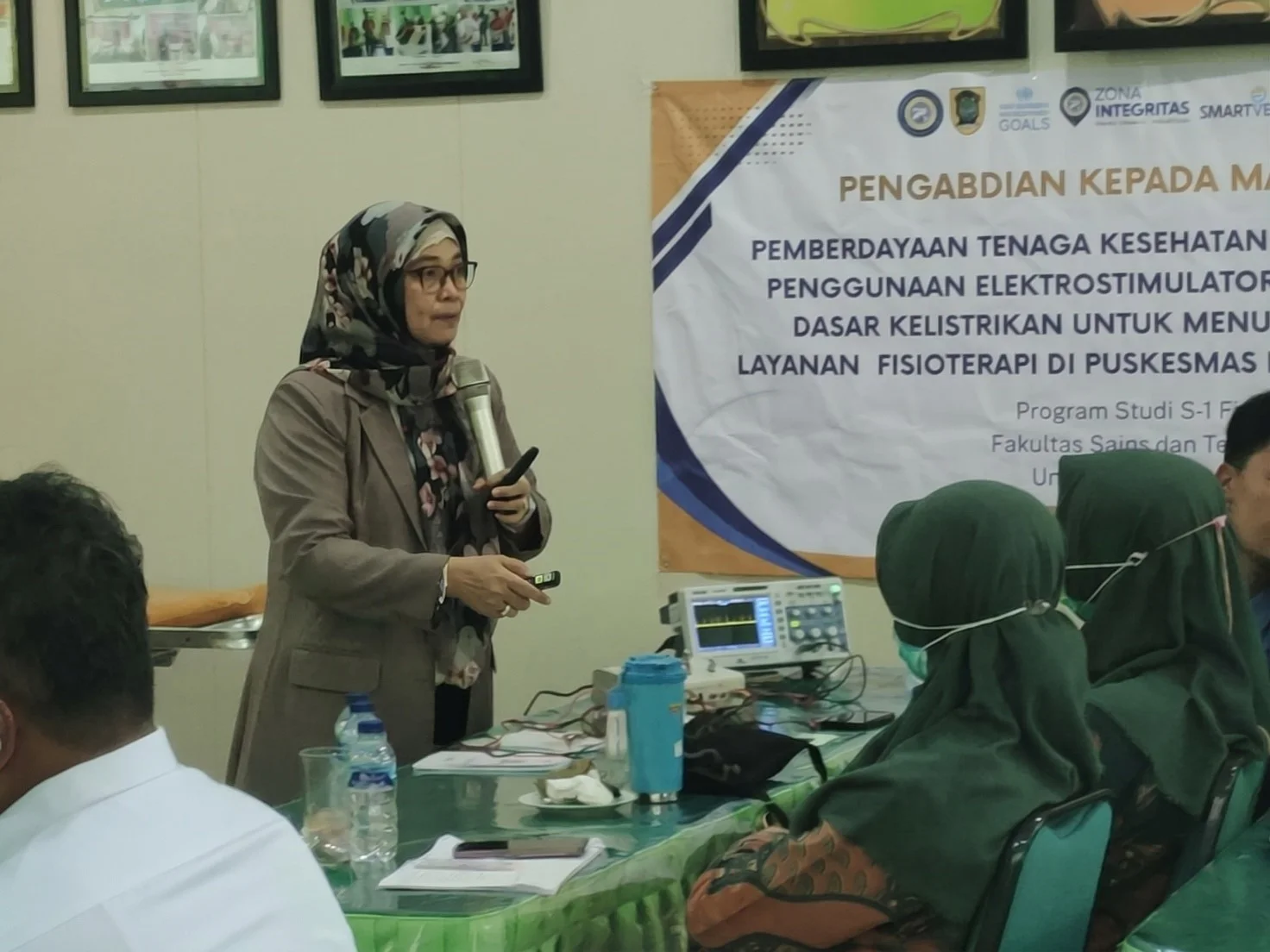
The third material was presented by Prof. Suryani regarding “Utilization of Electrostimulators for Therapy.”
During the presentation, participants also had the opportunity to discuss with the speakers regarding the device's operating principles, the application of electrostimulation technology, and various considerations for its use in healthcare services.
The discussion was interactive, with several questions raised by the participating healthcare workers.
Hands-on Practice with Electrostimulators
Following the theoretical session, the activity continued with simulations and practical use of electrostimulator instruments.
Participants had the opportunity to observe the operation of the device directly while understanding the steps for its use.
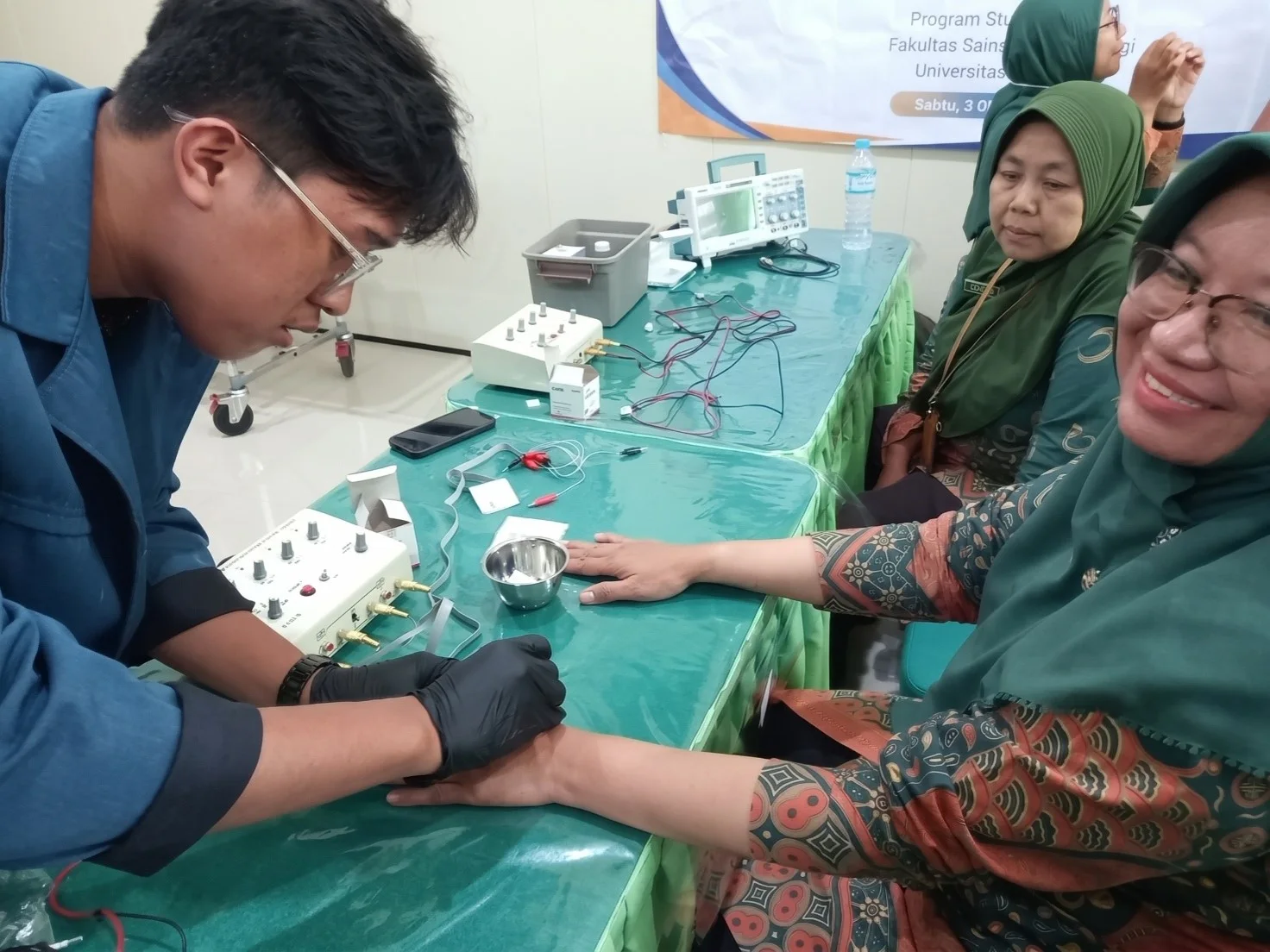
Several participants also took part in simulations of using the electrostimulator for various conditions discussed during the event.
The community service team provided explanations on device operation techniques, safety, and the importance of adjusting therapy parameters according to the patient's needs and condition.
The practical session was a crucial part of the training, as participants not only gained conceptual knowledge but also witnessed the direct application of electrostimulator technology.
The participants also discussed the use of the device in daily healthcare services, including safety aspects and operating procedures.
Activity Evaluation
At the end of the event, all participants were asked to complete an evaluation and satisfaction questionnaire regarding the training.
The evaluation was used to gauge participant responses to the material, delivery methods, and the practical application of the electrostimulators.
Based on the organizers' evaluation, the activity proceeded smoothly and received a positive response from the participants.
The training is expected to broaden the healthcare workers' insights into basic electrical concepts and the use of electrostimulator technology to support physiotherapy services.
This community service activity also serves as part of an effort to strengthen the relationship between universities and healthcare facilities.
Through this collaboration, the results of scientific and technological development on campus can be introduced and practiced alongside healthcare workers in the field.
Looking ahead, the UNAIR community service team and the Polanharjo Community Health Center hope that the partnership can be further developed through mentoring activities or other training relevant to the needs of public health services.




Comments 0
Write a Comment Share your response