


Ho Chi Minh City, JurnalPost.com — Batik masks have become a key medium for Universitas Negeri Surabaya (UNESA) to introduce Indonesian culture to students in Vietnam. Through an international community service program, UNESA academics invited students to explore the richness of Indonesian culture while fostering cross-cultural dialogue between the two nations.
The event took place at the University of Social Sciences and Humanities, Viet Nam National University Ho Chi Minh City (USSH–VNUHCM), Vietnam, from September 21–24, 2026. In addition to the batik mask workshop, this academic visit included visiting lecturersessions, knowledge exchange, and the exploration of research collaborations.
The UNESA team was led by Dr. Hespi Septiana, M.Pd., who employed a cultural learning approach that combined traditional art appreciation, creativity, and cross-cultural communication.
In the community service program titled "Batik Mask Introduction Training as a Medium for Indonesia–Vietnam Cross-Cultural Dialogue," students were encouraged to understand batik from a broader perspective, rather than viewing it merely as an art piece or craft product.
Participants studied the visual elements of batik masks, ranging from motifs and colors to shapes and the cultural values embedded within them. These elements served as a basis for discussions to identify similarities and differences in cultural expression between Indonesia and Vietnam.
This approach provided students with the opportunity to engage actively in the learning process. They did not just receive information about Indonesian culture but were also encouraged to develop their understanding through interaction and the exchange of perspectives.
The head of the UNESA community service team, Dr. Hespi Septiana, M.Pd., explained that batik masks were chosen because they possess compelling visual characteristics while embodying Indonesian cultural identity.
"Batik masks serve as a relatable medium for students because they blend visual aspects, creativity, and cultural identity. Through this activity, we aim to create a space for dialogue that allows Vietnamese students to learn about Indonesia while discussing the cultural similarities and differences between our two countries," said Hespi.
According to her, international community service programs provide universities with the opportunity to extend the benefits of education and knowledge beyond national borders.
Through direct interaction with Vietnamese students, the introduction of Indonesian culture is expected to be more communicative and effective in building mutual understanding.
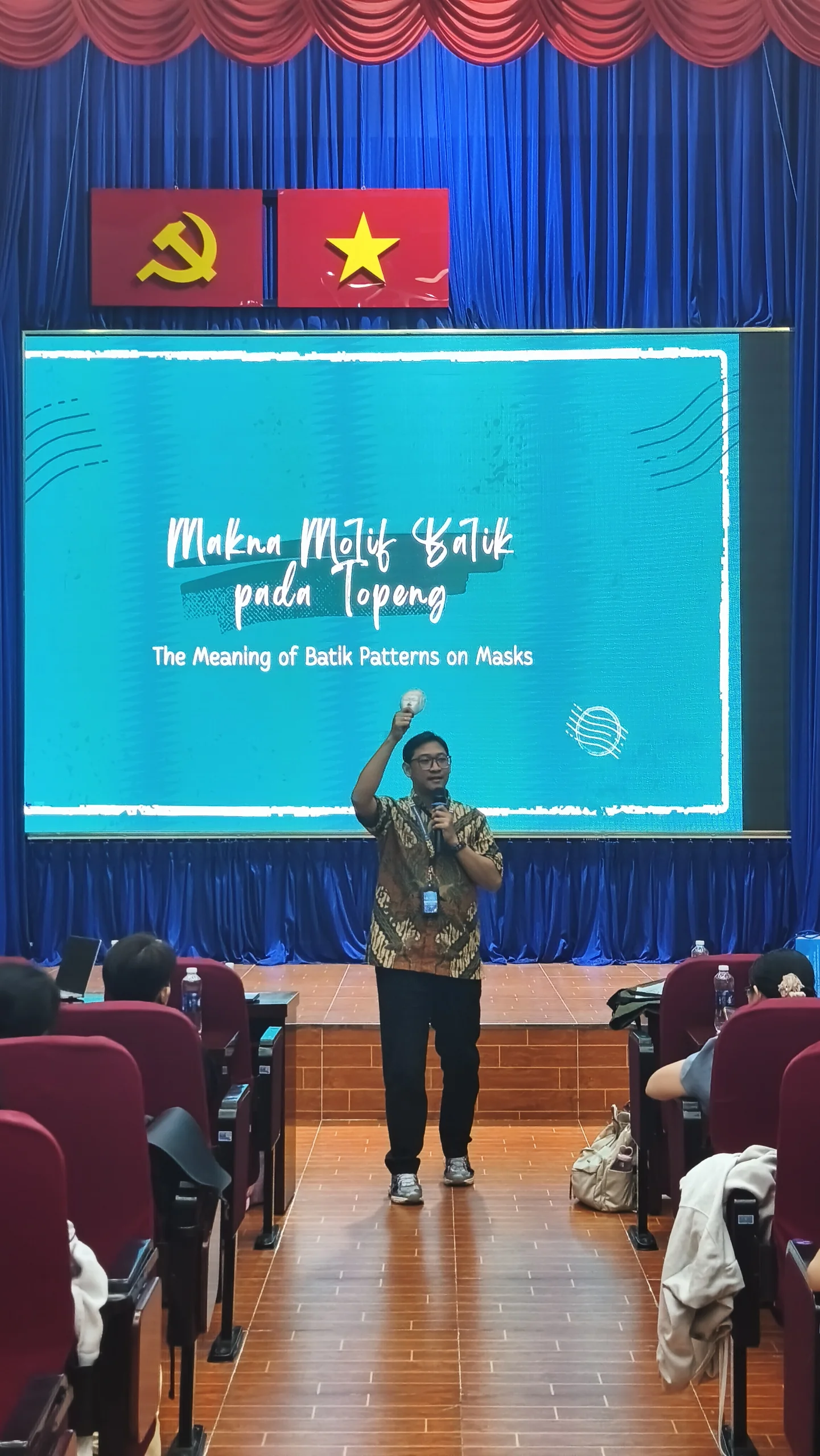
Visiting Lecturers Introduce the Diversity of the Archipelago
In addition to the batik mask workshop, the UNESA team participated in visiting lecturer sessions and academic exchanges at the Faculty of Oriental Studies, USSH–VNUHCM.
The program, themed "The Charm of Indonesia: Cultural Diversity in One Archipelago," introduced the diverse cultures, languages, identities, and social lives of the Indonesian people to students and faculty in Vietnam.
The activity also involved Dr. Resdianto Permata Raharjo, M.Pd., Respati Retno Utami, M.Pd., and Nadia Nur Thahirrah, S.E., M.SM., who received official invitations from USSH–VNUHCM to participate in visiting lecturer and academic exchangeprograms.
Through these programs, Vietnamese students had the opportunity to engage in direct dialogue with Indonesian academics regarding the diversity of the Indonesian archipelago.
The material presented not only showcased the richness of tradition but also opened discussions regarding the relationship between language, identity, and the social life of the community.
This academic exchange served as a meeting point for various perspectives, particularly in understanding how culture shapes the character and identity of society in each country.
Batik Masks as a Tool for Cultural Diplomacy
The use of batik masks in the community service program was a compelling approach, as it connected cultural learning with visual experience and creativity.
Batik, long known as part of Indonesia's cultural wealth, was introduced through the medium of masks. This combination allowed students to explore the relationship between art, symbolism, and cultural communication.
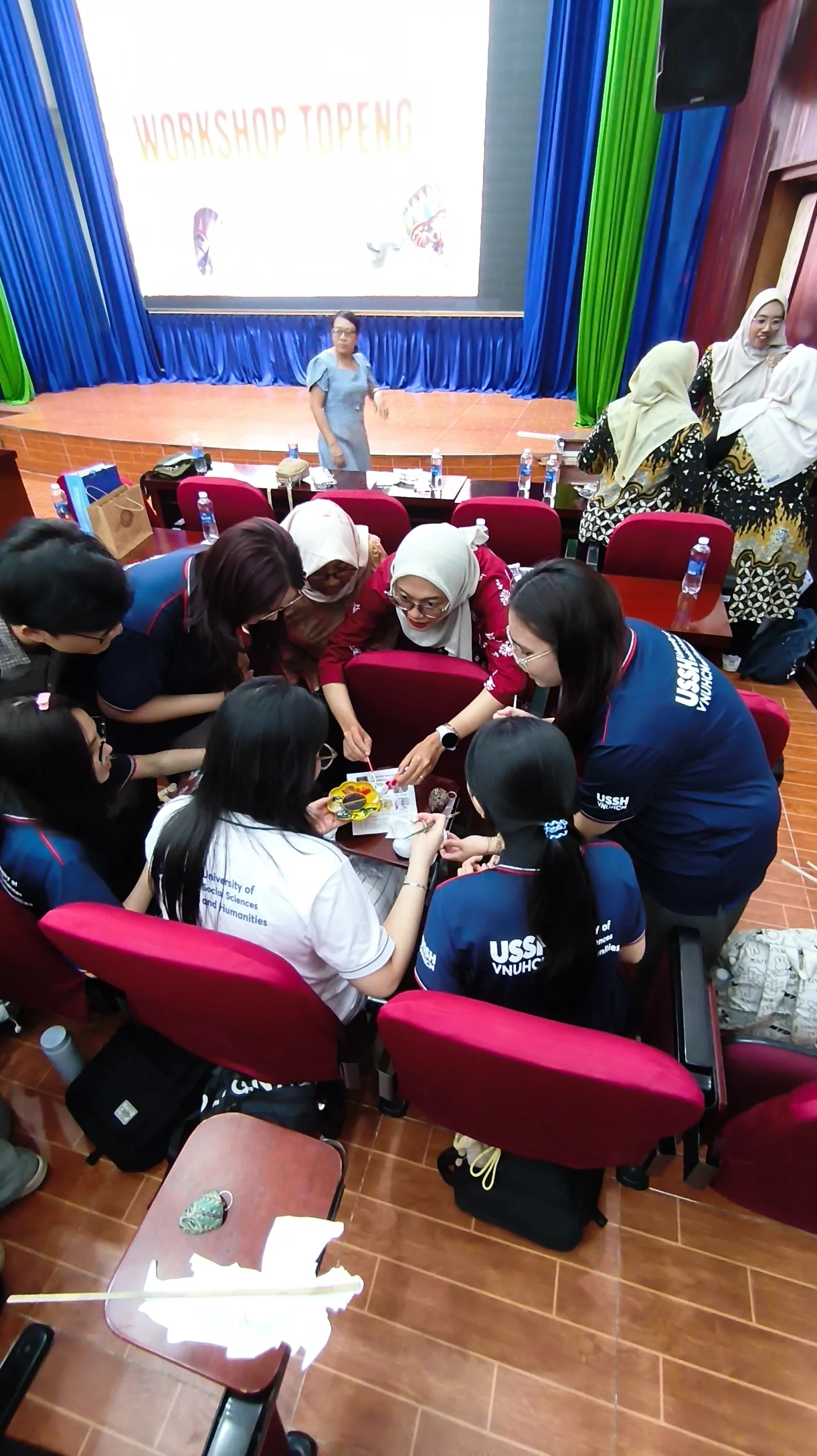
Through discussions on the motifs and meanings contained within the batik masks, students were invited to understand how an artwork can convey messages about a society's identity.
This approach also opened opportunities to compare various forms of cultural expression between Indonesia and Vietnam.
Thus, the introduction of batik masks was not only oriented toward imparting knowledge about Indonesian culture but also served as a means to build communication and mutual understanding.
The activity demonstrated how cultural diplomacy can be carried out through educational activities that involve students directly.
Strengthening Research Cooperation and Academic Exchange
The series of activities by UNESA in Vietnam was also part of developing institutional cooperation between the Faculty of Languages and Arts (FBS) at UNESA and USSH–VNUHCM.
Collaboration between the two institutions covers several academic fields, including joint research, community service, faculty and student exchanges, and scientific publications.
This cooperation is grounded in an Implementation of Arrangement document that governs the execution of academic activities between the two universities.
Based on the cooperation document referenced in the activity, the collaboration is designed to last for five years, with the possibility of evaluation and renewal based on mutual agreement.
This agreement opens opportunities for both institutions to develop more sustainable programs, including collaborative research, academic mobility, and international community service.
For UNESA, the activities in Vietnam represent a form of international cooperation that integrates education, research, and community service.
Meanwhile, for students and academics in Vietnam, this program provides an opportunity to learn about Indonesian culture while expanding academic ties with universities in Indonesia.
Through batik mask workshops, visiting lecturerprograms, and the development of research cooperation, both universities are striving to build relationships that focus not only on academic activities but also on cultural exchange and strengthening mutual understanding between communities.
This activity also demonstrates that art and culture can serve as a gateway for universities to build international dialogue and develop cross-border educational collaboration.






Comments 0
Write a Comment Share your response