


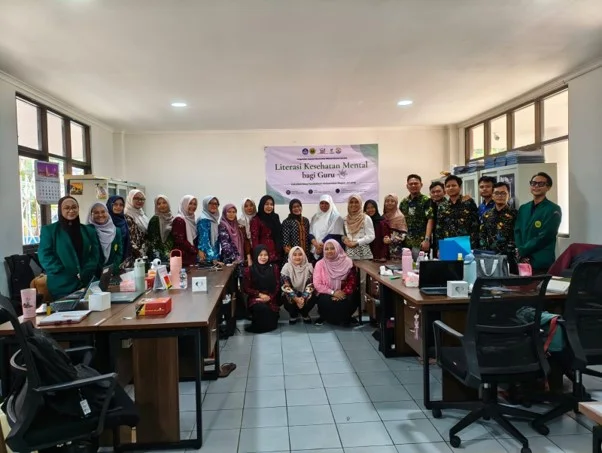
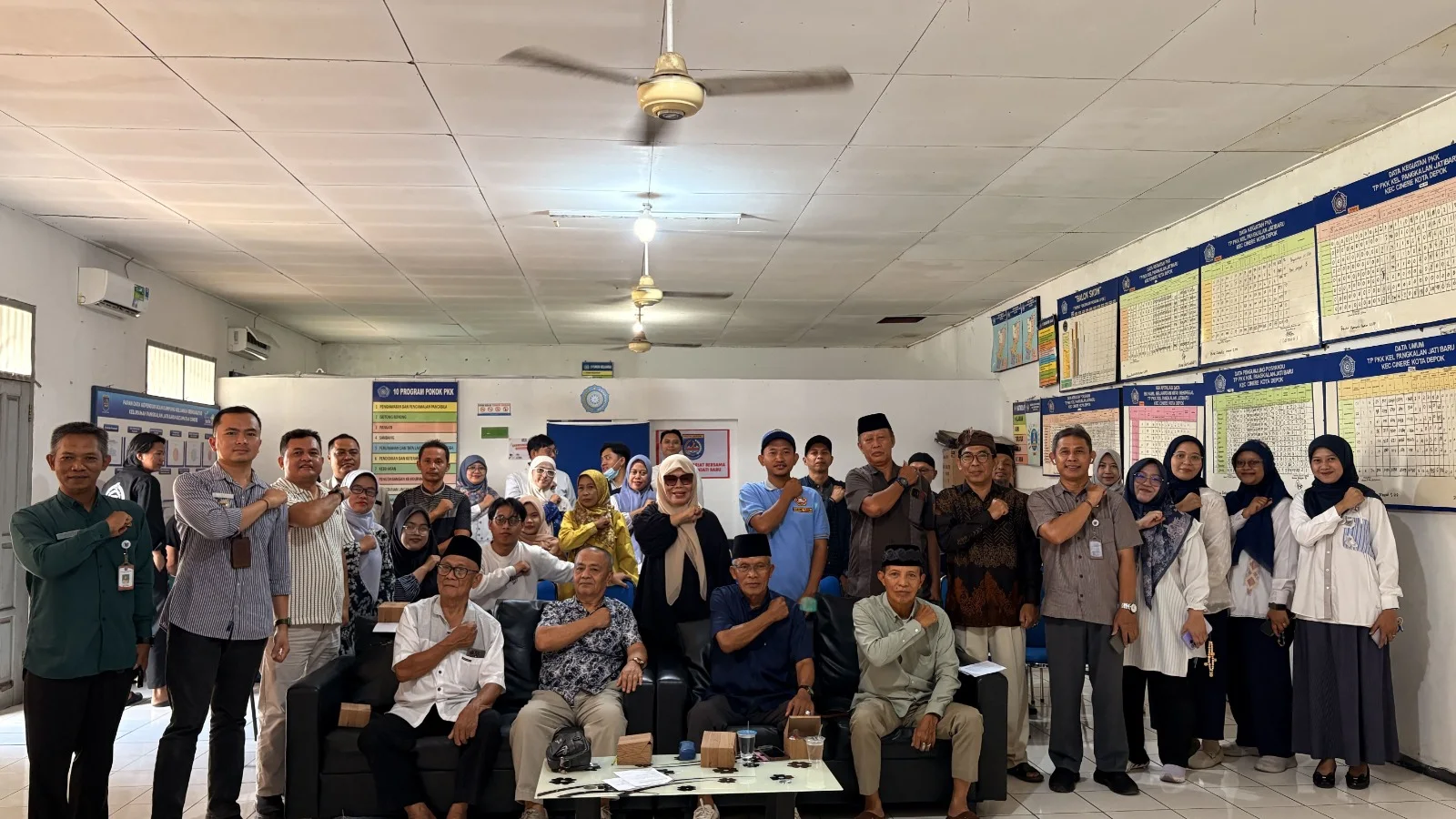
BEKASI, JurnalPost.com – A total of 180 students from Sekolah Rakyat Menengah Atas 13 Bekasi participated in a mental health literacy activity organized by a team of lecturers from the Guidance and Counseling Study Program at the Faculty of Education (FIP), State University of Jakarta (UNJ), on Tuesday (4/8/2026).
The activity, titled “Mental Health Literacy for Students in the North Bekasi Region” , involved teachers and student assistants. This program is part of the FIP UNJ Community Service initiative in the field of Guidance and Counseling.
Through this activity, students were equipped with an understanding of mental health from a scientific perspective and encouraged to develop psychological resilience to face various challenges during adolescence.
The program also supports the achievement of Sustainable Development Goals (SDGs) Number 3: Good Health and Well-being, which emphasizes the importance of healthy living and well-being for society.
The UNJ Guidance and Counseling lecturer team involved in this activity consisted of Desriani Rahmania, M.Pd.; Dr. Eka Wahyuni, MAAPD.; Rike Ulandari, M.Pd.; Nira Prihatin Nufus, M.Pd., Kons.; Wening Cahyawulan, M.Pd.; and Cut Munika Bastia Rahmadani, M.Pd.
Meanwhile, the students assisting with the activity were Nadine Hafiizha Rosadi, Ramadhianne Kayla Hasna Nur Hidayat, and Najla Nadhifa Putri Nayasin.
Mental Health Literacy Amidst Social Media Exposure
The community service team noted that understanding mental health is increasingly vital for adolescents due to high exposure to information via social media.
Students today do not only obtain knowledge about mental health from school, family, or professionals. Various content regarding psychology and mental health is also easily found on digital platforms.
However, not all information circulating on social media has a scientific basis or is delivered by individuals with competence in the mental health field.
One phenomenon of concern is the tendency toward self-diagnosis, which occurs when an individual concludes they have a specific mental disorder based on information obtained independently, particularly through social media content.
Therefore, students need to understand that feelings of sadness, anxiety, fatigue, or stress do not automatically indicate a specific mental health disorder.
Through proper literacy, students are expected to be able to understand their emotional states, recognize changes that require attention, and know when and from whom they can seek help.
This understanding is also important to prevent misunderstandings or the labeling of oneself and others without a proper basis.
Using a Strength-Based Positive Psychology Approach
In its implementation, the BK FIP UNJ team utilized a strength-based positive psychologyapproach.
This approach does not only focus on the psychological issues or risks that adolescents might face but also helps students recognize their strengths and positive internal resources.
Students were invited to recognize various aspects such as resilience—the ability to bounce back from difficulties—as well as hope, empathy, gratitude, and the ability to face life's challenges.
With this approach, students are not merely positioned as individuals vulnerable to psychological problems, but as individuals with the potential to grow and possess internal resources to face adversity.
The material provided covered basic understanding of mental health and psychological well-being, recognition and regulation of emotions, and ways to handle academic and social stress commonly experienced by teenagers.
Participants also received material regarding myths and facts surrounding mental health and the importance of seeking help through appropriate methods and from qualified parties when facing issues they cannot handle alone.
All materials were prepared using language relatable to the students' lives, making it easier to connect with experiences they encounter in their daily activities.
From Discussion to Self-Reflection
The mental health literacy activity did not just consist of one-way material delivery.
The community service team also used several interactive methods, ranging from discussions and case studies to self-reflection.
This approach was used so that students would not just receive theoretical knowledge, but could also connect it to their academic experiences, social lives, and the emotional conditions they experience daily.
Students were also encouraged to improve their ability to distinguish evidence-based mental health information from popular social media content that has the potential to cause misunderstandings or stigma.
Mental health literacy is thus not only directed at recognizing psychological disorders. Students are also encouraged to understand mental health as part of well-being and the process of personal growth.
Through the strength-based approach, every student is expected to see that they possess abilities, potential, and positive resources that can be developed when facing various challenges.
This Community Service activity is expected to strengthen the understanding of students at Sekolah Rakyat Menengah Atas 13 Bekasi regarding mental health while encouraging the formation of a school environment that is more open, supportive, and responsive to the psychological needs of students.





Comments 0
Write a Comment Share your response