


JurnalPost.com, Wonogiri – Agricultural waste and agro-industrial byproducts that have previously gone underutilized are now being tapped as alternative ingredients for poultry feed in Nguntoronadi District, Wonogiri Regency, Central Java.
Through a community service program, a team of lecturers and students from Diponegoro University (Undip) is providing guidance to poultry farmer groups on how to utilize local waste to create fermented feed.
The initiative took place during the Student Community Service (KKN) period, from July 9 to August 18, 2026, and was carried out on a rotating basis across 11 villages in Nguntoronadi District.
The service program was led by Prof. Dr. Dra. Turrini Yudiarti, M.Sc., a lecturer from the Department of Animal Science at the Faculty of Animal and Agricultural Sciences, Diponegoro University, alongside a team of lecturers and KKN students.
Nguntoronadi is considered to have significant potential for raw feed materials. In addition to agricultural waste, the region also produces byproducts from local agro-industries, including waste from brem production, which has the potential to be processed into animal feed.
This potential is a key focus because small-scale poultry farmers continue to face the challenge of high conventional feed costs. Furthermore, there is a need to improve knowledge regarding techniques for processing local materials into safe, nutritious feed.
Utilizing Regular Farmer Forums
The mentoring was conducted by leveraging regular meetings of farmer groups in each village. During these forums, the Undip team provided materials on processing agricultural and agro-industrial waste into fermented feed.
Farmers were introduced to the basic principles of fermentation, raw material selection, processing stages, and methods for feeding the poultry.
The training also emphasized the importance of maintaining hygiene and material quality throughout the processing stage to ensure the resulting feed remains safe for livestock.
The use of fermented feed is considered a viable option to increase the utilization of local raw materials while reducing farmers' dependence on commercial factory feed.
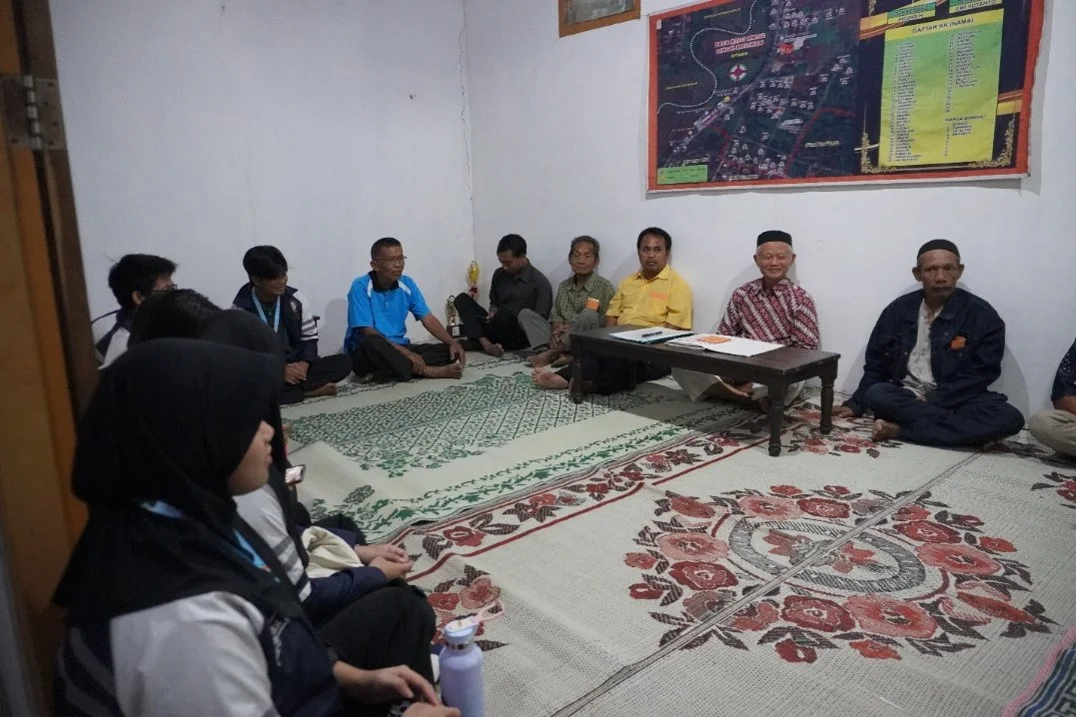
Beyond lowering production costs, proper feed processing is expected to support the health and productivity of the poultry.
The sessions were interactive, with farmers discussing the types of waste available in their immediate surroundings and the feasibility of using them as feed ingredients.
Farmers Welcome the Mentoring
Gunawan, a member of a poultry farmer group in Nguntoronadi District, stated that the program provided new insights for farmers on how to utilize materials that were previously overlooked.
“We are very grateful for the assistance and the educational materials on fermented feed provided by the Undip lecturers and students. We have long struggled with the high price of factory feed, even though there is plenty of agricultural and brem waste around us that has not been properly utilized,” said Gunawan.
According to him, the mentoring helped farmers understand how to process local waste into feed that is more beneficial for their livestock.
“Thanks to this guidance, we now know how to process that waste into fermented feed that is good for the health and growth of our poultry,” he added.
Encouraging Farmer Independence
Prof. Turrini hopes that the knowledge shared will not end with the conclusion of the KKN program but will continue to be applied and developed by the farmer groups in Nguntoronadi.
The utilization of local resources is seen as a way to help farmers build more independent business systems, especially in the face of fluctuating commercial feed prices.
This effort is also part of a sustainable farming approach, as materials previously considered waste can be repurposed into products with economic value.
By utilizing local agricultural and agro-industrial waste, farmers not only have the opportunity to reduce operational costs but can also help decrease the amount of waste discarded into the environment.
The mentoring conducted through group forums is also expected to facilitate the transfer of knowledge among livestock business operators. Farmers who have mastered the processing techniques can share their experiences with other members, allowing the use of fermented feed to be adopted more widely.
The program highlights the importance of collaboration between universities and the community in finding solutions to the challenges faced by the small-scale livestock sector.
Through the development of feed based on local resources, farmers in Nguntoronadi District are expected to be better equipped to improve business efficiency, maintain livestock health, and strengthen the sustainable availability of animal-based food.
This effort is also in line with the spirit of the Sustainable Development Goals or Sustainable Development Goals (SDGs) 2, which aims to end hunger, achieve food security, improve nutrition, and promote sustainable agriculture.






Comments 0
Write a Comment Share your response