


WEST MANGGARAI, EAST NUSA TENGGARA The Indonesian Red Cross (PMI) has erected temporary learning tents to help restore educational services for communities affected by the earthquake in East Nusa Tenggara.
One of these learning tents was established at SMP Negeri 8 Komodo in West Manggarai Regency, where parts of the school building sustained damage and cracks following the tremors.
In addition to supporting the education sector, PMI is strengthening healthcare services by providing tents and supporting facilities to assist the operations of field hospitals and community health centers impacted by the disaster.
This support is part of PMI's broader earthquake response, which focuses not only on structural damage but also on the disruption of essential public services, including education and healthcare.
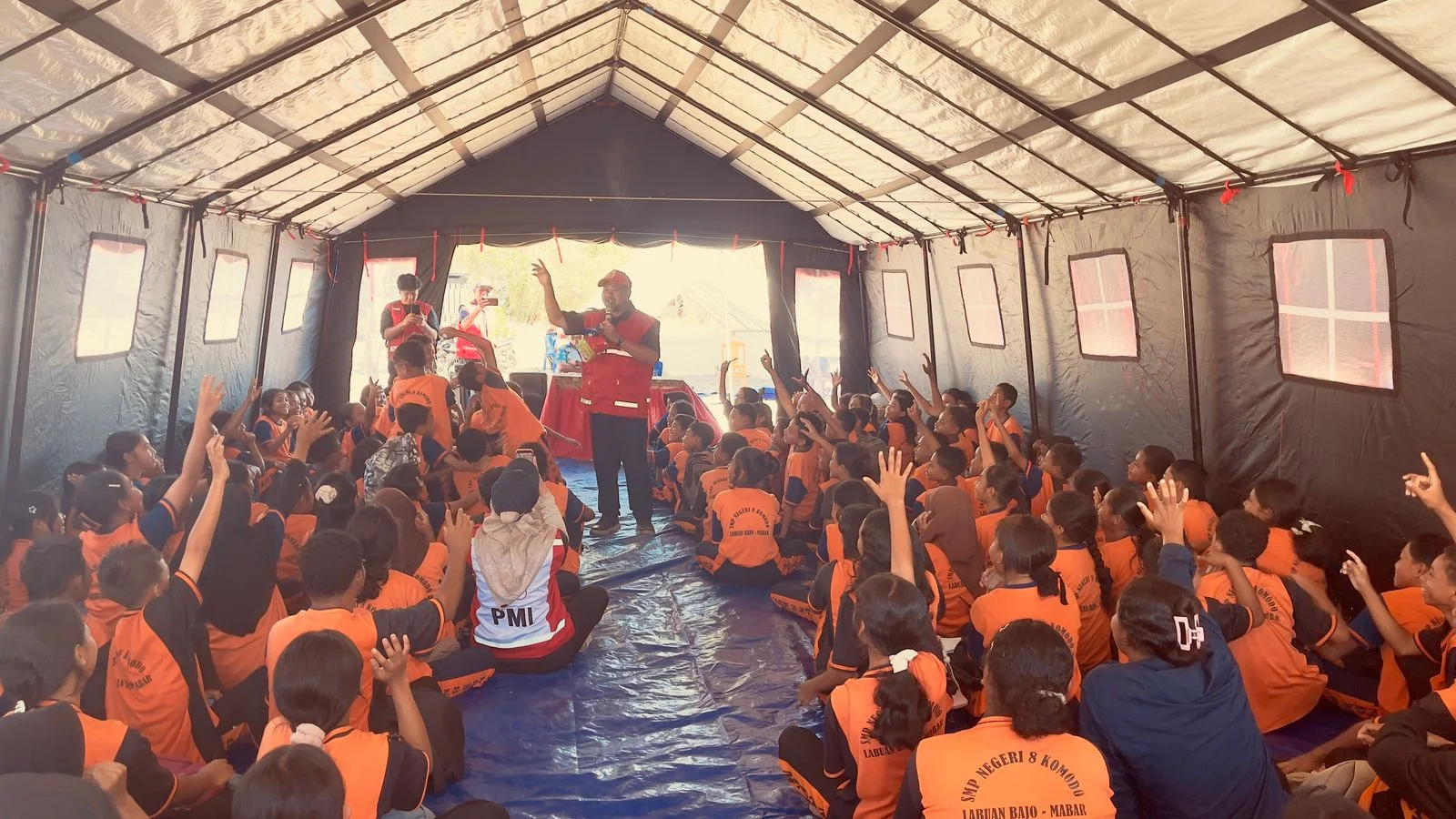
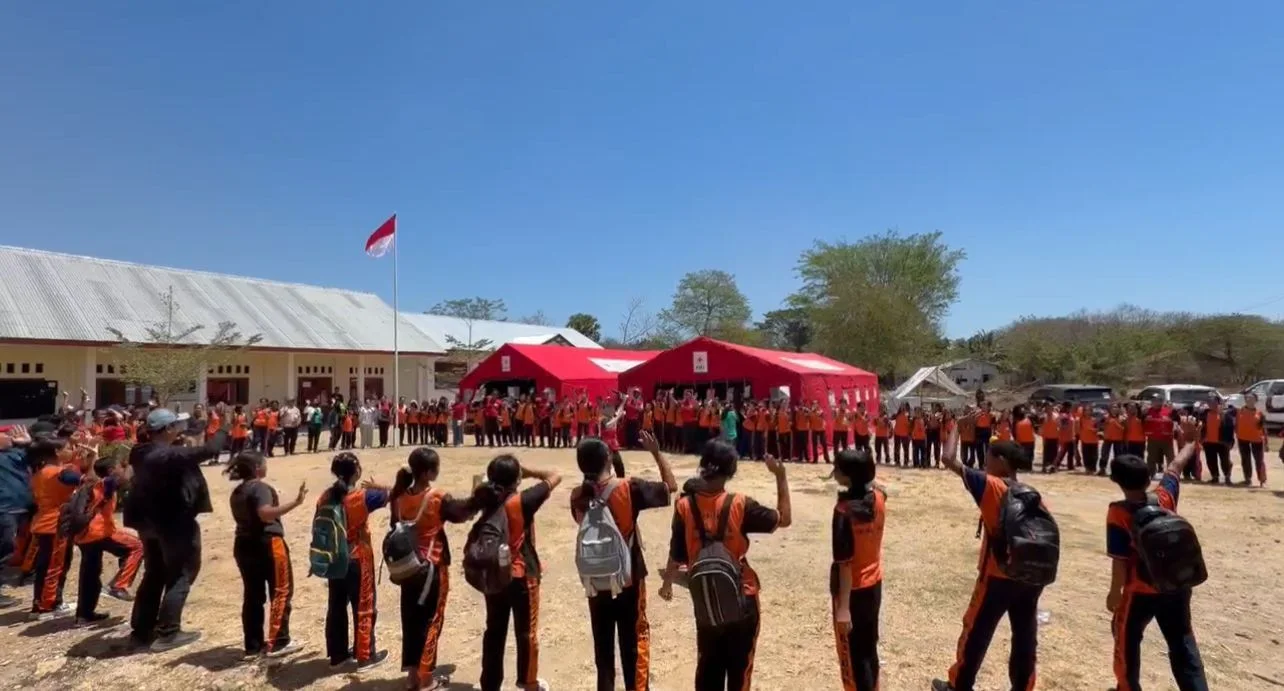
Approximately 140 students from SMP Negeri 8 Komodo, divided into six classes, have returned to face-to-face learning. However, classes are temporarily being held outdoors using the tents provided by PMI.
The Principal of SMP Negeri 8 Komodo, Aloysia Moto, stated that this decision was made after considering both the condition of the school building and the psychological well-being of the students.
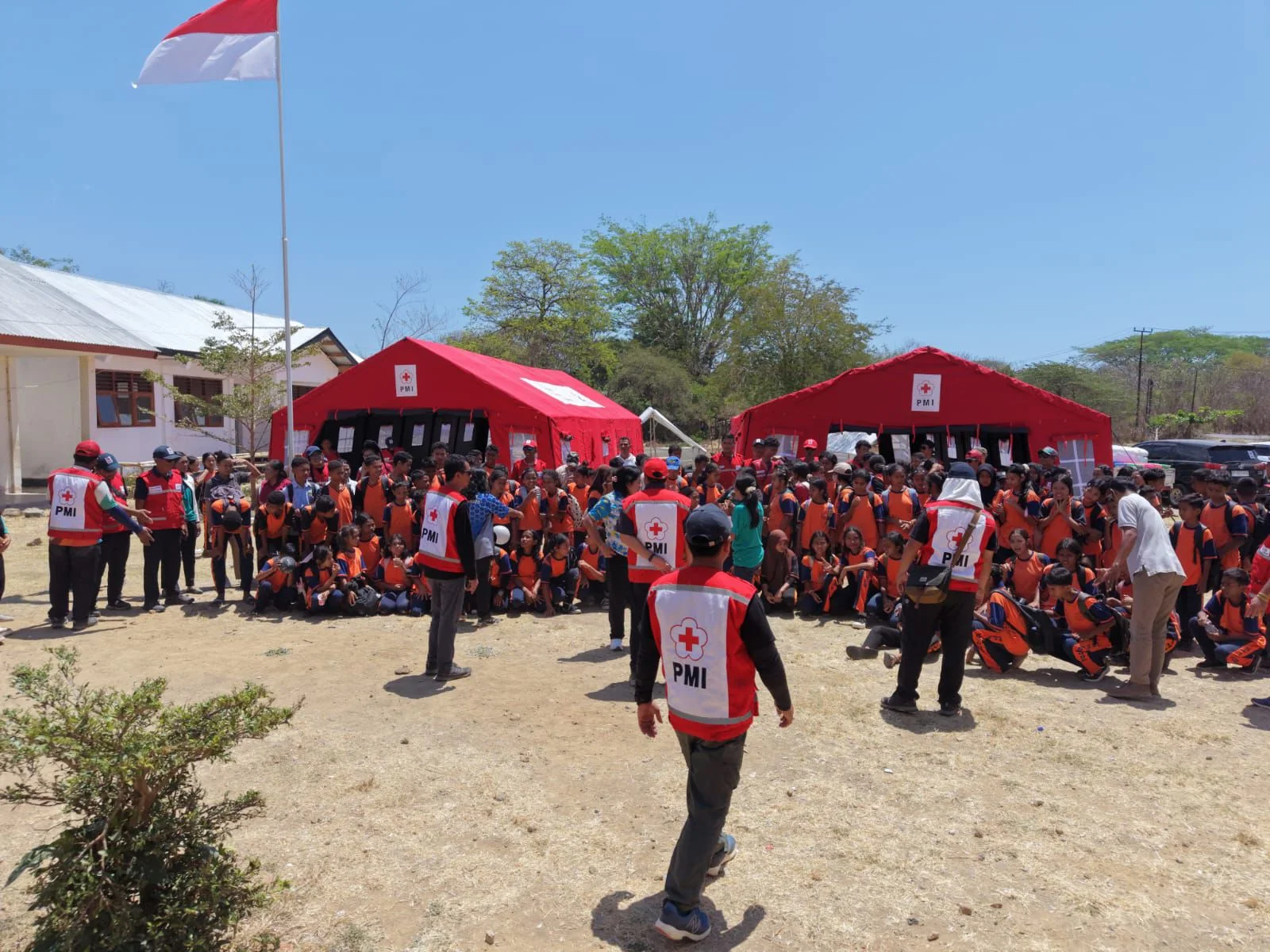
“During the emergency response period, we are prioritizing the children's psychological state, especially their sense of fear,” Aloysia said.
She explained that recurring aftershocks have left some students anxious about returning to classrooms, and the structural integrity of the school building remains a significant concern.
“Especially because we have a second floor. When tremors occur, the children can panic and start running. That is our biggest concern,” she said.
Consequently, outdoor learning has become a temporary solution. Beyond safety considerations, the learning tents are expected to help students gradually regain a sense of security and return to normal activities following the disaster.
Before resuming face-to-face learning, the school attempted to implement online classes. However, the method faced several obstacles and was deemed ineffective for the majority of students.
“After the earthquake, the learning process was not effective. Students had started learning online, but there were many hurdles. Some parents did not have smartphones, others lacked sufficient internet data, among other issues,” Aloysia noted.
Limited access to communication devices and internet connectivity made it difficult for many students to participate in distance learning, prompting the school to seek alternatives to resume in-person education.
With about 140 students across six classes, the learning tents serve as a vital temporary space to ensure education continues while the school building remains unusable.
“We want the children to understand that the learning process can continue even if we are not inside a classroom for the time being,” said Aloysia.
She also expressed her appreciation to PMI for responding to the school's needs following the earthquake.
“We thank PMI for responding to our current needs, especially those of the students. The children need a place where they can return to learning and activities after the earthquake. With these tents, they can study with their teachers and friends again,” she said.
Meanwhile, the Head of the Facilities and Infrastructure Bureau at PMI Headquarters, Ilham Huznul, stated that PMI's assistance is tailored to the specific needs and requests identified within the affected communities.
According to him, this approach aligns with the directives of PMI Chairman Jusuf Kalla, who emphasizes that disaster relief operations must be conducted quickly, accurately, and directly address the most urgent needs of the community.
“PMI adjusts its support based on the current needs and requests of the community. One example is the provision of learning tents to support the education sector. In the health sector, we are also preparing temporary facilities according to field service requirements,” Ilham said.
As part of its health sector response, PMI has set up 13 tents, each measuring 6 x 12 meters, to support field hospital operations in Ruteng.
The field hospital is operated by the Indonesian Ministry of Health after the previous hospital facility became inoperable due to earthquake damage.
PMI also provided 10 portable toilets to support sanitation needs and improve comfort for healthcare workers and patients receiving treatment at the field hospital.
“PMI has also set up 13 large 6 x 12-meter tents to support the field hospital in Ruteng, along with 10 portable toilet units,” Ilham added.
In addition to the field hospital, PMI has constructed three tents to support services at community health centers (Puskesmas) affected by the earthquake.
This assistance is intended to ensure that basic healthcare services remain available to the public even though several health facilities have been damaged and cannot operate normally.
“We are providing this support so that healthcare services for the community continue, even though health facilities were affected by the earthquake and cannot be used normally. In accordance with the direction of PMI Chairman Mr. Jusuf Kalla, PMI's aid operations must be fast and targeted,” said Ilham.
According to Ilham, these tents and other temporary facilities provide a quick solution while permanent buildings cannot be used safely.
“We hope the tents and supporting facilities we have set up can help healthcare workers provide services to the community in a more decent and comfortable environment,” he said.
Ilham emphasized that PMI's disaster response does not only focus on meeting short-term emergency needs but also on ensuring that essential services for the affected community remain operational.
“In principle, as emphasized by Mr. Jusuf Kalla, when a disaster occurs, community activities should not stop completely. Children must continue to receive education, the community still needs healthcare services, and supporting facilities must be provided responsively according to real needs in the field,” he said.
He added that tents serve as a quick and practical solution when permanent buildings are temporarily unusable. These facilities allow essential community activities to continue while awaiting assessment, repair, and recovery of damaged infrastructure.
“What we have built is temporary, but the benefits must be felt directly by the community during the emergency response and recovery period. As Mr. JK emphasized, PMI must always be present to help restore basic community services with dignity,” Ilham said.
The establishment of learning tents at SMP Negeri 8 Komodo, the provision of 13 tents and 10 portable toilets for the field hospital, and three tents for community health centers demonstrate that post-disaster recovery is not just about providing temporary shelter.
In the school environment, the tents provide a safe space for children to open their books and continue their lessons. Meanwhile, in health facilities, the tents serve as vital spaces for medical personnel to continue providing services to the affected community.
For PMI, post-disaster recovery is a gradual process that must address community needs across various sectors while ensuring that basic services remain functional from the emergency response phase through to recovery.






Comments 0
Write a Comment Share your response