

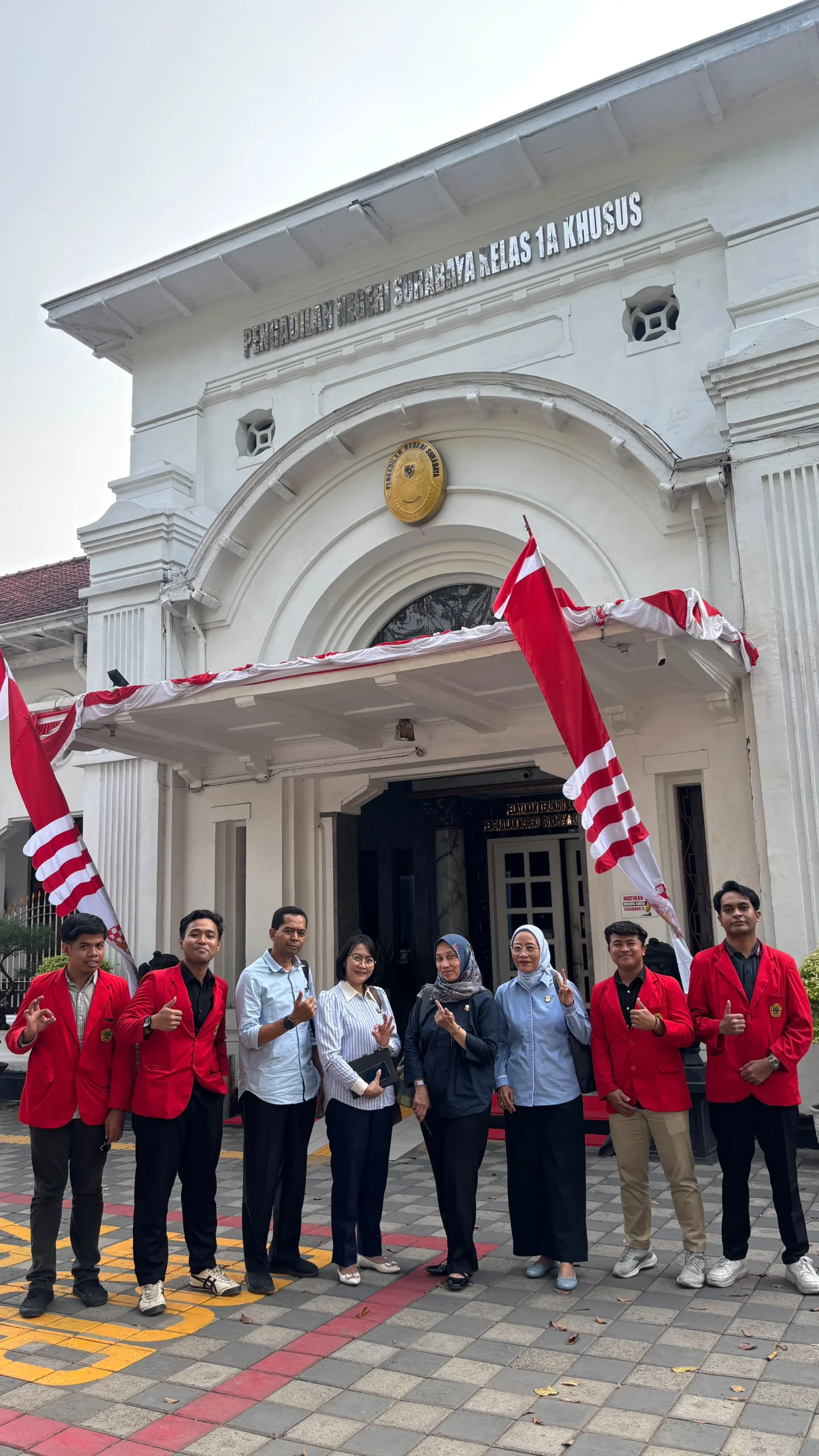
JurnalPost.com - Legal education extends beyond the classroom. A solid understanding of legislation must be paired with the ability to analyze legal issues based on the facts and circumstances at hand. This experience was gained by Simson Efraim Here Mone, a law student at the Faculty of Law, Universitas 17 Agustus 1945 (Untag) Surabaya, through a Practical Work Lecture (KKP) program at the East Java High Prosecutor's Office.
During his internship from July to early September 2026, Efraim had the opportunity to study various activities related to the Civil and State Administrative Law (Datun) division. The assignments provided served as a means to learn about the legal analysis process, document drafting, legal assistance, and the application of legislation in practice.
This experience bridged the material learned during his studies with the working environment of a law enforcement institution. Through assignments and discussions with mentors, Efraim realized that resolving legal issues requires precision, systematic reasoning, and the ability to connect facts with relevant legal foundations.
Deepening Legal Analysis in Civil Law
One of the experiences Efraim gained was studying non-litigation legal assistance for a business entity in East Java. In this activity, he learned about the core issues, the standing of the parties, the relevant legal basis, and steps for resolution outside of court.
This activity provided insight into the importance of legal analysis before determining a course of action. Understanding an issue requires more than just reading documents; it also demands the ability to identify relevant facts and examine the legal provisions related to the matter.
Efraim was also tasked with studying the drafting of legal opinions regarding the reference price for white crystal sugar at the farmer level. Through this assignment, he practiced understanding the subject of the study, tracing the legal basis, and drafting a systematic analysis.
Additionally, he studied legal assistance files related to the procurement of equipment and the construction of a wastewater treatment plant (IPAL) at a mental hospital for the 2022 Fiscal Year. This assignment broadened his understanding of legal analysis in procurement and construction activities, which requires precision in reviewing documents and understanding the legal aspects related to such activities.
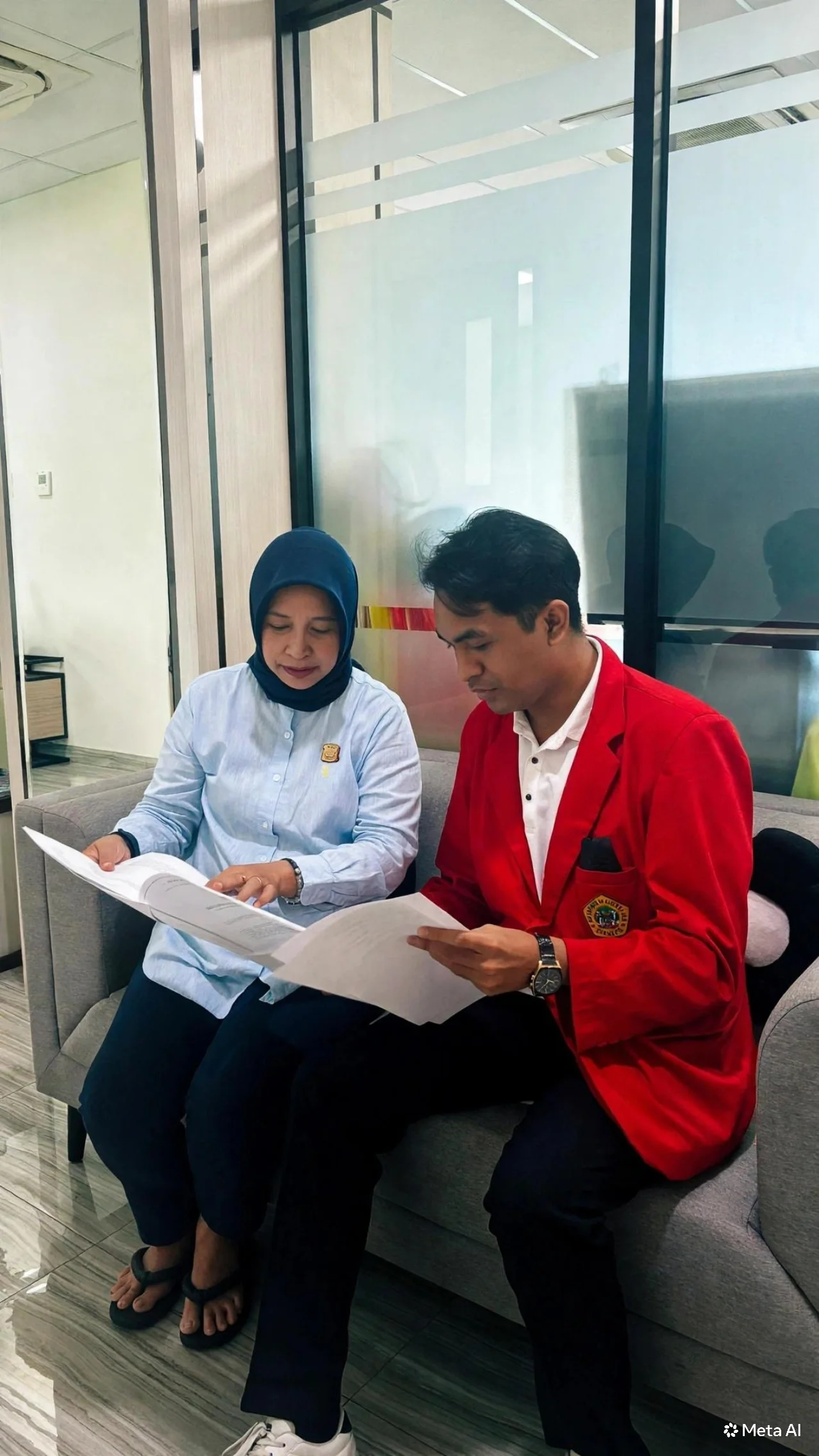
These various experiences demonstrate that civil law issues can have different characteristics. Therefore, the analytical approach must be adjusted to the facts, documents, and legal provisions related to each issue.
Learning Document Drafting and Case Processes
Beyond analyzing files, Efraim had the opportunity to learn how to draft several legal documents, including Special Powers of Attorney (SKK), answers to lawsuits, replications, and rejoinders.
In the drafting process, he learned about document systematics, the standing of the parties, the core issues, and how to structure responses and legal arguments coherently. Drafting these documents also requires precision in aligning the content with case files and mentor guidance.
One assignment involved a case of signature forgery on a check used as evidence. Through drafting the replication and rejoinder in that case, Efraim learned how legal arguments are structured to respond to the claims of other parties based on the issues being analyzed.
Practical experience was also gained by accompanying prosecutor mentors to hearings at the Surabaya District Court. This activity provided an opportunity to observe court proceedings firsthand, including agendas related to the examination of expert witnesses.
This experience complemented his learning about legal documents with an understanding of the judicial process. Efraim could see that drafting documents and legal arguments is part of a series of tasks that must be performed carefully and responsibly.
Understanding State Administrative Law through Regulatory Analysis
The internship in the Datun division also included the study of state administrative law, specifically regarding the differences in regulations within the Law on the State Administrative Court (PTUN) and its connection to the Government Administration Law.
In this assignment, Efraim studied relevant provisions, compared legal regulations, and examined the relationship between the two laws. This activity required the ability to read regulations carefully so that the analysis would not merely summarize provisions but also explain the connections between the regulations being studied.
The results of the analysis were then presented before the head of the Civil and State Administrative Law division. After receiving feedback, Efraim made revisions to refine his work according to the guidance provided.
This process was an important experience in developing legal analysis skills. Drafting a study does not stop at collecting regulations; it also requires the ability to explain arguments, justify the results of the analysis, and correct shortcomings based on evaluations.
Through this activity, Efraim gained an understanding that state administrative law issues have their own characteristics. The analysis must consider the authority, procedures, and provisions of legislation related to government administrative actions.
Learning Professionalism through Discussion and Evaluation
During the KKP, discussions with mentors were a crucial part of the learning process. The feedback provided helped Efraim improve document structures, review arguments, and clarify the legal basis used in his analysis.
The revision process also provided the experience that legal work requires precision and openness to evaluation. A document is not only judged by the completeness of its content but also by the accuracy of the information, the systematics of the drafting, and the consistency of the arguments with the issues discussed.
In addition to technical skills, the internship introduced the importance of discipline, professional communication, and responsibility in carrying out tasks. These are part of the competencies that students need to develop before entering the workforce.
The experience of studying various issues in the field of Civil and State Administrative Law also broadened his perspective on the scope of legal work. Each issue requires an appropriate approach, making critical and systematic thinking essential tools for facing the challenges of the legal profession.
Connecting Theory with Practice for Future Preparation
The KKP activity at the East Java High Prosecutor's Office was an opportunity for Efraim to deepen his understanding of the application of law in a professional work environment. Through the analysis of non-litigation legal assistance, the drafting of legal opinions, PTUN regulatory studies, and the drafting of case documents, he gained an overview of the diverse work related to the Civil and State Administrative Law field.
This experience shows that legal learning requires a balance between mastering theory and practical skills. The ability to read regulations must be accompanied by the precision to understand facts, construct arguments, and present analysis results clearly and responsibly.
For law students, internships are not just about fulfilling academic requirements. More than that, internships are an opportunity to recognize the challenges of the working world, develop competencies, and build a professional attitude.
Through his experience at the East Java High Prosecutor's Office, Efraim gained the foundation to continue developing his analytical skills and legal understanding. This experience is expected to support his readiness to face the professional world while strengthening his understanding of the importance of applying the law carefully, professionally, and responsibly.






Comments 0
Write a Comment Share your response