


JurnalPost.com - Every year, a significant flow of development funds and public spending reaches the land of Papua. From the Regional Revenue and Expenditure Budget (APBD) to the Special Autonomy (Otsus) Fund, the government's commitment to driving the wheels of the economy remains constant. However, if we examine the economic structure at the grassroots level more closely, a fundamental question arises: to what extent has public budget allocation transformed Papua's cultural and artistic heritage into an independent and sustainable economic force?
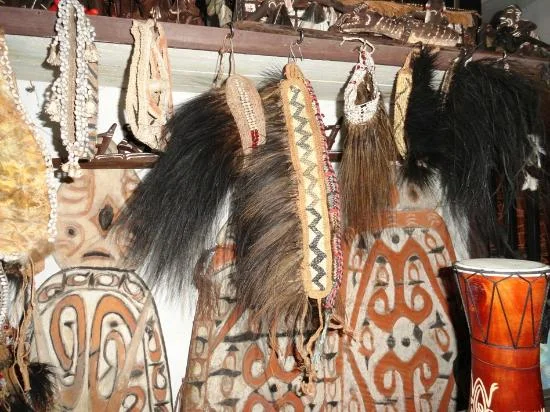
Papua is blessed with invaluable artistic and cultural wealth. From Noken knitting—recognized as a UNESCO Intangible Cultural Heritage—to majestic Asmat carvings, locally patterned batik, and jewelry and crafts from the interior, the region is rich in tradition. Unfortunately, this creative economic potential is often viewed merely as a complementary commodity for ceremonial events or cheap souvenirs. Thevalue addedof these high-value artworks is often not fully enjoyed by the Indigenous Papuan (OAP) artisans and artists themselves.
This is where the urgency for a reorientation of regional public financial policy lies. It is time for local governments in Papua to shift the paradigm from merely distributing consumptive social assistance toward productive investment that builds an ecosystem of Culture-Based Economy.
Structuring a "Productive Fiscal" Approach for Craft and Art MSMEs
Downstreaming in the context of the creative economy does not mean mass industrialization that strips awayauthenticity. The downstreaming of arts and crafts is an effort to provide added value through quality standardization, copyright protection, improved packaging capacity, and the opening of supply chains to the global market.
To achieve this, regional public financial instruments must act as acatalyst:
1. Development of Creative Houses and Craft Centers: APBD/Special Autonomy Fund allocations need to be prioritized to provideco-working spaces, craft production centers, and permanent exhibition galleries at the district or regency level.
2. Intellectual Property (IP) Protection & Mentorship: Public spending must target the protection of local artists' creative works. Local governments can facilitate the registration of Copyrights and Geographical Indications for regional craft products, while simultaneously funding training in modernbranding & packagingande-commercemarketing.
3. Strengthening Supply Chains and Local Markets: Local governments can implement an affirmative policy through office operational spending that mandates the use of local OAP craft products as official souvenirs. Furthermore, local governments must encourage integration with the regional tourism sector—such as requiring hotel chains, public spaces, and airports to provide dedicated display cases for local craft products.
Regeneration of Artisans and Access to Financing
The biggest challenge often overlooked is the threat of a break in the regeneration of traditional artisans. Many young Papuans are reluctant to pursue craft arts because they perceive the sector as lacking financial security. Regional public fund allocations should target apprenticeship programs, scholarships, and creative business incubators that bring senior masters together with the younger generation. This approach allows traditional techniques to be combined with modern design and digital marketing skills.
On the other hand, a classic problem that still hinders traditional artisans in villages is limited access to formal business capital. The activity of producing Noken or wood carving is often considered a side activity that is unbankable by financial institutions.
Local governments, together with Regional Development Banks (BPD) and microfinance institutions, can play a strategic role through innovative fiscal interventions. For example, designing acredit guarantee fundscheme based on Special Autonomy funds to facilitate access to People's Business Credit (KUR) for local craft Micro, Small, and Medium Enterprises (MSMEs) without being hindered by burdensome physical collateral requirements.
Economic Sovereignty Rooted in Culture
Changing the direction of fiscal policy toward strengthening art and craft MSMEs is not just a matter of increasing Regional Original Revenue (PAD). More importantly, it is about maintaining cultural dignity, creating inclusive job opportunities for Papuan women and the younger generation, and triggering economic growth from the village to the city.
When Noken or wood carvings are not only valued as historical heritage but also managed professionally to generate real prosperity for their creators, that is when the economic sovereignty of the people is realized. It is time for public budgets to be used as a tool to ensure that Papua's cultural wealth is not only a source of pride but also a source of prosperity for its owners.







Comments 0
Write a Comment Share your response