


PAREPARE, JurnalPost.com — Traditional games have the potential not only to serve as a means of cultural preservation but also to be developed as part of the classroom learning process. This concept forms the basis of research by Universitas Muhammadiyah Parepare (UMPAR) in developing a learning model that integrates traditional games with Science, Technology, Engineering, Arts, and Mathematics (STEAM), cultural values, and 21st-century skills.
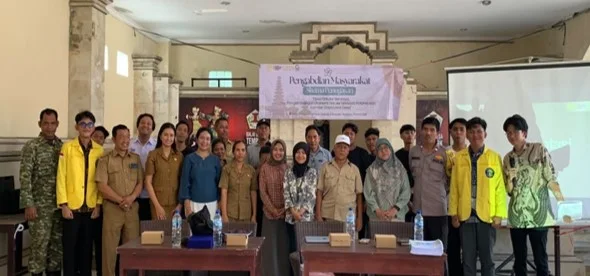
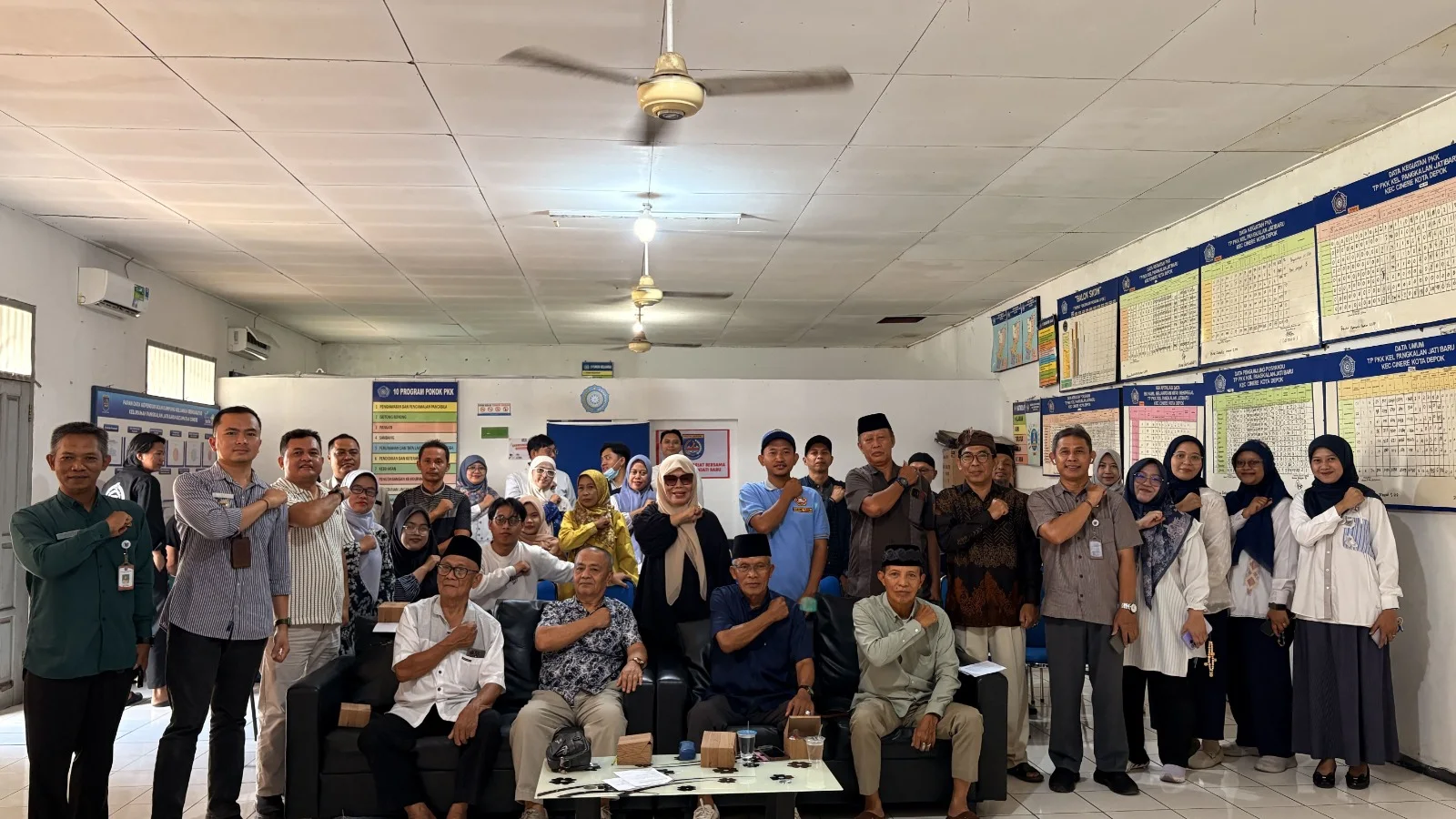
This research, now in its first year, involves several stages of data collection and model development. One such stage was a Focus Group Discussion (FGD) held with 21 junior high school teachers in Pangkep Regency in August 2026.
The research aims to bridge the richness of traditional games with the needs of school-based learning. Through this approach, teachers are expected to have a more structured framework for transforming local games into learning resources and contexts.
UMPAR researcher Dr. Nur Ismirawati, S.Pd., M.Pd., stated that the shift in children's play patterns is one of the reasons why traditional games need to be reintroduced into the educational space.
"Students today are more familiar with online games than traditional ones," said Nur Ismirawati in a summary of an interview compiled by the UMPAR Resona Saintek Team.
According to her, traditional games have characteristics that allow students to do more than just play for entertainment. Many games combine physical activity, specific rules, teamwork, and strategic thinking skills.
"It is very engaging because it involves movement and strategy within the game," she said.
These characteristics became the starting point for the research team to examine the relationship between play activities and academic concepts that can be applied in the classroom.
Connecting Traditional Games with Subject Matter
During the research process, the UMPAR team explored several traditional games known to the people of Pangkep and its surrounding areas. Data was collected through discussions and interviews with teachers and cultural experts to assess their potential for use in learning.
Some of the games identified in the research include Gandrang Bulo, magasing-gasing, gasing, longga, and macengke.
In Natural Science (IPA) lessons, these games can be linked to concepts of force, motion, rotation, balance, and simple machines. Meanwhile, in mathematics, teachers found connections to measurement, numbers, ratios, symmetry, and congruence.
These findings indicate that traditional games can function as a learning context if the play activities are designed with clear academic objectives.
Students, for example, are not just asked to play a game. They can also be guided to observe movement, calculate measurements, analyze strategies, compare results, conduct experiments, and draw conclusions based on their playing experience.
Thus, the game does not stop at being a recreational activity but becomes a gateway to understanding concepts that are usually acquired through classroom materials.
Nur Ismirawati stated that the research is also aimed at helping teachers implement traditional games more easily in their lessons.
"This research is also expected to serve as a bridge for teachers in schools to make it easier for them to incorporate traditional games into their teaching," she said.
The research results show that some teachers are already capable of finding connections between traditional games and subject matter. However, the ability to map these concepts has not always been followed by direct application in the classroom.
There are teachers who can identify the relationship between a game and mathematical concepts but have not utilized them in the learning process. On the other hand, there are also teachers who have developed the movement structure of a game into a representation of numerical operations.
The Birth of the BULO Learning Model
Building on these findings, the UMPAR research team developed a prototype learning model named BULO, an acronym for Budayakan (Cultivate), Ulas (Review), Lakukan (Do), and Olah (Process).
This model is designed so that traditional games can be implemented through systematic learning stages.
The Budayakan stage serves to introduce students to traditional games while providing the cultural context that accompanies them. Students not only learn how to play but also understand that these games are part of the knowledge and life of the community.
In the Ulasstage, students are invited to identify and analyze the concepts found within the game. Teachers can connect these to concepts in science, mathematics, technology, arts, or other fields of study.
The Lakukan stage provides students with the opportunity to be directly involved. Activities can include practicing the game, conducting experiments, building tools, testing, or modifying game equipment according to learning objectives.
Meanwhile, the Olah stage is directed at the process of processing the experience gained. Students can draw conclusions, explain observations, reflect, and present their work individually or in groups.
This structure allows traditional games to become part of STEAM learning while providing space for a more contextual learning experience.
Training 21st-Century Skills
The UMPAR research also looks at the potential of using traditional games to develop 21st-century skills, particularly critical thinking, creativity, communication, and collaboration.
Critical thinking skills can be honed when students analyze game rules, identify the causes of a strategy's success or failure, and solve problems that arise during the game.
Creativity can emerge through activities such as making or modifying game equipment. Meanwhile, communication and collaboration skills develop when students work in groups, devise strategies together, discuss results, and present their findings.
With this approach, traditional games are positioned not just as cultural material, but as a tool that can connect various competencies into a single learning experience.
Cultural Preservation Through Schools
Another aspect of concern in the research is the sustainability of traditional games amidst changing play habits among children.
Based on information from cultural experts involved in the research, a number of traditional games are still known to the public. However, the intensity of playing them is no longer what it used to be.
Some games now appear more frequently in competitions, school activities, institutional agendas, or special events related to cultural preservation.
This condition opens up opportunities for schools to take a larger role. By incorporating traditional games into learning, cultural preservation does not have to stand as an activity separate from the educational process.
Students can learn about local culture while studying academic concepts through activities that are close to the life of the community.
As of the progress report stage, the initial prototype of the BULO model is available. The next steps are to conduct expert validation or expert judgment, Aiken's V analysis, and prototype revisions based on feedback from the validators.
The results of these improvements will form the basis for model development before entering the second year of research.
In addition to producing the BULO prototype, this research has also produced a reference book titled "Learning, Playing, and Being Cultured: Pangkep Traditional Games in STEAM Learning" with ISBN 978-623-7257-29-5, published by UMPAR Press.
The research team also targets the publication of an international article as one of the academic outputs for the first year.
Through the development of the BULO model, it is hoped that traditional games will not only be maintained as cultural heritage or recreational activities. Local games can be processed into part of a contextual learning experience, connecting students with the culture in their environment while introducing STEAM concepts through activities they can experience firsthand.



Comments 0
Write a Comment Share your response